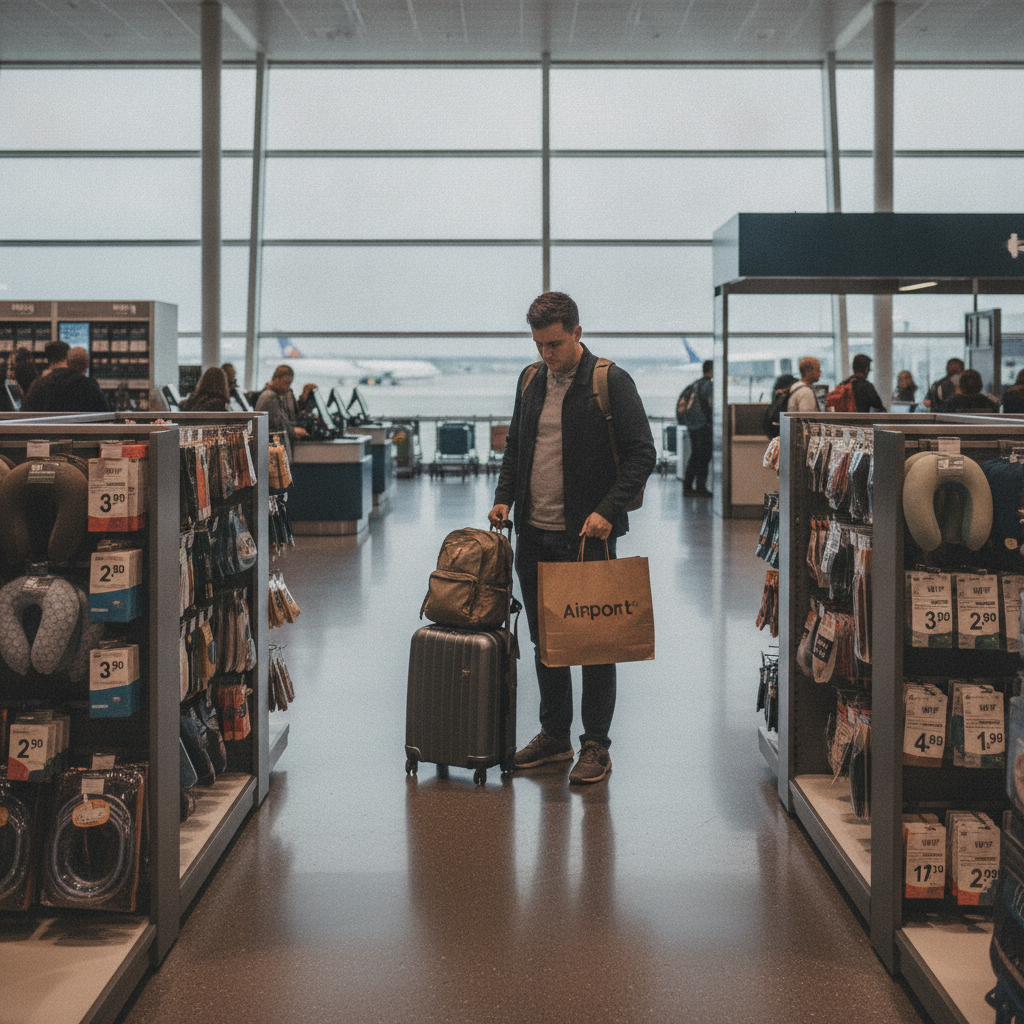
Airport shopping has a way of feeling inevitable. Whether it's a forgotten neck pillow, a pair of noise-canceling headphones spotted in a terminal window, or a last-minute packing cube, travelers routinely spend far more on travel gear at departure stores than they ever intended — and far more than the same items cost almost anywhere else.
What Makes Airport Retail Pricing So Different?
Airport stores operate in a fundamentally different retail environment than street-level shops or online platforms. Rent for terminal space is extraordinarily high, turnover is fast, and the customer base is essentially captive. Travelers rushing through departures rarely have time to comparison shop, and stores know it. Brands like Brookstone, InMotion, and Hudson News charge a premium not just because they can, but because the economics of airport real estate demand it. The markup on electronics, luggage accessories, and travel comfort items can run significantly higher than what the same products sell for at Target or Amazon.
How Does the Captive Audience Effect Work?
The concept of a captive audience isn't unique to airports, but it's rarely as concentrated. Once a traveler clears security, options narrow sharply. There's no popping out to a nearby store, no quick drive to a mall. This creates a purchasing environment where urgency overrides price sensitivity. A $14 travel-size sunscreen or a $60 phone charger cable feels justifiable in the moment — the flight is boarding, the item is needed, and there's simply no alternative. Retailers structure their entire pricing model around that psychological window, and it's remarkably effective at driving full-price purchases from people who would otherwise wait for a sale.
Why Do Travelers Keep Getting Caught Off Guard?
Most people don't plan to shop at the airport. The purchases tend to happen reactively — a realization that earbuds were left at home, that the checked bag is too heavy and a tote is needed, or that the layover is long enough to justify a travel pillow. These gap purchases are exactly where airport stores thrive. The items aren't extravagant, which makes the prices feel less alarming in isolation. But across a single trip, a forgotten charger here and a travel-size toiletry kit there can quietly add up to a surprisingly large unplanned expense. The individual purchases feel small; the cumulative cost often isn't.
What Specific Categories See the Steepest Markups?
Electronics and accessories consistently see the sharpest price differences at airport retail. Cables, portable chargers, wireless earbuds, and travel adapters — items from brands like Anker or Belkin — often carry prices well above what they sell for on Amazon or at Best Buy. Travel comfort items like neck pillows, sleep masks, and compression socks follow closely behind. Luggage add-ons such as TSA-approved locks and packing organizers also trend high. Interestingly, books and snacks tend to be less dramatically marked up, which may explain why those sections of airport stores always feel a bit more justified than the gear wall near the entrance.
How Can Smarter Packing Prevent the Problem Entirely?
The most effective strategy against airport retail is simply reducing the number of moments where a purchase feels necessary. Experienced travelers treat packing as a checklist exercise rather than a memory exercise — running through categories like power, comfort, documentation, and toiletries before leaving the house rather than at the gate. Apps like PackPoint help generate custom packing lists based on destination and trip length, which cuts down on the forgotten-item spiral. Keeping a small travel kit pre-packed and ready to go — charger, adapter, earplugs, a spare cable — means the airport store rarely has anything that's actually essential.
What Should You Actually Do Before Your Next Trip?
If you're serious about cutting airport spending, the fix is almost entirely in the preparation. Before you travel, order anything you might need from Amazon or pick it up at a big-box store — prices are typically a fraction of what you'll find airside. If you do forget something, check whether your airport has a pharmacy or grocery-style store before heading to the branded travel retailers; some larger airports like Heathrow or LAX have more competitively priced options tucked between the glossy terminal boutiques. Use your phone's notes app to keep a running travel essentials list that updates every time you catch yourself thinking "I wish I'd brought that." Over time, that list becomes your best defense against impulse buys at 6 a.m. in a departure terminal.
Airport departure stores aren't inherently predatory — they exist because travelers genuinely need things and have nowhere else to turn. But the pricing model depends heavily on urgency and limited alternatives, and travelers who arrive prepared simply don't need what those stores are selling. A little pre-trip attention to gear and essentials is one of the quietest ways to keep a travel budget intact, with none of the stress of realizing, mid-boarding, that a forgotten item now costs three times what it should.