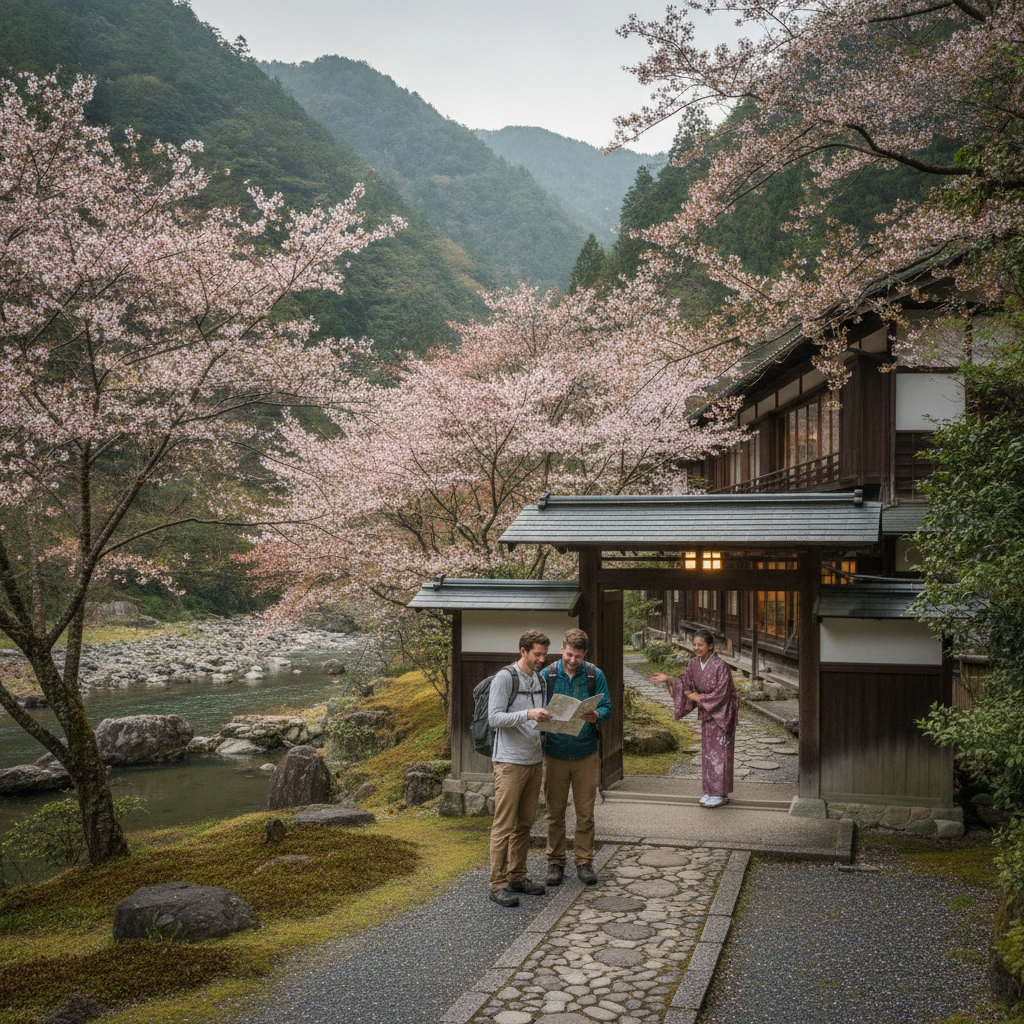
Stepping into a traditional Japanese inn deep in the countryside is one of travel's genuinely transformative experiences — the smell of tatami, the sound of a nearby river, a multi-course kaiseki dinner arriving at your room. What stops many travelers from attempting it is the very reasonable fear of getting something wrong. Booking through a major Kyoto hotel is one thing. Communicating with a family-run ryokan in a mountain village, where the owner speaks no English and the check-in process involves half a dozen small customs you've never encountered, is another thing entirely. The gap between wanting this experience and actually having it is usually just preparation.
Book Through a Platform That Bridges the Language Gap
The easiest way to avoid a booking misunderstanding is to use a platform designed to handle one. Jalan and Rakuten Travel are both Japan-based booking services with strong rural ryokan listings, and many properties on these platforms now offer basic English descriptions. Alternatively, smaller curated booking services like Ryokan.com exist specifically for international travelers and pre-screen properties for English-readiness. Whatever platform you use, look for listings that explicitly mention English-speaking staff or describe experience with foreign guests — this single filter eliminates most of the friction before you've even arrived.
Use a Translation App Before You Need It
Downloading Google Translate and enabling Japanese offline language packs before you travel is one of the most practical steps you can take. The camera translation feature alone handles most written communication — menus, signs posted in hallways, instructions left in your room. Beyond the app, consider preparing a simple printed card in Japanese that covers your dietary restrictions, arrival time, and any relevant health information. You can generate this text using DeepL, which tends to produce more natural Japanese phrasing than basic translation tools. Having something tangible to hand over at check-in immediately signals that you've made an effort, and that goodwill goes a long way in a small family-run inn.
Learn the Eight Phrases That Actually Matter
You don't need conversational Japanese. You need a small, reliable toolkit of phrases that cover the moments of highest interaction. "Itadakimasu" before a meal, "Gochisousama deshita" after it, "Onegaishimasu" when making a request, and "Arigatou gozaimasu" as a general thank-you will cover the majority of your exchanges. Knowing how to say your check-in time, ask where something is, and signal that you're finished with a tray rounds out the list. Writing these phonetically on a small card and keeping it in your pocket is a practical backup for moments when your phone battery is low or the wifi is patchy.
Understand Ryokan Etiquette Before You Arrive
Many awkward moments in a rural ryokan aren't language problems — they're etiquette gaps. Removing shoes at the entrance and switching to house slippers, then removing those slippers before stepping onto tatami, is the kind of thing nobody will correct you on but everyone will notice. Yukata robes are typically worn to and from the communal baths and sometimes to dinner; wearing one correctly, left side over right, is a small but appreciated detail. Understanding that mealtimes are usually fixed, that the futon is laid out by staff while you're at dinner, and that onsen pools often have rules around tattoos will help you move through the experience with confidence rather than constant uncertainty.
Confirm Meal and Bath Schedules the Moment You Check In
The two areas where miscommunication has the most impact at a ryokan are mealtimes and bath schedules. Most traditional inns serve dinner between 6:00 and 7:30 p.m. and breakfast between 7:30 and 9:00 a.m., but times vary and may be assigned to your room. Some smaller properties have only one or two communal bath slots per gender, and missing yours can mean a cold wait or no bath at all. Point to your watch, use your translation app, or show a simple time grid printed on paper — whatever gets confirmation. Getting this sorted during check-in prevents the most common points of friction.
Manage Dietary Needs With a Written Document
Kaiseki cuisine is elaborate, seasonal, and not particularly flexible — which is something worth knowing in advance. Vegetarian and vegan travelers especially need to communicate clearly, because dashi stock made from fish appears in many dishes that look vegetarian on the surface. Allergy information is even more critical. Preparing a card in Japanese that lists your restrictions clearly, and specifying whether cross-contamination matters, is the single most effective tool for this situation. Several websites offer free printable allergy cards in Japanese; Happy Cow also maintains a useful guide for plant-based travelers specifically. Emailing the ryokan before arrival with this information gives staff time to prepare alternatives rather than scrambling at service.
Arrive With Cash and Small Bills
Rural areas of Japan remain largely cash-based, and many family-run ryokan outside of major tourist corridors don't accept foreign credit cards even in 2026. Settling a two-night stay including meals entirely in cash isn't unusual; neither is tipping — which, importantly, you shouldn't do, as it can cause genuine discomfort. Keeping your yen organized in small denominations makes payment exchanges smooth and avoids the need for verbal negotiation over change. ATMs in rural train stations and convenience store chains like FamilyMart or Lawson are the most reliable withdrawal points when you're outside a major city.
Embrace the Silence as Part of the Experience
There will be moments when communication simply doesn't work, when gestures run out and both you and your host are left smiling at each other with no clear resolution. These moments are almost never emergencies. A gentle bow, a patient pause, and a willingness to accept that some things will remain unclear is itself a form of cultural respect. Many travelers who've stayed in rural ryokan report that the most meaningful exchanges happened without a shared word — a dish explained by pointing to the garden it came from, a bath time communicated with a drawn clock face, a goodbye that needed no translation at all.
A rural ryokan stay is absolutely within reach for travelers who don't speak Japanese. The preparation is finite, the locals are almost universally patient, and the experience on the other side of that preparation is genuinely unlike anything a city hotel can offer. Do the groundwork, bring your curiosity, and give yourself permission to be a little uncertain — that's what makes it memorable.