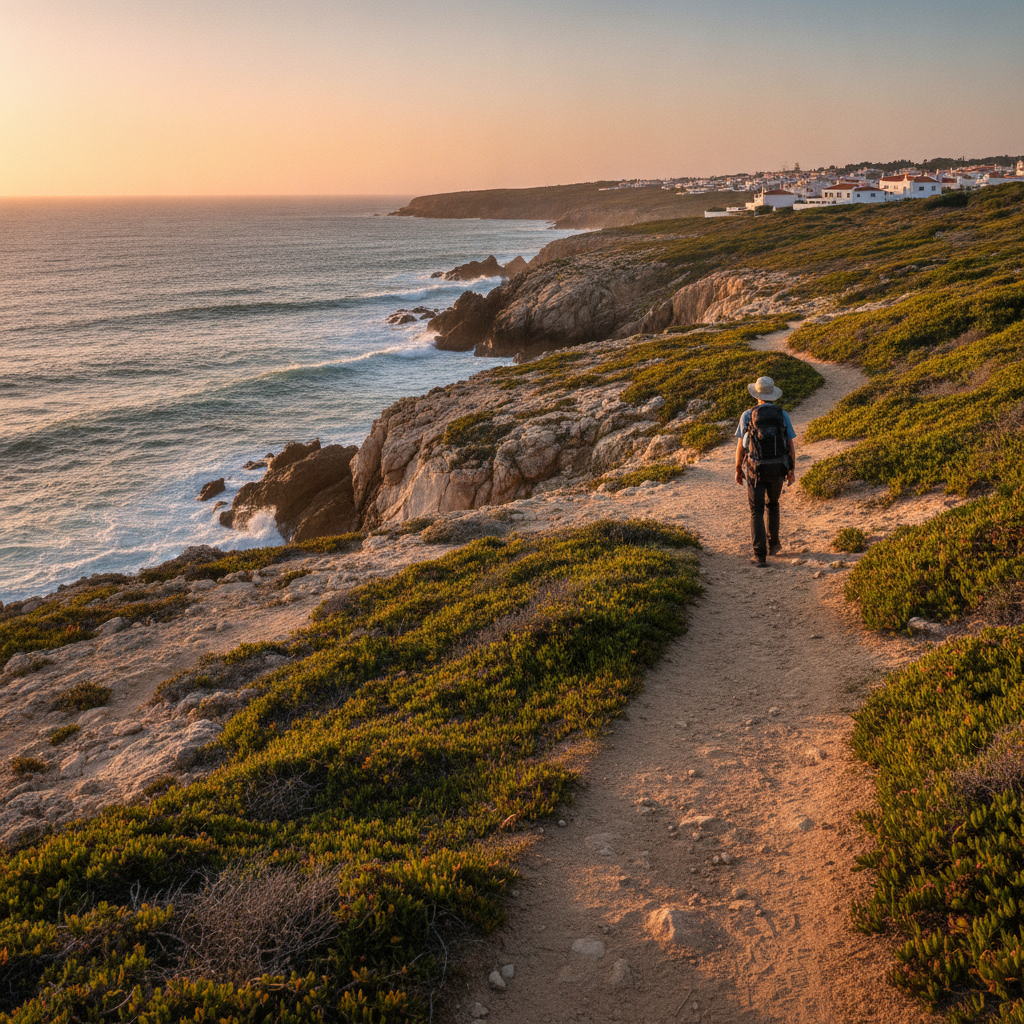
There's a particular kind of freedom that comes with planning your own long-distance hike — no fixed schedule, no group pace to match, and no one deciding when you stop to watch the Atlantic crash against a sea stack. Portugal's Rota Vicentina, specifically the Fishermen's Trail (Trilho dos Pescadores), is one of those routes that rewards the self-directed traveler. Stretching roughly 120 kilometers along the Alentejo and Algarve coastline, it's wild, raw, and entirely manageable without a guide — as long as you go in with a solid plan.
Research the Route Before You Book Anything
The Fishermen's Trail runs from Porto Covo in the north down to Odeceixe, or further to Lagos depending on how far you want to push. Before you commit to accommodation or flights, spend real time understanding the stages. The official Rota Vicentina website breaks the trail into daily segments with estimated distances and difficulty ratings. Some stages are flat and breezy; others involve soft sand for kilometers at a stretch, which is far more taxing than it sounds. Knowing which days will drain you helps you plan rest days and accommodation clusters rather than scrambling once you're already on the trail.
Choose Your Season Carefully
The Fishermen's Trail is a year-round route, but not every season suits every hiker. Spring — particularly March through May — is widely considered the sweet spot. Wildflowers cover the clifftops, temperatures sit in the comfortable low-to-mid twenties Celsius, and the crowds are manageable. Summer brings heat and more foot traffic, especially in the southern sections closer to the Algarve. Autumn is another strong option, with quieter paths and softer light. Winter hiking is possible and genuinely atmospheric, but some small accommodation options close, and the wind off the Atlantic can be relentless. Pick your window based on how you like to travel, not just when flights are cheap.
Sort Your Accommodation in Advance for Busy Sections
This is where independent hikers sometimes underestimate the planning required. The trail passes through small villages — places like Almograve, Zambujeira do Mar, and Odeceixe — where accommodation options are limited. A single guesthouse with eight beds fills up fast, especially between April and June. Use Booking.com to lock in key nights at least six to eight weeks ahead if you're traveling in peak season. You don't need to pre-book every single night, but anchor your itinerary around the harder-to-book spots first, then fill in the rest as you go. Flexibility is an asset; getting stranded without a bed is not.
Pack for the Specific Demands of Coastal Hiking
The Fishermen's Trail is not a mountain route, but it has its own demands. Sand, salt air, and constant wind are your companions. Footwear matters enormously — trail runners with solid grip tend to outperform heavy boots on this terrain, though some hikers swear by low-cut hiking shoes. A lightweight wind layer is worth its weight every single day. Sun protection is non-negotiable even in spring, since you're exposed on open cliffs for long stretches. Pack light overall. Most villages along the route have small shops where you can resupply basics, so you don't need to carry five days of food from the start.
Download Offline Maps Before You Leave
Cell service along the trail is inconsistent, and some of the most beautiful sections are also the most remote. Download the route on Wikiloc or AllTrails before you set off, and make sure it's saved for offline use. The trail is generally well-marked with the Rota Vicentina's distinctive yellow and green markers, but waypoints can be confusing near beaches where sand shifts the visible path. Having an offline map on your phone as a backup isn't overcautious — it's just sensible. A portable power bank is equally important, since you'll be using GPS and taking photos across long days with limited charging opportunities.
Budget Realistically for the Full Trip
Hiking independently can be genuinely affordable, but costs add up in ways that catch people off guard. Accommodation in guesthouses and small rural hotels along the trail typically runs from moderate to mid-range per night — rarely luxury, but not always budget either. Meals in coastal villages are simple and often excellent: fresh fish, bread, local wine. Factor in transport to the trailhead in Porto Covo and from your endpoint back to Lisbon or Faro, since public transport in this region requires some planning. Renting a car for the access legs can be more efficient than piecing together buses, depending on where you're flying in and out.
Understand the Leave No Trace Principles for Protected Land
Much of the Fishermen's Trail runs through the Southwest Alentejo and Vicentine Coast Natural Park, which is a protected area. That means rules apply — and for good reason. Camping on the clifftops or beaches is not permitted, even though the scenery makes it tempting. Stick to designated accommodation. Stay on marked paths to avoid eroding the fragile coastal vegetation. Take all your rubbish with you from beaches and remote sections. The park is part of what makes this trail exceptional, and the more hikers who treat it well, the longer it stays that way for everyone who follows.
Build in at Least One Unplanned Day
Even the best itinerary benefits from a buffer. A tired body, an unexpectedly beautiful village worth lingering in, or a section of trail that takes longer than planned — these aren't failures, they're just the reality of multi-day hiking. Building one or two flexible days into your schedule takes the pressure off and lets you actually enjoy the experience rather than racing through it. The Fishermen's Trail isn't a race. The Atlantic will be there whether you arrive by noon or by late afternoon, and some of the best moments on a trip like this happen when you've stopped trying to stick to the plan.
Planning this hike yourself is absolutely within reach. With a bit of preparation and a willingness to be flexible, the Fishermen's Trail offers one of Europe's most rewarding coastal walks — entirely on your own terms. Take one solid step: pull up the route map today and start imagining where you want to begin.