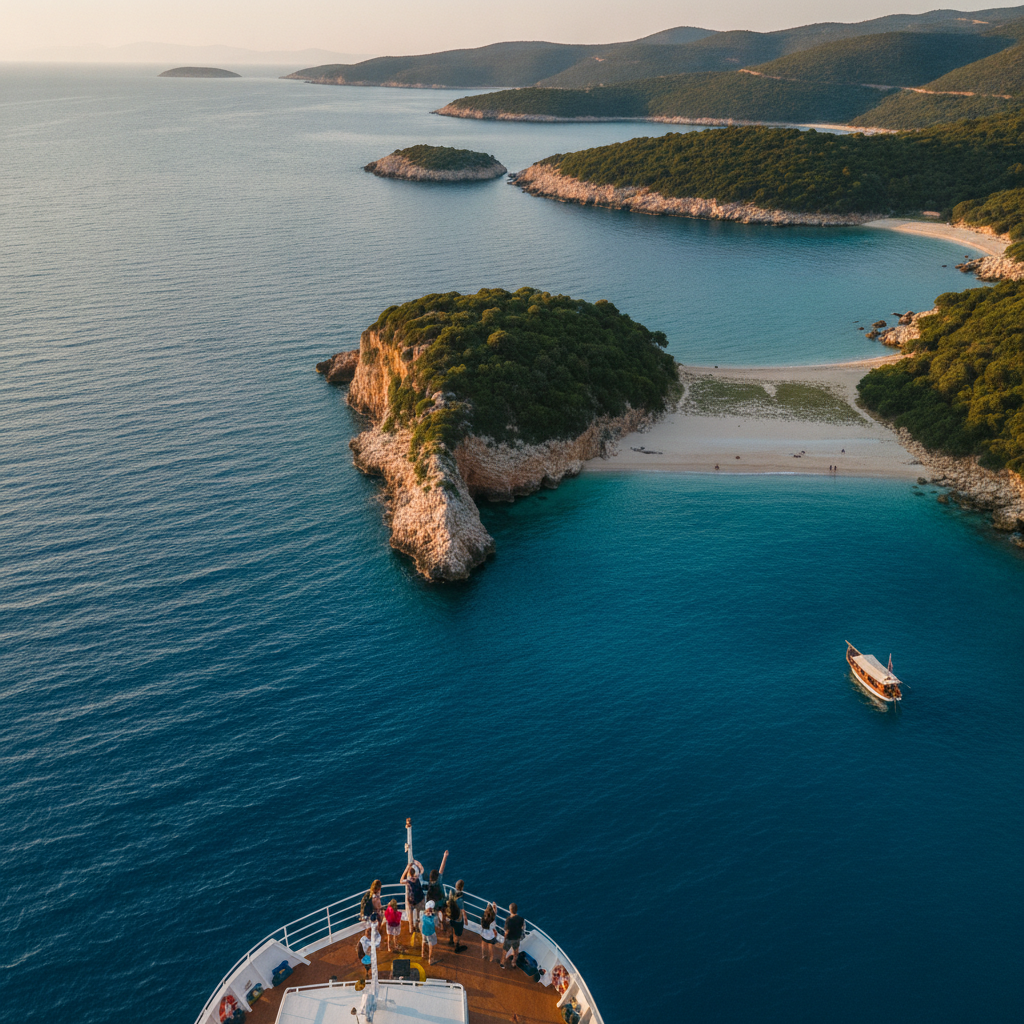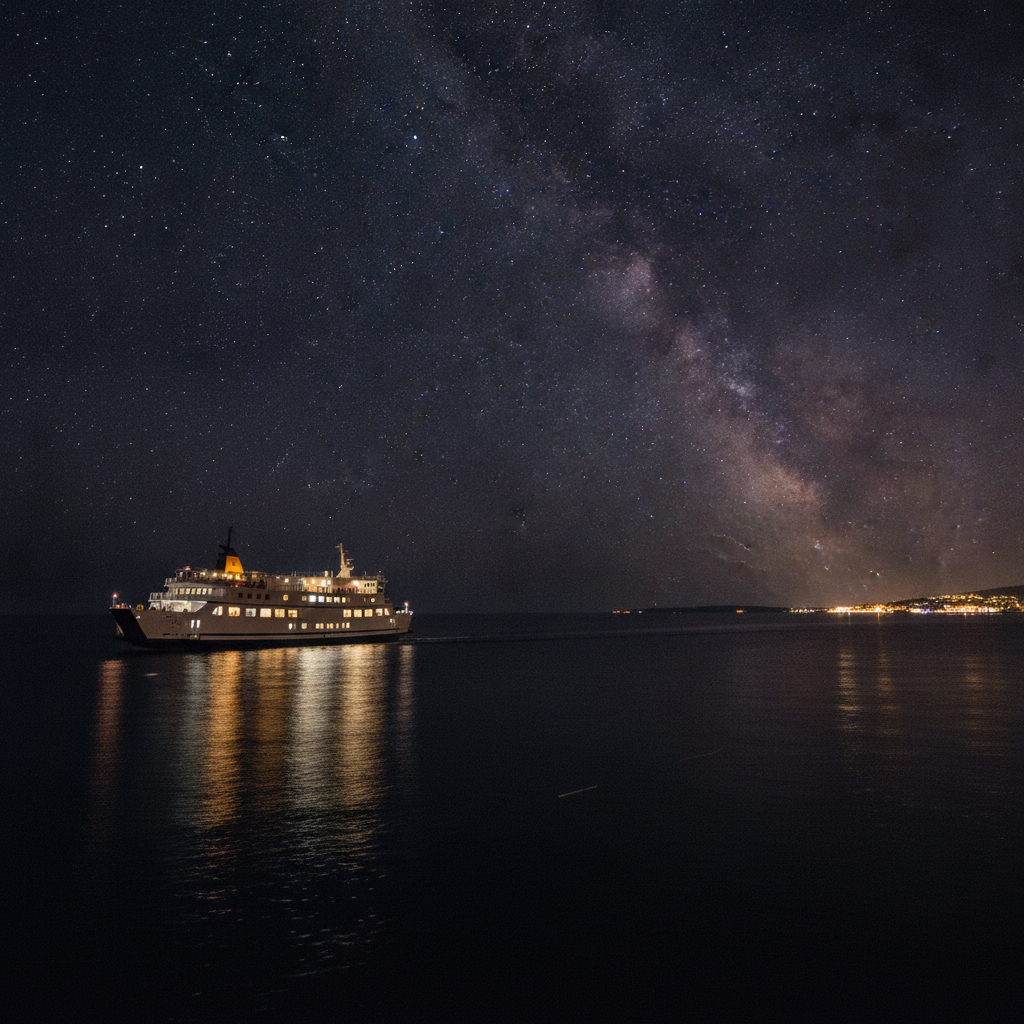
The sea has always been a more honest way to measure distance. Unlike an airplane, which collapses geography into something abstract and nearly meaningless, a ferry crossing the Adriatic Sea makes the traveler feel every nautical mile between Ancona and Split, between Bari and Dubrovnik. There is a particular quality to arriving somewhere by water — salt air, the slow materialization of a coastline, the sense that the journey itself was part of the destination. Travelers who choose overnight ferries between Italy and Croatia aren't simply looking for an economical alternative to flying; they're practicing a philosophy of movement that prizes depth over speed.
The Logic of Slow Crossings
Slow travel, as a concept, resists the idea that the purpose of movement is arrival. It insists instead that transitions matter — that the hours between one place and another carry their own meaning. Overnight ferry crossings across the Adriatic embody this philosophy with unusual elegance. A traveler boards in the early evening, watches the Italian port lights recede into darkness, and wakes the following morning as the Croatian coastline comes into focus. No flight connection, no lost day to transit, no disorienting compression of time zones. The crossing itself becomes a kind of rest, a threshold between two distinct cultures.
Operators like Jadrolinija, the Croatian national carrier, and SNAV run regular routes connecting Italian ports — primarily Ancona, Bari, and Pescara — to Croatian destinations including Split, Zadar, and Dubrovnik. Cabin options range from basic reclining seats, known as *poltrona* in Italian, to private en-suite cabins that function much like a modest hotel room. For travelers carrying their own provisions and choosing a standard cabin, the crossing can replace an entire night's accommodation cost, effectively making the journey both transportation and lodging.
Reading the Route Options
The Ancona–Split route is perhaps the most traveled of the Adriatic crossings and serves as a strong entry point for travelers unfamiliar with ferry travel in this region. The journey takes roughly nine hours overnight, arriving in Split — the city built around the ancient Roman palace of Diocletian — in the early morning. This timing is particularly well-suited to slow travelers, since it allows a full day's exploration immediately upon arrival without the need to check in anywhere first. Split's *Riva*, the broad waterfront promenade, is an ideal place to drink coffee and watch the city wake up around an arriving ferry.
The Bari–Dubrovnik route appeals to those approaching Croatia from southern Italy. Dubrovnik, sometimes called the *Bisero Jadrana* — Pearl of the Adriatic — can feel overwhelming during peak summer hours, but arriving by sea in the early morning grants a quieter entrance than the cruise ship crowds that accumulate by midday. Those traveling between April and October will find the most frequent departures, though reduced winter schedules do exist and carry their own austere, unhurried appeal. Flexibility with departure dates is the traveler's single greatest asset on these routes.
Practical Rhythms of the Crossing
Boarding typically begins two to three hours before departure, and experienced ferry travelers treat this window as part of the experience rather than an inconvenience. Most vessels operated by Jadrolinija and Blueline Ferries include a restaurant, a bar deck, and outdoor seating areas that become increasingly pleasant once the port lights are behind the ship. The Mediterranean summer evening — warm air, a darkening sky, the mild chop of open water — makes deck time genuinely memorable. Travelers who spend those hours outdoors before retreating to a cabin often describe the crossing as one of the more atmospheric passages they've made anywhere in Europe.
Packing for a ferry crossing rewards the same logic as any slow travel itinerary: bring what's needed, leave margin for improvisation. A light overnight bag with a change of clothes, a few provisions from one of the excellent markets near Italian ferry terminals — the Mercato Coperto in Ancona is particularly well-stocked — and a good book or a downloaded playlist tend to cover most needs. The ships are comfortable rather than luxurious, which suits the spirit of the journey well.
Arriving as a Traveler, Not a Tourist
There's a meaningful distinction between arriving somewhere as a tourist and arriving as a traveler, and it has less to do with budget or itinerary length than with attention. Crossing the Adriatic overnight requires a kind of patience that rewards the person practicing it. By the time the Croatian coastline appears — all limestone karst, pine-covered islands, and that particular shade of blue-green water the Dalmatian coast is known for — something in the rhythm of travel has already shifted. The urgency that characterizes air travel seems to have dissolved somewhere in the middle of the sea.
For those arriving in Split or Dubrovnik by ferry, the city center is typically within walking distance of the terminal, or a short local bus ride away. This ease of arrival, combined with the rest accumulated during the crossing, tends to produce a different kind of first morning than any airport connection can offer. Travelers often find themselves genuinely present in a place rather than merely located within it — attentive to the smell of baking bread, the sound of Croatian spoken quickly between vendors, the quality of morning light on old stone.
Planning Your Own Adriatic Crossing
If this approach appeals to you, the practical groundwork is straightforward. Book directly through Jadrolinija or a reliable ferry aggregator like Ferryhopper, which compiles routes and cabin availability across multiple operators. Cabins on popular summer routes fill weeks in advance, so early booking is advisable from June through August. A four-berth cabin shared between travel companions remains the most cost-efficient option; a two-berth cabin offers greater privacy without a significant price jump. Vehicles can be transported on most crossings as well, making the ferry a logical choice for road-trippers moving between the Italian interior and Croatia's coastal roads.
There's something quietly satisfying about a form of travel that refuses to pretend the sea isn't there. The Adriatic crossings between Italy and Croatia ask the traveler to accept a different kind of schedule — one measured by tides and departure times rather than gate numbers — and in doing so, they return something that faster travel takes away: the sense that distance is real, and that crossing it slowly is its own reward. The traveler who arrives in Split with sea air still in their clothes and a full morning ahead carries with them something that no direct flight can offer.