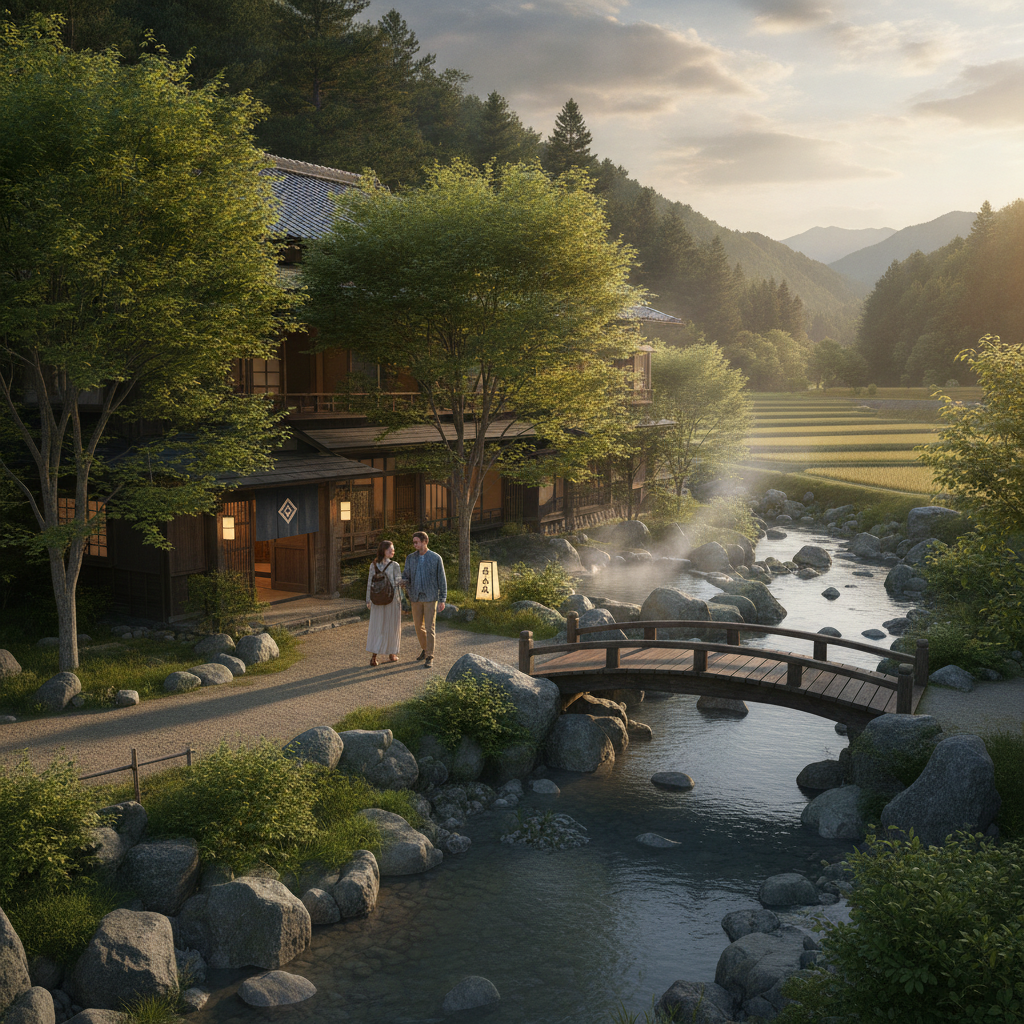
Staying at a rural ryokan in Japan is one of the most rewarding travel experiences available anywhere in the world — and also one of the most quietly intimidating. You've pictured the tatami floors, the hinoki wood bath, the multi-course kaiseki meal served in your room. What you haven't pictured is standing at the front desk while a kind but puzzled innkeeper waits for you to say something, and your mind goes completely blank. That gap between expectation and reality is where a lot of travelers give up on rural ryokan stays before they even book one.
The good news is that language isn't actually the barrier it feels like. With a little preparation and the right tools in your pocket, staying at a remote ryokan — hours from any major city — becomes genuinely manageable. Japan's rural inn culture is built on ritual and routine, which works strongly in your favor once you understand the patterns.
Book Through a Platform That Bridges the Gap
Your booking platform does more work than you might expect. Services like Jalan, Rakuten Travel, and the English-language side of Japanese Guest Houses connect you with properties accustomed to foreign guests and often include fields where you can submit dietary restrictions, arrival times, and special requests in writing before you ever arrive. This upfront communication removes most of the uncertainty from check-in. Rural ryokan owners in areas like the Kiso Valley or the Noto Peninsula often read English far better than they speak it, so written exchanges smooth things over considerably.
Download Google Translate and Use the Camera Feature
The camera translation function inside Google Translate has changed the experience of traveling without language skills more than almost any other tool. Point it at the menu card left in your room, the laminated bathing schedule on the wall, or the instructions printed beside the yukata folding guide, and you'll get an instant read. It's imperfect, but it's accurate enough to be genuinely useful. Download the Japanese language pack before your trip so the app functions offline — rural areas often have unreliable data connections, and you don't want to be stuck guessing whether the bath is communal or private at 9pm.
Learn the Physical Rhythm of a Ryokan Stay
A traditional ryokan follows a reliable structure, and knowing it in advance means you're rarely lost. You arrive, remove your shoes at the genkan, are shown to your room, and receive tea and a small sweet. Dinner is typically served between 6pm and 7pm — either in your room or a dining area — and breakfast follows around 7:30am to 8:30am. The shared onsen has posted hours and often separate bathing times for men and women. Once you understand this framework, most interactions with staff become predictable and low-stress. You're not interpreting a foreign situation from scratch; you're executing a familiar sequence.
Carry a Small Phrasebook With the Essentials
Digital tools are reliable until they aren't. A pocket phrasebook — or a single printed sheet you prepare yourself — covers the moments when your phone battery dies or the wifi drops out entirely. Prioritize phrases around meals: allergy communication, preference for vegetarian options, or a simple "this is delicious" go a long way. Phrases like *sumimasen* (excuse me), *arigatou gozaimasu* (thank you very much), and *wakarimasen* (I don't understand) signal respect and patience. Staff at rural ryokan respond warmly to guests who make the effort, even imperfectly.
Use Pre-Written Cards for Dietary Needs
Kaiseki cuisine is elaborate and often involves seafood, shellfish, or meat in ways that aren't immediately obvious. If you have dietary restrictions, don't assume the booking form covered everything. Sites like Equal Eats and SelectWisely produce professional allergy and dietary cards translated into Japanese, covering everything from celiac disease to shellfish allergies. Print one and hand it to your host at arrival. This single gesture prevents misunderstandings at the meal table and shows you've taken the communication challenge seriously. Most rural innkeepers will genuinely try to accommodate you once they understand the situation clearly.
Communicate Arrival Times Precisely
Ryokan staff plan dinner service, room preparation, and bath scheduling around your estimated arrival. Arriving significantly late — or early — without notice throws off a carefully coordinated household. Before your trip, confirm your arrival window in writing through the booking platform or by email. If your plans change en route, apps like Google Translate allow you to type a message and have it translated, which you can then paste into an SMS or messaging app. Some properties use Line, Japan's dominant messaging platform, for guest communication. Confirming you'll arrive at 4pm rather than 6pm is a small act that earns genuine goodwill.
Read the Bathing Etiquette Before You Go
The onsen experience is central to a ryokan stay, and rural inns with natural hot spring access take the bathing rituals seriously. Wash thoroughly at the seated shower stations before entering the bath. Tattoos remain a sensitive issue at many traditional properties — check the individual ryokan's policy when booking if this applies to you. Larger ryokan in areas like Kinosaki Onsen or Hakone offer private family baths that sidestep any communal concerns entirely. Understanding the sequence — rinse, enter, soak, exit quietly — means you can participate fully without needing anyone to explain it to you on the spot.
Embrace the Silence as Part of the Experience
One of the unexpected pleasures of staying in a rural ryokan without strong language skills is that the experience becomes more observational, more present. You watch the way the innkeeper refolds your bedding, the care taken in placing each dish during kaiseki service, the particular quiet of a mountain valley after dinner. Communication that doesn't rely on words tends to slow everything down in the best way. Many travelers who've worried most about the language barrier come away saying it was the most immersive stay of their trip.
A rural ryokan stay rewards preparation, not fluency. With the right tools, a clear understanding of how these inns operate, and a willingness to meet your hosts halfway, you'll find that the language gap is far smaller than it appears from the outside. Start by picking one destination — Kiso Valley, Aomori, or the Iya Valley in Shikoku are all extraordinary — and make the booking. Everything else becomes manageable once you're actually there.