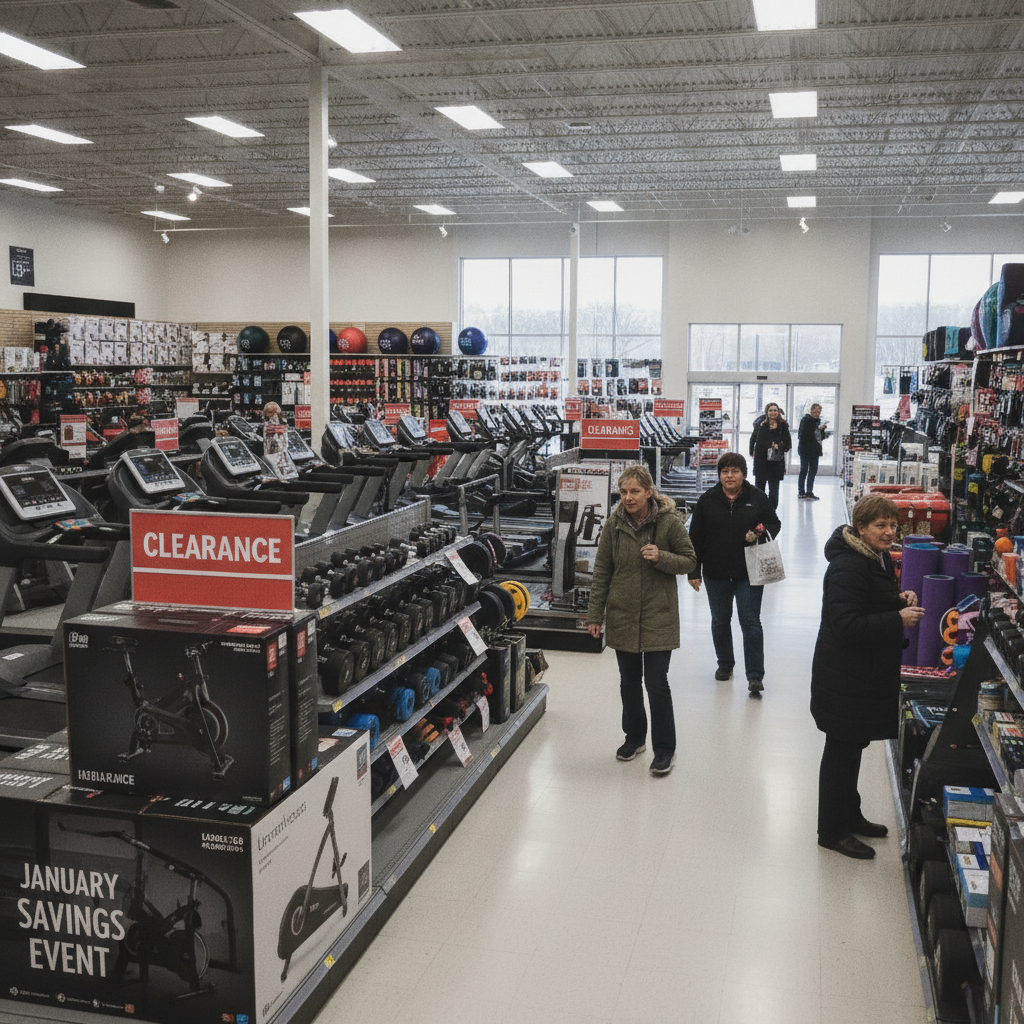
Every January, fitness equipment flies off shelves and out of online carts during the first two weeks of the month. Retailers lean hard into resolution season, and shoppers — swept up in the energy of a new year — tend to buy at exactly the moment prices are least favorable. The good news is that a small shift in timing changes the outcome considerably.
The Resolution Rush and What It Does to Pricing
Retailers plan for January the same way they plan for Black Friday. They know that the first days of a new year bring a reliable surge of motivated shoppers ready to invest in home gyms, yoga mats, resistance bands, and treadmills. That predictable demand means there's little pressure to discount — the full-price items move quickly enough without incentives. Prices during early January often match or even exceed holiday-season highs, dressed up with marketing language that frames them as "New Year" deals when they're really standard retail pricing.
Why Early January Isn't the Discount Window It Appears to Be
The framing of New Year sales can be genuinely misleading. A banner that reads "New Year, New You — Save Now" doesn't tell you whether the discount is measured against an inflated reference price or an actual reduction from recent selling history. If you've used a browser-based price tracking tool like Camelcamelcamel to review an item's price history, you'll often find that early January prices sit at or near their highest points of the preceding three months. The perceived urgency of a new year creates demand, and retailers meet that demand with pricing that reflects it.
What Changes After the First Two Weeks
By the third week of January, something predictable happens in the fitness retail market. The initial resolution wave tapers off. Shoppers who bought impulsively in the first week are already second-guessing purchases, and return rates begin to climb. Retailers — particularly large ones like Dick's Sporting Goods — start to see inventory sitting longer than anticipated, and the calculus shifts toward moving units rather than protecting margin.
The Inventory Correction That Works in Your Favor
This isn't a hidden phenomenon — it's a well-understood retail cycle. When demand softens faster than supply adjusts, markdowns follow. Fitness equipment is bulky, expensive to warehouse, and seasonal in its appeal. Once mid-January arrives and the cultural momentum of resolutions fades from social media, retailers become far more motivated to clear stock. That's when genuine price reductions tend to appear, often without the fanfare of a named sale event.
How to Track the Right Moment Without Constantly Monitoring
Waiting strategically doesn't mean refreshing product pages every day. Apps like Honey and platforms like Google Shopping both offer price alert features that notify you when a tracked item drops below a threshold you set. You can identify the equipment you want during the first week of January — when selection is at its widest — add it to a watchlist, set a target price, and then simply wait. The alert does the monitoring for you, and you step in only when the timing aligns with a real discount.
Using Wish Lists as a Research Tool, Not a Buying Tool
One underused approach is to treat early January wish lists as data collection rather than a purchase queue. Add the treadmill, the kettlebell set, the foam roller collection to your cart or saved items on Amazon. Watch the price. Note the starting point. When the third week arrives, you'll have a clear baseline that tells you whether a later reduction is meaningful or cosmetic. This transforms an impulse-driven process into a measured one — and fitness equipment, which often carries a significant price tag, rewards that patience.
The Secondary Market Advantage in Late January
Fitness equipment also has a strong secondary market that peaks in late January. By the third and fourth weeks of the month, the first wave of regretted resolution purchases begins appearing on Facebook Marketplace and OfferUp. Lightly used or even unopened items — spin bikes, weight benches, adjustable dumbbells — tend to list at meaningful reductions from retail, often simply because the seller wants them gone quickly. This parallel market runs alongside retail markdowns and gives you a second channel for finding value at the same time of year.
Knowing What Holds Value Versus What Depreciates Fast
Not all fitness equipment behaves the same way on resale platforms. Compact, versatile items like adjustable dumbbell sets and pull-up bars tend to hold their value longer because demand for them is steady year-round. Larger, more specialized equipment — certain styles of rowing machines, bulky cable systems — depreciates more sharply on the secondary market because fewer buyers are looking for them at any given time. Understanding that distinction helps you decide whether to wait for a retail markdown or act quickly when a secondhand listing appears.
Building Your Timing Strategy Before January Arrives
The most effective approach is one you prepare for before the new year begins. In the final weeks of December, identify the specific items you're genuinely interested in and note their current prices across a few retailers. Set up alerts through Honey or Camelcamelcamel with a target price that reflects a meaningful discount — not just a few dollars off, but a reduction worth the wait. Then let January unfold. Shop the first week for selection clarity, not for purchases. Revisit with intent around the third week, when the inventory pressure on retailers is real and the secondhand market is freshly stocked.
Patience, in retail timing, is a practical strategy rather than just a virtue. January fitness sales are genuine — they just arrive later in the month than the marketing suggests. Giving yourself two or three extra weeks before purchasing puts you on the right side of that cycle.