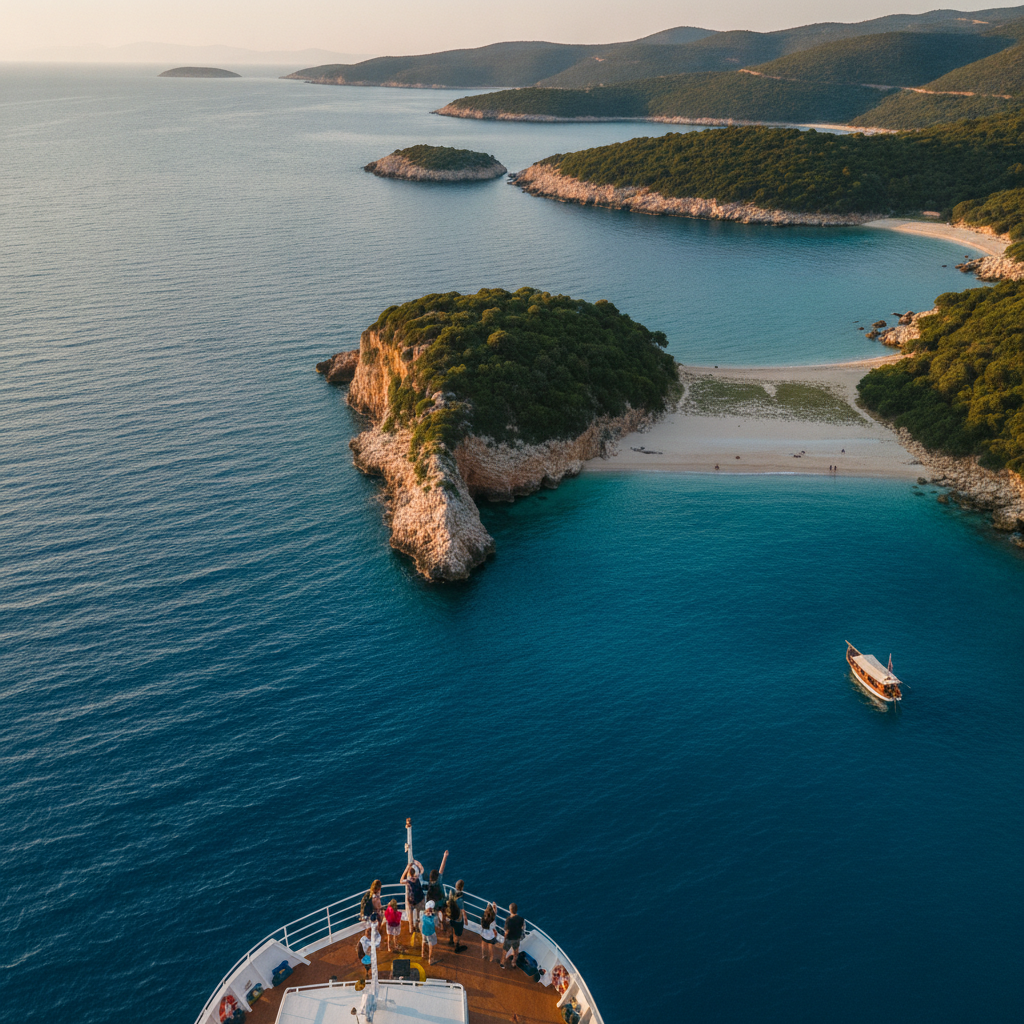
The Albanian Riviera holds some of the most unspoiled coastline in the entire Mediterranean, yet the majority of visitors experience only a fraction of it. Most travelers arrive by road — bumping along the SH8 highway in shared furgons or rental cars, stopping at the same pull-offs between Sarandë and Himara that every travel blog photographs. What those overland routes can't reach, however, are the coves, cliffs, and small fishing communities tucked between headlands that become genuinely accessible only from the water. Learning how to use the ferry and boat connections that run along this stretch of coast doesn't just add variety to a trip — it opens up a completely different version of the Albanian coast.
Understand What the Ferry Network Actually Covers
The Albanian Riviera's water transport isn't a formal, year-round ferry system in the way that Greece or Croatia operates. It functions more as a combination of seasonal passenger boats, water taxis, and small vessel services that connect coastal towns and beaches from roughly late May through September. Sarandë serves as the primary hub, with scheduled connections running toward Ksamil and informal boat services pushing further north toward Palasa and Dhermi. Knowing this distinction matters: some routes require advance arrangement while others run on loose daily schedules.
Start Your Planning in Sarandë, Not Online
Sarandë's small waterfront promenade is where most ferry-adjacent planning happens in practice. The harbor area near the main port hosts several operators running seasonal excursion boats and water taxis, and speaking directly with them — even with basic communication through a translation app — will give you far more accurate, current scheduling information than anything found on a website. Boat operators in Sarandë regularly adjust their departure times based on weather, passenger numbers, and demand. Arriving a day early and walking the harbor in the late afternoon, when boats are returning, is consistently the most effective way to understand what's actually running.
Use Ksamil as a Stepping Stone, Not a Destination
Ksamil has become popular enough that overland transport now reaches it easily, which means it no longer represents the hidden end-point it once was. Its real value for ferry-minded travelers lies in its position as a southern launch point for boat access to the smaller islands just offshore — Ksamil's four island-lets, reachable only by water — and as a departure point for informal water taxi services that push further up the coast. Treat Ksamil as a transit node rather than your final stop, and you'll find boat operators there willing to arrange custom drop-offs at beaches that see almost no foot traffic from the road.
Learn the Difference Between Scheduled Boats and Charter Services
Two distinct service types run along the Riviera, and confusing them leads to missed opportunities. Scheduled seasonal boats — often running between Sarandë, Himara, and occasionally Vlorë — operate on rough timetables with fixed fares and are useful for covering longer distances efficiently. Charter or water taxi services, on the other hand, are completely flexible and priced per trip or per group. For reaching genuinely isolated beaches like those near Gjipe Canyon or the stretch of coast below Palasa, a chartered small boat arranged for a half-day is typically the only reliable option. Prices are negotiable and reasonable by any Mediterranean standard.
Time Your Boat Departures Around the Wind
The Adriatic and Ionian coastline around the Albanian Riviera can generate choppy conditions by early afternoon, particularly when seasonal winds pick up. Experienced local boat operators know this well and tend to run morning departures for a reason. Aiming for a 7:30 to 9:00 am departure gives you calmer water for the crossing, longer time at a remote beach before day-tripper boats arrive, and an easier return journey. Travelers who book afternoon departures often find the return trip rougher and the beaches more crowded from the one or two larger excursion boats that run midday circuits.
Build Your Route Around Himara as a Northern Base
Himara sits roughly in the middle of the Riviera and receives enough visitors by road that it has genuine infrastructure — guesthouses, restaurants, and a working small harbor. What makes it useful as a ferry base is that it serves as an informal midpoint from which boat services run in both directions. From Himara's harbor, water taxis can arrange access to Livadhi Beach and to less-visited coves sitting between Himara and Dhermi that the road passes well above. Spending two nights here while combining one overland day with one full water day gives you access to a range of coastline that neither pure mode of transport could cover alone.
Carry Cash, Flexibility, and a Waterproof Bag
Practical preparation makes a measurable difference on boat-accessed beaches. Cash is essential — virtually no small boat operator accepts card payment, and ATMs thin out considerably once you move away from Sarandë and Himara. Flexibility matters equally: if a boat operator tells you conditions aren't suitable for a specific cove, trust that assessment and ask for an alternative. A dry bag or waterproof sack protects documents, phone, and snacks during the crossing and while swimming, since many of these beaches have no facilities whatsoever. Bringing your own water and food for a full day is standard practice and entirely necessary at the most remote stops.
Respect the Seasonality of These Services
Boat services along the Albanian Riviera wind down significantly after mid-September and disappear almost entirely by October. This isn't a flaw in planning — it's simply how the local economy around water transport operates. Visiting in June rather than August brings lighter crowds at the remote beaches while still ensuring boat services are running reliably. July and August bring more operators and more competition for the same isolated spots, meaning the beaches are still quieter than anything overland tourists reach, but noticeably busier than shoulder-season visits. The shoulder of early June, in particular, is when the water is warm enough for swimming and the crowds are at their thinnest.
The Albanian Riviera's boat access routes are likely to develop further as the country's tourism infrastructure grows. More formal seasonal ferry schedules, better-marked departure points, and improved booking options are all gradual possibilities as visitor numbers climb. For now, though, the informality of the system is precisely what keeps the most beautiful stretches of coast genuinely quiet. Travelers who take the time to walk a harbor, start a conversation with a boat captain, and build a flexible morning into their itinerary will find a version of the Mediterranean that the highway simply cannot deliver.