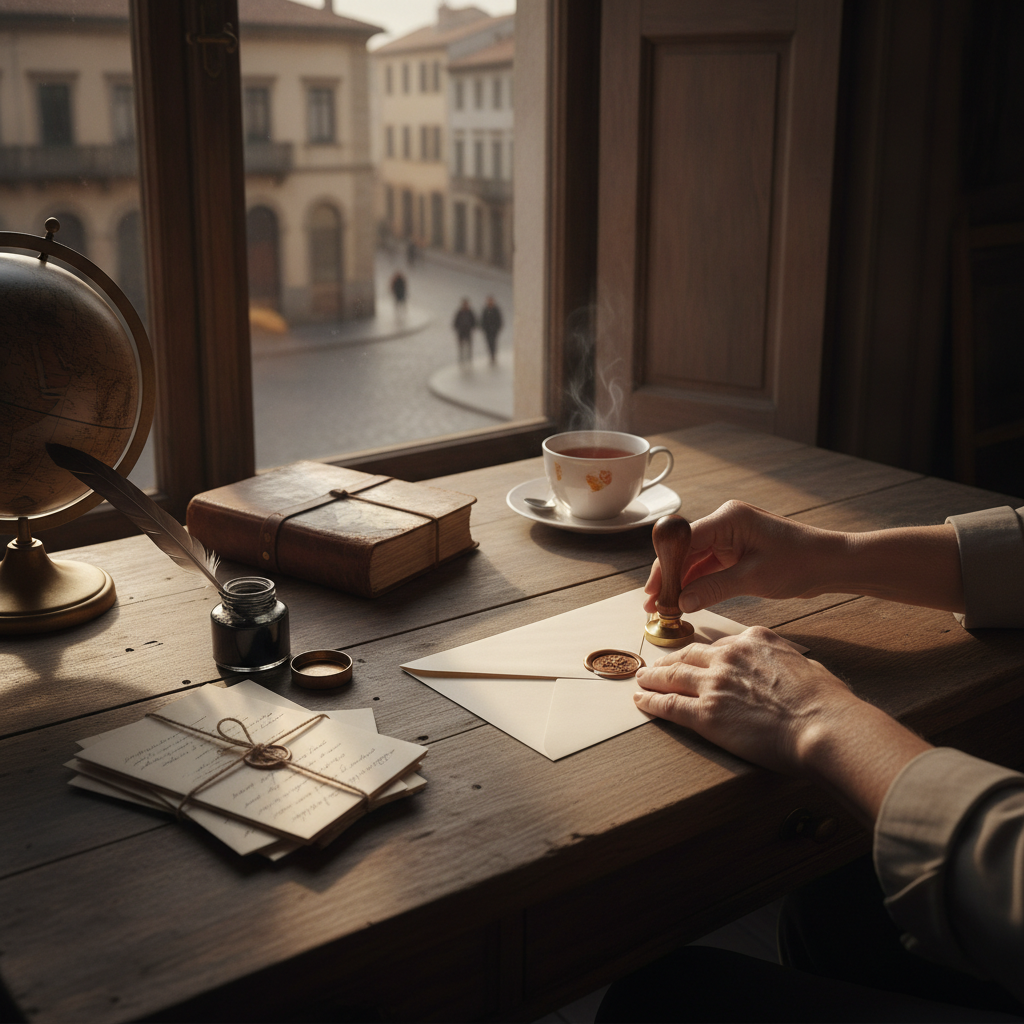
Something shifts when a person sits down with paper and pen and begins to write to someone they have not spoken to in months. The act itself is slower, more deliberate, and carries a particular weight that a typed message never quite achieves. In an era where a text reply can arrive in seconds and platforms like WhatsApp or iMessage make it effortless to send brief acknowledgments across any distance, genuine correspondence has become rare — and precisely because of that rarity, it has become more meaningful than ever.
The Quiet Erosion of Deliberate Communication
Digital messaging has made it possible to stay loosely connected with an enormous number of people simultaneously, but this ease comes with a cost that rarely gets named directly. Brief exchanges — a reaction emoji, a forwarded article, a two-word reply — maintain the feeling of contact without requiring much investment of thought or attention. Over time, relationships that once involved genuine exchange can settle into a kind of low-effort holding pattern, where both people technically remain in touch but neither fully knows where the other really is in life. The depth that once characterized those connections gradually gives way to surface-level familiarity.
What a Handwritten Letter Actually Requires
Writing a letter by hand demands something that digital communication does not: sustained, undivided attention directed at one person. A person composing a letter to a friend in Edinburgh or a cousin in Osaka must sit with that relationship long enough to construct full thoughts, revisit memories, ask real questions, and share something true about where they are in life. This is not a passive act. The Japanese concept of *ma* — the meaningful pause or space between things — finds a quiet parallel here: the letter exists in the space between two people, carrying weight precisely because it asked something of the person who wrote it.
Why Infrequent Relationships Benefit Most
The practice of monthly letter writing is perhaps most valuable when directed at people who exist at the edges of daily life — the college friend who moved to Lisbon, the mentor who retired, the relative whose life has diverged geographically but not emotionally. These are relationships that digital messaging tends to reduce to birthday notifications and occasional check-ins. A letter changes the terms of the relationship entirely. It signals that this person was thought about slowly and carefully, not just tagged in a passing moment. Recipients almost universally describe receiving a handwritten letter as surprising, moving, and strangely clarifying about the nature of their bond with the sender.
The Sender's Experience Is Just as Significant
There is a reflective quality to letter writing that benefits the writer as much as the reader. Composing a letter requires a person to articulate their own inner life — to describe what matters to them right now, what they have been thinking about, what has changed since they last spoke. This is not something most people do in the course of an ordinary day. The act of writing to someone else becomes, almost incidentally, a practice of self-examination. Writers of letters often report that the process clarifies feelings they had not yet found words for, and that returning to correspondence over months creates an informal archive of where they were at different points in their own life.
On Stationery, Stamps, and the Pleasantness of the Ritual
Part of what makes the monthly letter practice sustainable is building a small ritual around it. Simple supplies from a shop like Papier or Rifle Paper Co. — a few sheets of quality stationery, a box of envelopes — transform the act into something that feels considered rather than obligatory. Choosing a stamp, addressing an envelope by hand, and walking it to a postbox are steps that carry their own quiet satisfaction. These small physical actions create a boundary around the practice, separating it from the frictionless digital world. Setting aside thirty to forty-five minutes on a consistent evening — the last Sunday of the month, perhaps — gives the habit a rhythm that makes it easier to maintain over time.
The Letter as an Artifact of Relationship
Unlike a text thread that scrolls upward and disappears into the noise of dozens of other conversations, a physical letter can be kept. Many people who receive handwritten letters save them — tucked into books, stored in drawers, returned to during difficult or contemplative moments. There is a French word, *dépaysement*, used to describe the disorienting feeling of being somewhere foreign, but it contains within it a sense of longing for a place that once felt like home. Letters can serve as antidotes to that feeling — reminders, in the handwriting of someone who cares, that meaningful bonds persist across distance and time. The physicality of the letter makes the relationship tangible in a way that a notification never can.
Starting With One Name and One Sheet of Paper
If this practice sounds appealing, the beginning is simpler than it might seem. Think of one person — not the easiest person to contact, but the one whose absence from your regular life you actually feel. Write their address on an envelope, pull out a single sheet of paper, and begin without overthinking the opening line. Write about what you have been noticing lately, what you have been reading, what has surprised you. Ask them something you genuinely want to know. You do not need to produce something polished or long — a page and a half, honest and unhurried, will mean more than you expect. Send it. Then do it again next month, to the same person or someone new. What you are rebuilding, one letter at a time, is the understanding that some relationships deserve more than a quick reply — and that choosing to give them more is one of the quieter forms of care available to anyone with a pen and an hour to spare.