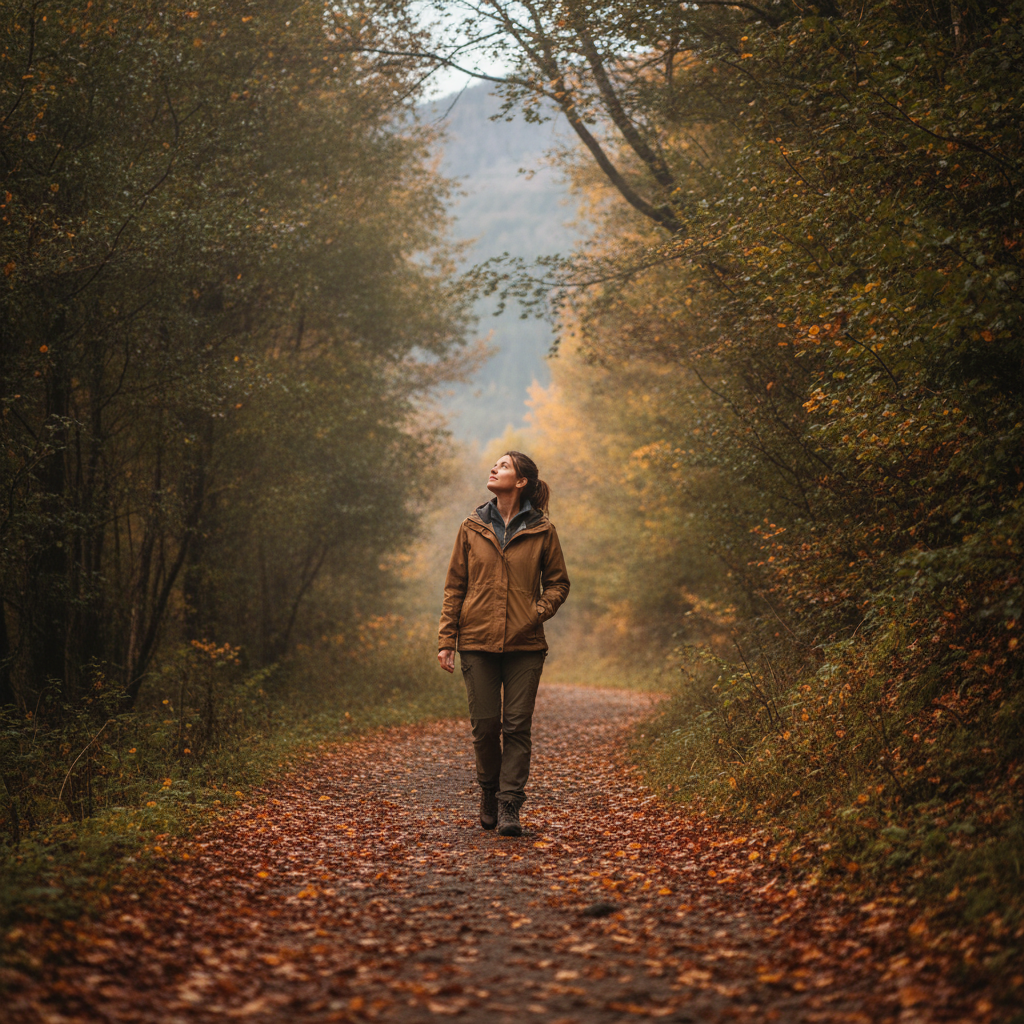
Modern life has quietly convinced most people that silence is something to be filled. The moment attention drifts — waiting for a coffee, pausing between tasks, stepping outside — a hand reaches for a phone. Earbuds go in. A podcast begins. What feels like productivity or entertainment is, over time, something else entirely: a slow erosion of the capacity to think without prompting. The mind that is never left alone gradually forgets how to wander, connect, and rest in its own rhythm.
What Constant Audio Input Does to the Thinking Mind
The human brain is not simply a processor that improves with more information. It needs fallow periods — stretches of unstructured, low-stimulation time — to consolidate experience, form connections between ideas, and produce what researchers have long described as insight. When every outdoor moment is filled with a Spotify playlist or a Huberman Lab episode, the neural equivalent of downtime disappears. The mind stays busy, but it isn't thinking — it's receiving. Over months and years, the difference becomes noticeable: ideas feel harder to form, attention spans shorten, and even enjoyable solitude begins to feel uncomfortable.
The Particular Value of Walking Outdoors Without Direction
Walking has always held a special place in the lives of thinkers, writers, and artists. There is something about the rhythmic, low-effort movement through physical space that loosens the grip of deliberate thought and allows the mind to settle into a softer gear. Researchers who study cognition have noted that walking, particularly in natural or semi-natural environments, activates the default mode network — the part of the brain associated with reflection, self-referential thought, and creative connection-making. Parks like Portland's Forest Park, London's Hampstead Heath, or even an unremarkable tree-lined street in a quiet neighborhood can serve as the backdrop for this kind of mental restoration. The key isn't the destination. It's the absence of structured input.
Why One Weekly Walk Matters More Than Daily Short Ones
The instinct might be to assume that more is better — that five brief, phone-free strolls would outperform one longer, committed one. But habit research and practical observation suggest otherwise. A single weekly walk that is genuinely protected — put in the calendar, treated as non-negotiable, long enough to allow the mental noise to settle — carries a different weight than scattered micro-breaks. It takes roughly fifteen to twenty minutes of undistracted walking before the planning mind begins to quiet and the slower, associative mind starts to emerge. A ten-minute stroll rarely crosses that threshold. One deliberate, unhurried hour does.
There is also a ritual dimension that matters. When the same window of the week is reserved for this kind of unstructured outdoor time, the brain begins to anticipate it. The walk becomes a container the mind learns to trust — a space where it doesn't need to produce, perform, or respond. That trust is built slowly, and it deepens each week the commitment is kept.
The Role of Discomfort in the Early Weeks
For people who have spent years filling every quiet moment with audio or screen content, the first few phone-free walks often feel genuinely uncomfortable. The mind reaches for stimulation, circles through to-do lists, and occasionally protests with low-level restlessness. This is not a sign that the practice isn't working — it's a sign that it is. What feels like boredom is actually the mind in the early stages of recalibrating. Apps like Calm or Headspace often describe this phase in their guided content, though the practice being described here requires none of those tools. The discomfort is part of the process, and it passes more quickly than most people expect.
After three or four weeks, something typically shifts. The walk stops feeling like deprivation and starts feeling like relief. Thoughts that arrive feel less pressured. Observations — the texture of a wall, a smell from a bakery, the particular quality of afternoon light in October — start to register again with quiet pleasure. The world becomes slightly more vivid, and the mind becomes slightly more one's own.
How Slow Thinking Connects to Better Decisions and Creativity
The kind of thinking that happens on an undistracted walk is qualitatively different from the kind that happens at a desk or in front of a screen. It's slower, more associative, less goal-directed — and, paradoxically, often more generative. Problems that felt stuck begin to loosen. Decisions that seemed complex simplify themselves without effort. This isn't mystical; it's how the brain processes information when it isn't being asked to do something specific. Writers from Mary Oliver to Bruce Chatwin built their creative lives partly around this kind of earned solitude in motion. The practice doesn't belong to artists alone — anyone who thinks for a living, makes decisions, or simply wants to feel more present in their own life has access to the same mechanism.
Starting Your Own Weekly Walk Practice
Choosing one consistent time each week works better than leaving it flexible. Sunday mornings before the day fills up, or a weekday late afternoon before dinner, tend to hold well across seasons. Leave your phone at home if possible — or, if that feels too difficult at first, tuck it into a bag on silent where reaching for it requires a deliberate choice. Choose a route that includes some exposure to natural elements: trees, water, open sky, even a well-planted urban boulevard. You don't need to walk far. Forty-five minutes to an hour is enough.
Resist the urge to make the walk productive in other ways — no mental planning sessions, no rehearsed conversations. Simply walk, notice what you notice, and allow the mind to move at whatever pace it chooses. The restoration isn't something you do. It's something you allow.
With consistent practice, the capacity to think slowly — to sit with an idea, to notice your own inner life, to feel genuinely present — tends to return in ways that accumulate quietly but meaningfully over time. That restoration is worth protecting, one unhurried walk at a time.