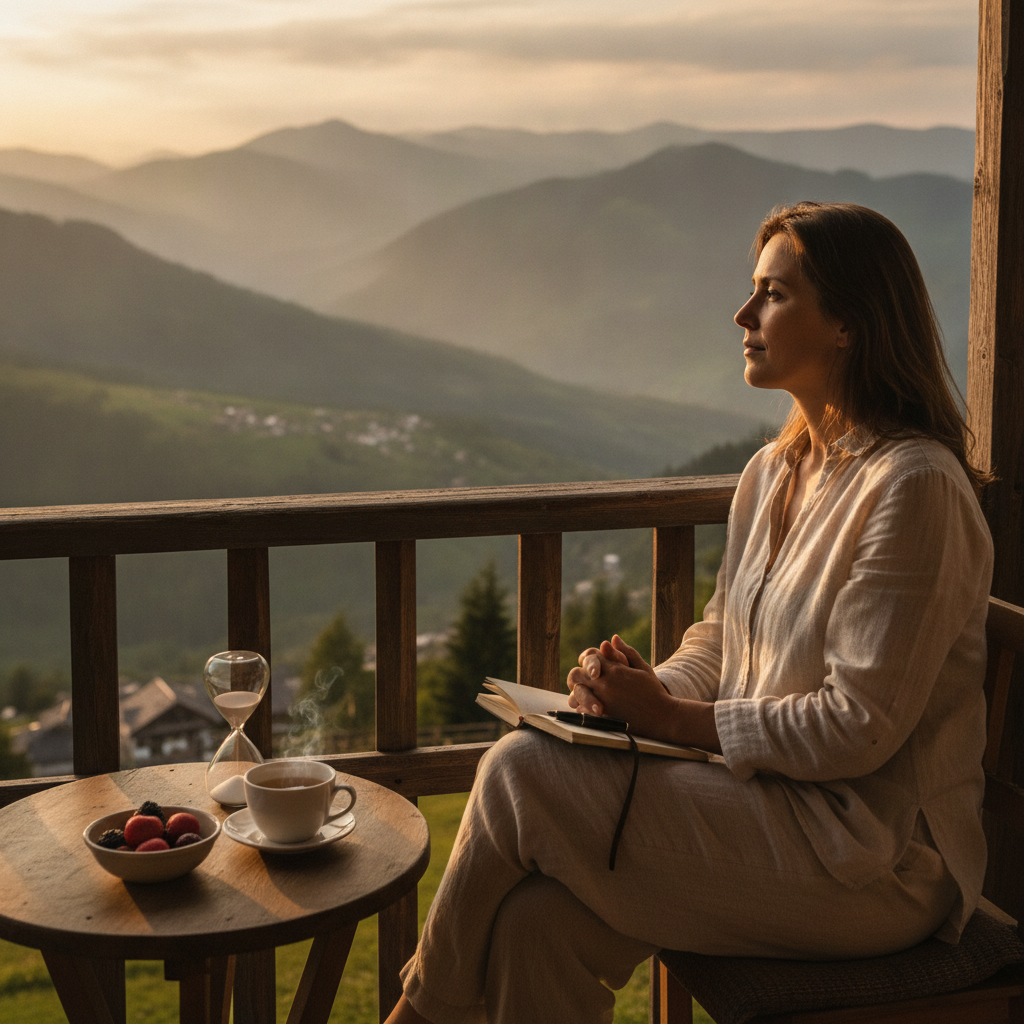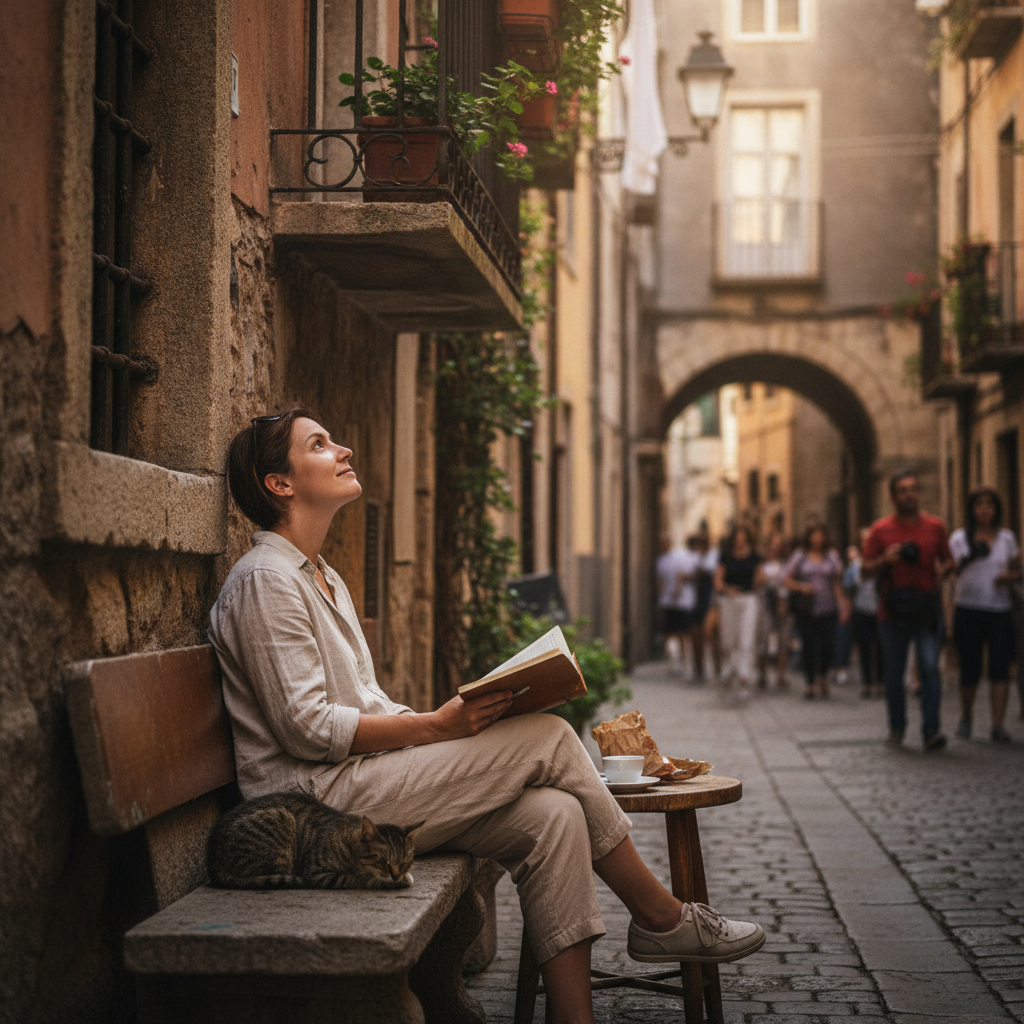
Most travel memories blur together faster than travelers expect. The fountain from the third morning, the cathedral from the second afternoon, the market from the first evening — within weeks, these images collapse into a single composite impression of a city visited rather than a place genuinely known. The itinerary that covered the most ground often leaves the least behind, not because the experiences weren't real, but because the mind requires repetition, familiarity, and a sense of belonging to form memories that actually hold.
What Repetition Does to a Place
There is a concept in urban anthropology sometimes called *flânerie* — the practice of wandering a city's streets with deliberate, unhurried attention, observing its rhythms rather than consuming its highlights. The *flâneur* is not a tourist with a checklist but a witness to ordinary life: the way light falls on a particular corner at a particular hour, the sound a neighborhood makes when its residents are heading to work, the subtle social choreography of a local café at midmorning. These details are invisible to the traveler who arrives for two hours and leaves for the next attraction. They become visible only through repetition, through showing up at the same crossroads on different days and watching what changes and what stays the same. When a traveler spends three full days in a single neighborhood — whether that's Le Marais in Paris, Pigneto in Rome, or Karakoy in Istanbul — they begin to accumulate exactly this kind of layered awareness. The neighborhood stops being a backdrop and starts becoming a place with character, logic, and life.
The practical consequence of this shift is more significant than it might first appear. When movement slows, sensory attention sharpens. A traveler who eats breakfast at the same corner café twice in three days will notice which locals return, how the staff's behavior changes depending on the hour, whether the music shifts from morning to afternoon. A traveler who crosses the same market square each day begins to understand its social geometry — who sells where, which vendors know each other, which corners fill with different people at different times. This accumulated knowledge becomes the raw material of genuine memory, the kind that doesn't fade into a vague impressionistic haze by the time the return flight lands.
The Problem With Comprehensive Itineraries
The appeal of the comprehensive city tour is understandable. Traveling is expensive, time is limited, and the anxiety of missing something significant is real. But the itinerary that attempts to cover an entire city in five days — a different district every morning, a major museum every afternoon, a highly rated restaurant each evening — produces a particular kind of exhaustion that travelers rarely anticipate. It's not physical fatigue so much as perceptual saturation, the cognitive state that arrives when too much new information arrives too quickly for any of it to settle. Neuroscientists who study memory formation describe how the brain encodes experience more deeply when it has time to process stimuli in relationship to previous encounters — when a new detail connects to something already observed, already felt, already partially understood.
A neighborhood-focused approach works with this tendency rather than against it. The second morning in Pigneto carries meaning that the first morning couldn't have, because the traveler arrives already knowing which bar makes the best espresso, already recognizing the bookshop owner who opens late, already possessing a small internal map that makes each new discovery feel like a genuine addition rather than an isolated data point. This is the difference between accumulation and immersion — and it is immersion that generates the memories travelers describe years later when someone asks about a place they truly loved.
Making the Most of Focused Time
Choosing the right neighborhood matters, and it rewards some advance thought. The ideal area for a three-day stay combines genuine local life with enough variety to sustain daily exploration — a mix of residential streets, at least one market or food hub, a scattering of small businesses, and some connection to the city's broader cultural identity. Karakoy in Istanbul, for instance, offers converted warehouses, independent galleries, a working waterfront, and streets that shift from fashionable to workaday within a single block. Kreuzberg in Berlin carries decades of subculture and immigrant community history visible in its murals, its döner stands, its record shops, and its parks. Neighborhoods like these reward patience because they contain genuine depth, not just curated tourist appeal.
The logistics of slowing down are simpler than they seem. Choosing accommodation within or immediately adjacent to the chosen neighborhood removes transit time from the equation and allows for the kind of spontaneous re-entry — an afternoon wander, an evening return to a restaurant that looked interesting at noon — that is impossible when staying on the other side of the city. Apps like Komoot or AllTrails can help map walking routes that stay within a defined area while covering ground systematically. Keeping a small written or voice-recorded log at the end of each day, even just a few sentences, dramatically improves the clarity of what the traveler recalls months later — the specific detail, the unexpected encounter, the image that would otherwise dissolve into generality.
It's worth pausing on what this kind of travel actually asks of you. It asks for a tolerance of incompleteness, an acceptance that the famous museum across the city will not be visited this trip, that the celebrated viewpoint will be skipped. What it offers in return is something harder to market but easier to carry home: the experience of having briefly, genuinely belonged somewhere. Of having been recognized by a café owner, of knowing which street is quietest in the evening, of understanding a small piece of a city's actual texture rather than its tourist-facing surface.
Travel memory, it turns out, is less about what was seen and more about how deeply anything was felt. The traveler who wanders one neighborhood for three days and learns its moods, its rhythms, and its small daily dramas returns home with something the comprehensive itinerary rarely produces — not a list of landmarks, but the memory of a place that felt, for a few days, briefly like theirs.