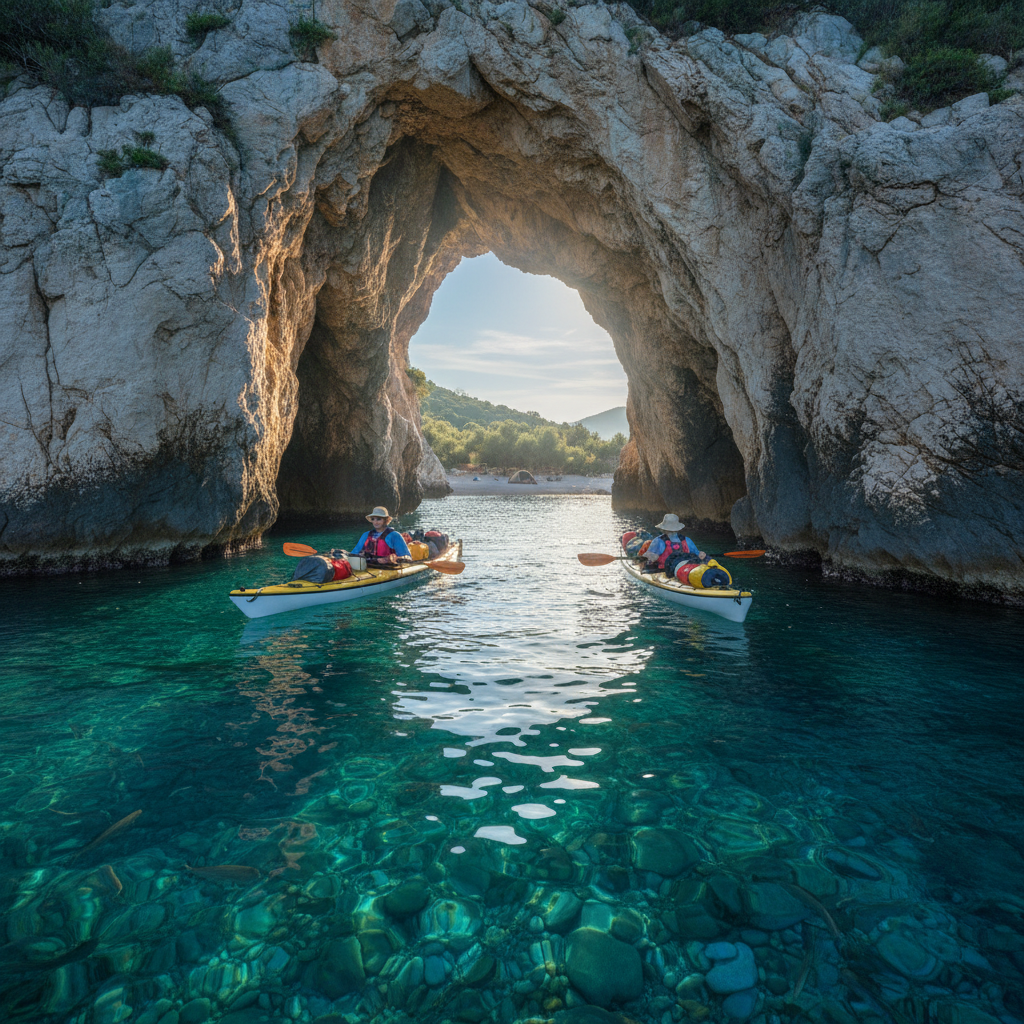
The Montenegrin coastline holds one of the Adriatic's most rewarding paddling routes, threading past limestone cliffs, hidden coves, and sea caves that most visitors only glimpse from a tour boat. Planning it independently takes more groundwork than booking a guided day trip, but the payoff — moving at your own pace, camping where you choose, and spending quiet mornings inside caves that tour groups reach only briefly — is worth the preparation. With the right logistics in place, this kind of trip is genuinely accessible to paddlers with solid flatwater experience and a methodical approach to planning.
Understanding the Coastline Before You Commit to a Route
Montenegro's coast runs roughly 300 kilometers, but the most compelling sea cave paddling concentrates around the Bay of Kotor and the stretch south toward Petrovac. The Bay of Kotor is unusual — a drowned river canyon that creates sheltered, almost fjord-like conditions ideal for kayaking. The outer coast near Sveti Stefan and the Budva Riviera offers more exposed paddling with larger caves, though wind and swell patterns demand more caution. Spend real time studying nautical charts alongside satellite imagery through tools like Google Earth before settling on a route. Understanding what each section actually looks like at water level changes your planning significantly.
Sourcing a Kayak Without Shipping One Across Europe
Bringing your own sea kayak to Montenegro is rarely practical. The better approach is renting from a local outfitter and transitioning to self-supported mode from there. Several small operators in Kotor and Herceg Novi rent quality touring kayaks by the week, and some will negotiate multi-day rentals for independent paddlers who demonstrate experience. Confirm that the vessel is sea-worthy for open-water crossings, includes a skirt and basic safety gear, and that you're permitted to take it overnight. Get everything in writing. Cressi and similar watersports brands often have local distributors who rent quality equipment in the region.
Registering Your Trip and Understanding Local Maritime Rules
Independent sea kayaking in Montenegrin waters operates within a framework of maritime regulations that can catch unprepared visitors off guard. Montenegro requires that vessels — including kayaks — operating in its territorial waters are registered or accompanied by documentation proving seaworthiness. Camping on certain beaches requires permits, and some areas near the Old Town of Kotor fall within protected heritage zones with access restrictions. Contact the Montenegrin Maritime Administration before your trip date and check current regulations with the Harbour Master's office in Kotor. Rules shift periodically, and what applied the previous season may not apply now.
Planning Your Daily Stages Around Tide, Wind, and Cave Access
Sea caves along this coast are most accessible in calm morning windows before afternoon breezes pick up from the southwest. Building your daily paddling stages around this rhythm — early starts, cave exploration mid-morning, sheltered rest through early afternoon — protects both safety and the quality of the experience. Most caves are fully explorable only at lower tidal states, and several require swimming inside once the kayak can no longer fit. Apps like PredictWind and Windy provide reliable local forecasts, and cross-referencing two sources is worth the habit. Plan each stage at roughly 15 to 20 kilometers per day to leave room for exploration without exhausting yourself.
Managing Water, Food, and Overnight Camping Logistics
The Montenegrin coast has reliable fresh water sources in villages but almost none along remote cliff-section paddling routes. Carrying a quality filter like those made by Sawyer or Katadyn, combined with two large dry-bag bladders, gives you enough flexibility to extend between resupply points without anxiety. Food planning is simpler than on backcountry land routes — coastal towns appear regularly enough that a two-day food carry is usually sufficient. For camping, wild beaches exist but require judgment about permission and privacy. Established campsites near Ada Bojana and around Buljarica Beach offer organized options with basic facilities that suit a paddling base camp well.
Navigating the Sea Caves Themselves Safely
Entering sea caves in a kayak involves specific hazards that have little to do with open-water paddling skill. Surge — the rhythmic push and pull of water inside confined rock spaces — can be powerful even on calm days, pinning boats against walls or washing paddlers unexpectedly off course. Always scout a cave entrance from a stable position before committing. Bring a quality waterproof headlamp, tie it to your PFD, and never enter a cave system alone without a clear exit plan. The most dramatic caves in Montenegro, including those along the cliffs near Lustica Peninsula, reward patience and careful timing rather than aggressive entry.
Communicating Your Plan and Staying Reachable
Self-supported paddling without any communication plan creates unnecessary risk. Before departure, file a float plan — a written document listing your route, daily stages, and emergency contacts — with someone you trust onshore. Carry a VHF marine radio tuned to Channel 16, the international distress frequency, and consider renting or purchasing a personal locator beacon for the duration of the trip. Montenegro has reliable cellular coverage in most coastal towns but patchy to nonexistent signal along exposed cliff sections. A waterproof phone case and a backup battery are basic equipment, but they don't replace dedicated marine safety communication tools for multi-day open water travel.
Planning a self-supported kayaking trip through Montenegro's sea caves demands genuine preparation, but it doesn't require specialized expertise beyond solid paddling fundamentals and careful logistical thinking. The coast rewards independent travelers who do the groundwork — understanding the maritime rules, reading the conditions, moving at a pace that matches the environment. What you get in return is a stretch of the Adriatic almost entirely on your own terms, where the caves, the light, and the silence between limestone walls belong to no tour schedule but your own.