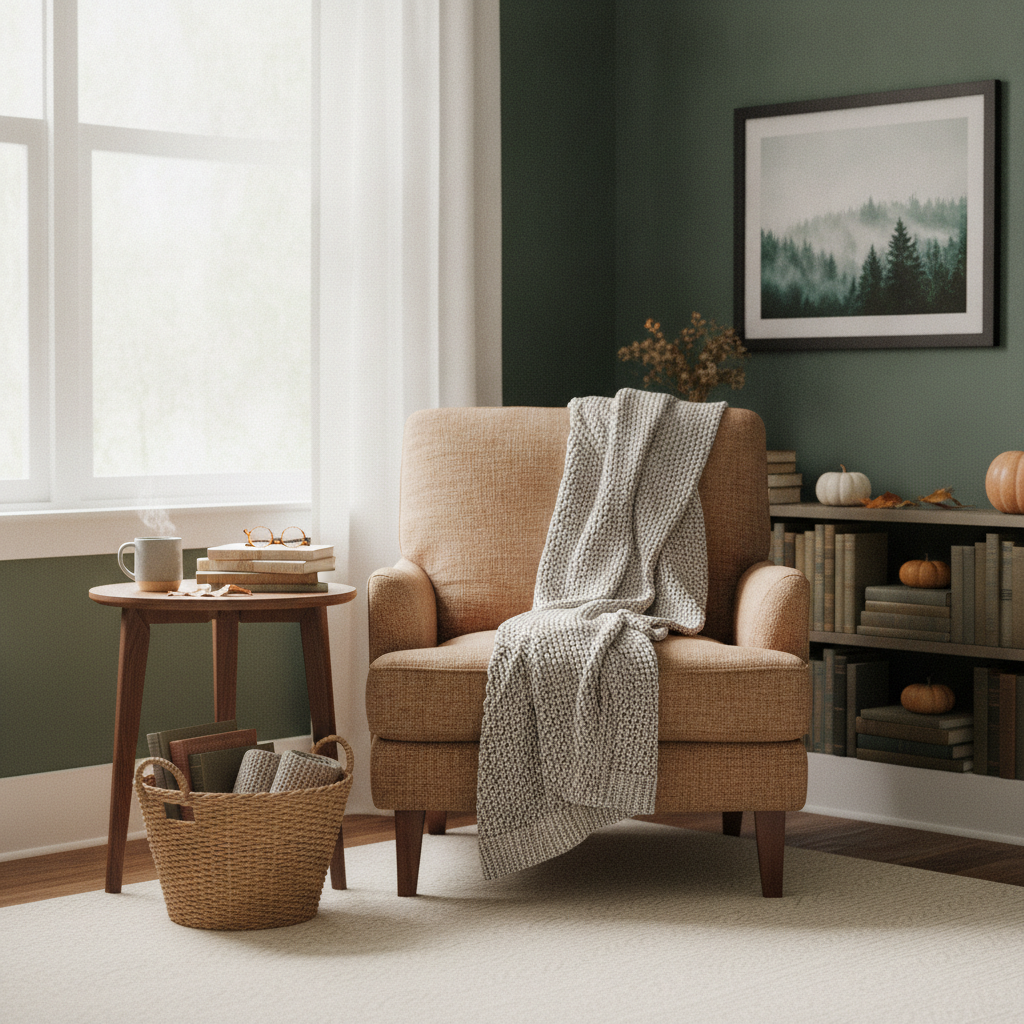
There is something quietly powerful about a corner of a room that knows what it's for. Not every space in a home carries intention — most accumulate purpose by accident, shaped by furniture placement and convenience rather than deliberate design. But when you carve out even a small area and commit it entirely to reading, something shifts in how your evenings unfold, and more importantly, in how reliably you find yourself returning to that space night after night.
The Psychology Behind a Dedicated Reading Space
Environments shape behavior in ways that go far beyond aesthetics. When your body and mind associate a specific corner with a specific activity — the stillness of reading, the pleasure of turning pages, the unhurried quality of a well-chosen hour — that association becomes self-reinforcing over time. Arriving in that spot begins to feel like an invitation rather than a decision. You stop negotiating with yourself about whether to read tonight, because the space itself quietly answers that question before you've even sat down. This is one of the more underappreciated mechanisms behind lasting reading habits: the room does part of the work for you.
Why Ordinary Seating Rarely Supports the Habit
Reading from the couch where you also watch television, or at the kitchen table where you sort through mail, means your environment is sending mixed signals about what this time is for. Your attention fractures before you've opened a book. A dedicated reading corner removes that ambiguity entirely — it becomes a single-purpose zone that your nervous system learns to respond to with a particular quality of calm and focus, which is exactly what sustained reading requires.
Choosing the Right Corner for the Season
The seasonal dimension of this practice is what makes it feel alive rather than static. A reading corner that shifts with the season — in small, considered ways — keeps the ritual from going stale and gives each quarter of the year its own character. In winter, you might anchor your corner near a heat source, draping a weighted blanket across the arm of a chair and stacking books that reward slow, immersive reading. In spring and early summer, moving closer to a window that catches afternoon light, adding a lighter throw, and rotating in titles with more expansive themes can refresh the space without requiring any significant effort or expense.
Small Adjustments With Outsized Effect
You don't need to redecorate to make a seasonal reading corner feel intentional. Swapping a single scented candle — something warm and woody in autumn, something cleaner and lighter come spring — changes the sensory atmosphere of the corner noticeably. Rotating the books on your small side table to reflect what you want to be reading in the coming weeks adds a visual cue that this corner is current, considered, and waiting for you specifically. These small acts of curation send a signal to your brain that the space has been tended, and tended spaces draw you back.
Building the Corner Without Overthinking the Setup
The most effective reading corners aren't elaborate. What they share is consistency: a reliable chair or cushioned seat, a light source positioned for reading rather than general room illumination, and a surface within arm's reach for a drink, a bookmark, and whatever book is currently in progress. A small adjustable lamp from a brand like BenQ — which makes reading-specific lighting designed to reduce eye strain — can meaningfully improve comfort during longer evening sessions. The goal is to make the corner feel complete enough that nothing is missing when you sit down, because friction, even minor friction like getting up to retrieve something, interrupts momentum and chips away at the habit over time.
Using Apps to Support What the Corner Starts
A reading corner creates the physical conditions for the habit, but a few well-chosen tools can reinforce the commitment around it. Goodreads is useful for keeping a running list of what you want to read each season, so your side table never sits empty while you try to remember a title you heard about months ago. Libby, which connects directly to your local library's digital catalog, means you can arrive at your corner with your next book already waiting — no errand required. StoryGraph goes further by tracking your reading pace and suggesting books that match the mood or genre you've been gravitating toward, which is particularly useful when you want your seasonal corner to have a coherent atmosphere rather than a random pile of titles.
Timing Your Corner Ritual for Maximum Return
The hour at which you begin your reading session matters more than most people expect. Evening reading works best when it follows a clear transition — something that signals the productive or social part of your day has ended and the quieter, more personal part has begun. A short walk, a cup of tea made with some care, or even changing into comfortable clothing can serve as that transition. Aiming to reach your reading corner between 8 and 9 in the evening, before the pull of a phone screen becomes strongest, tends to yield longer and more satisfying sessions. The corner becomes part of a sequence your body recognizes, which is far more sustainable than relying on willpower alone.
Seasonal Reading Lists as a Planning Tool
Building a loose reading list at the start of each season — four to eight titles that feel appropriate for that time of year — gives your corner a sense of purpose and direction. Autumn might call for longer fiction, essay collections, or books that reward rereading. Summer evenings near an open window might invite lighter nonfiction or travel writing. You aren't committing rigidly to a schedule; you're giving yourself a curated set of options so the decision of what to read next is already half-made before you sit down. Kindle's seasonal sale events, which tend to run in early spring and again in late autumn, are worth keeping in mind as a low-cost way to fill out a digital reading list before the season begins.
What Consistency Actually Looks Like Over Time
A dedicated seasonal reading corner doesn't produce perfect evenings. Some nights you'll read for forty minutes; others you'll manage ten before your eyes close. But the consistency that matters isn't about duration — it's about return. A well-built reading corner becomes a place you come back to, reliably, because the space itself has become associated with something your evenings feel better for including. Over weeks and months, the corner does what no app or habit tracker can entirely replicate: it makes reading feel like belonging somewhere, rather than accomplishing something.
That sense of belonging to a place — a small, specific, quietly beautiful corner of your own home — is perhaps the most honest explanation for why some people read every evening without effort while others struggle to finish a book in a year. The corner doesn't just hold a chair and a lamp. It holds a standing invitation, renewed each season, to return to the part of yourself that still finds genuine pleasure in the unhurried company of a good book.