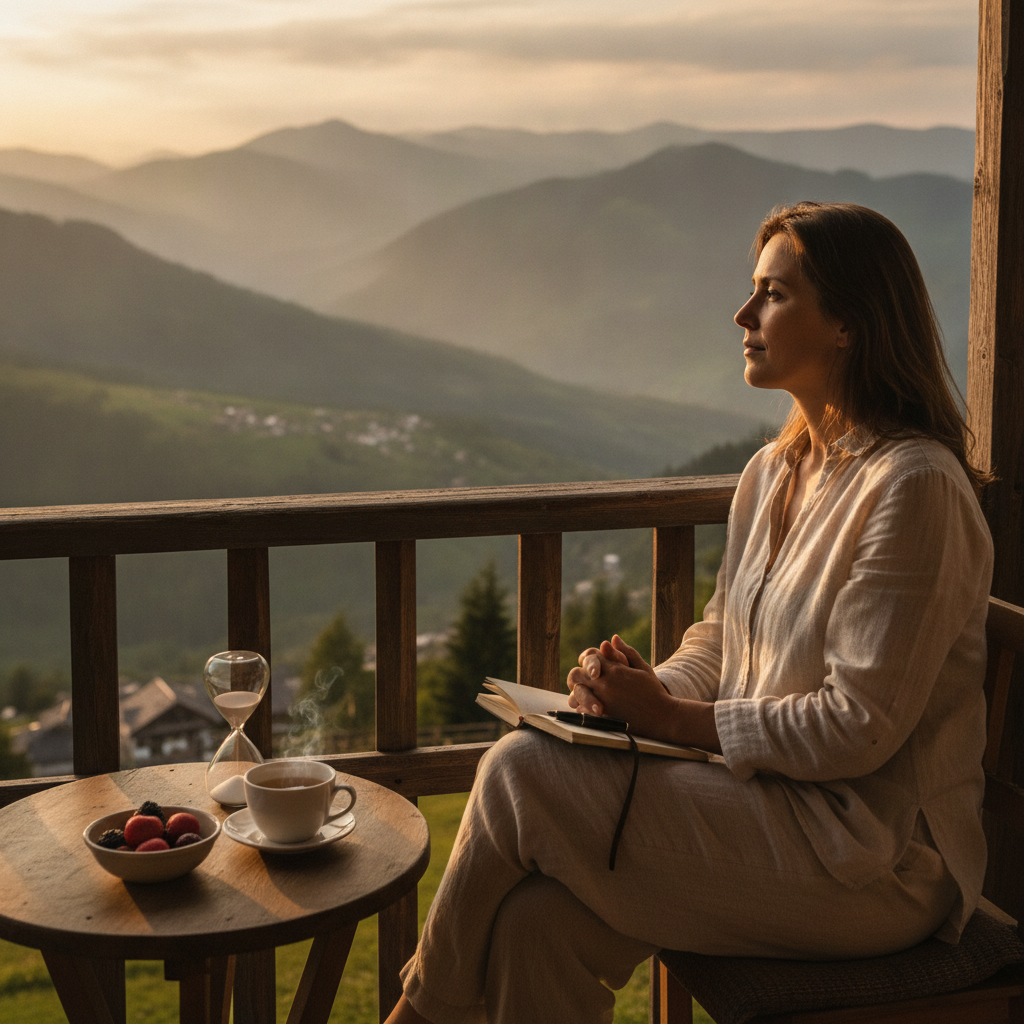
Most people know their neighborhood far less than they assume. They know the fastest route to the grocery store, the parking situation near the pharmacy, the traffic pattern on the main road on Saturday mornings — but the actual texture of the place where they live, the rhythm of its streets, the details that accumulate into character, remains largely unexamined. The errand loop, which has quietly become the default structure of the modern weekend, is efficient by design. It covers ground without inviting attention. It resolves tasks without generating curiosity. And over time, it trains a person to move through their own surroundings as though passing through them, rather than belonging to them.
When Efficiency Replaces Presence
The errand loop is not a bad thing in itself. Completing necessary tasks is, obviously, part of adult life, and the coordination required to move between a hardware store, a farmers' market, and a dry cleaner in a single trip represents a real form of practical intelligence. But when that loop becomes the primary way a person relates to their local environment — when it is the default structure around which all available weekend time organizes itself — something quieter and harder to name begins to erode. The neighborhood becomes a backdrop rather than a place. Familiar streets register as routes rather than locations. The sense of actually living somewhere, rather than operating out of it, gradually thins. Research into urban belonging consistently points to a single underappreciated variable: how much time people spend in their local environment without a task governing their attention.
The Concept of Strolling as Cultural Practice
Many cultures have developed formal traditions around purposeless walking as a civic and personal practice. The Italian *passeggiata* — an evening stroll taken not to reach any destination but to be present in shared public space — has been part of daily life in cities like Bologna and Palermo for centuries. The French concept of the *flâneur*, famously explored in nineteenth-century Paris, describes a person who wanders through urban space with an unhurried, observational eye, absorbing the life of the street without participating in it as a consumer or commuter. Both traditions recognize something that the errand loop structurally prevents: that a place reveals itself slowly, to those who are not in a hurry to leave it. A deliberately chosen neighborhood walk operates on the same principle, even if it lacks the cultural formality of those traditions.
What a Walk Without Agenda Actually Reveals
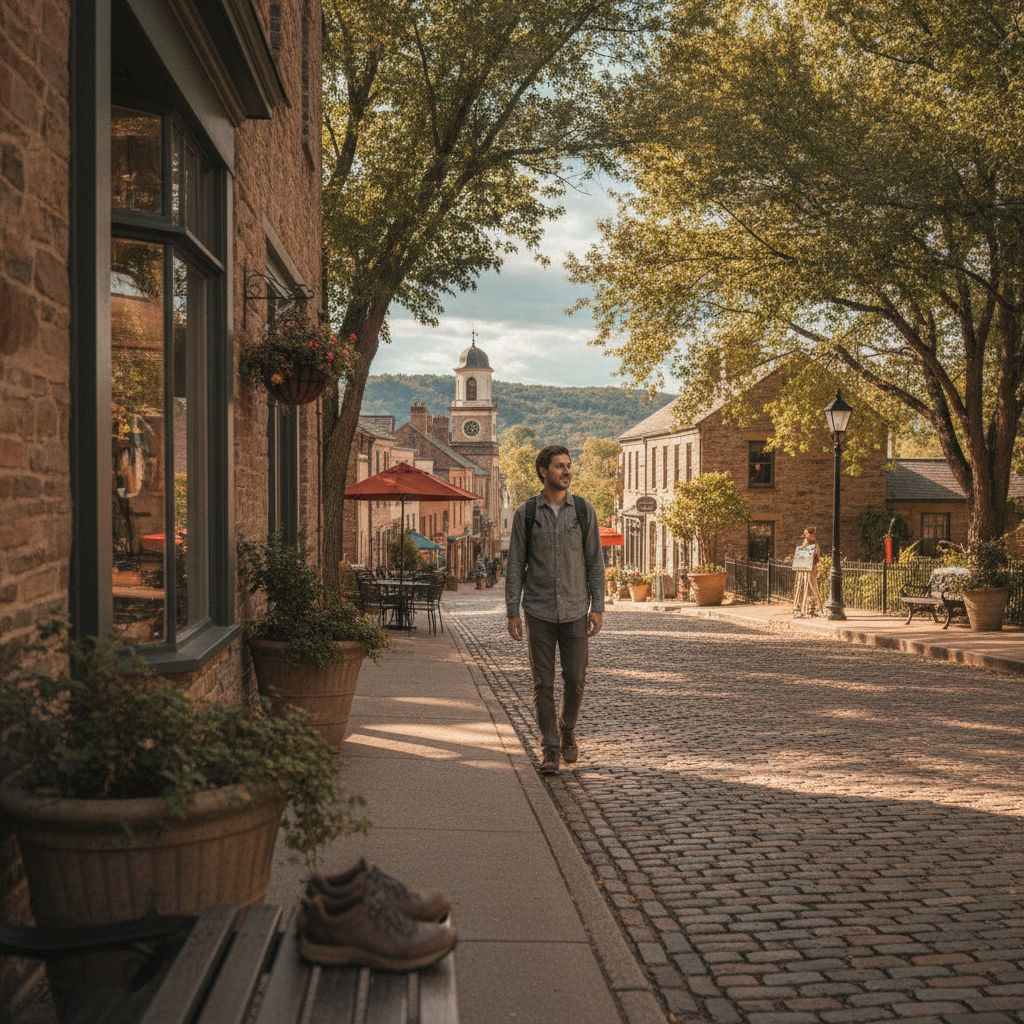
Choosing one walk — not a run, not a commute, not a route from one errand stop to another — and taking it without a destination or a productivity goal changes what becomes visible. A block that has been driven past a hundred times reveals a painted gate, a community noticeboard, a pocket garden pressed between two buildings. The regulars at the corner café become recognizable. The sound pattern of a particular street at ten in the morning on a Saturday registers differently from the same street at seven in the evening on a Tuesday. These are not dramatic revelations, and they do not need to be. What accumulates through repeated, unhurried observation is a layered sense of familiarity that is qualitatively different from the thin recognition produced by routine task-completion. Neighborhoods like Fitzroy in Melbourne or Crown Heights in Brooklyn are not interesting because they contain interesting things — they become interesting to the people who actually inhabit them slowly.
The Relationship Between Walking and Belonging
Belonging to a place is not the same as living in it. A person can occupy an address for years and feel no particular attachment to the surrounding streets, no sense that the neighborhood is theirs in any meaningful way. This detachment tends to grow in proportion to how task-oriented all movement through the area has become. Walking without agenda restores a different kind of relationship to local space — one that is closer to the curiosity a traveler brings to an unfamiliar city. It is worth noticing that the qualities most people seek when they travel — the wish to be surprised, to encounter something unexpected, to feel genuinely present in a place — are available within a few blocks of where they sleep every night. The walk does not create those qualities; it simply removes the errand structure that prevents them from being noticed.
How to Start Without Overthinking It
The practical barrier here is smaller than it appears. Replacing one weekend errand run — not all of them, just one — with a forty-five-minute walk in a direction that feels slightly unfamiliar is enough to begin. This is not a program or a system. It does not require a particular app, though tools like Komoot or AllTrails can be useful for finding quieter pedestrian routes through areas that are usually experienced by car. The only genuine requirement is resisting the pull toward efficiency, the instinct to combine the walk with an errand or to time it competitively. The walk works because it is useless in the conventional sense. It produces nothing except presence, and presence is what gradually rebuilds the sense that the place where a person lives is actually theirs.
So consider this a quiet reframe rather than a challenge. The weekend will still hold its errands, its obligations, its logistics. But if one hour of it is given over to a walk taken for no reason other than to see where you actually live — not the version glimpsed through a car window or a to-do list, but the street-level, sensory, unhurried version — the neighborhood begins to give something back. Over weeks, the accumulation of small observations builds into something that resembles genuine attachment: a feeling of being known by, and knowing, the particular corner of the world you happen to call home. It is a quieter ambition than most weekend plans allow, and for that reason, considerably harder to forget.