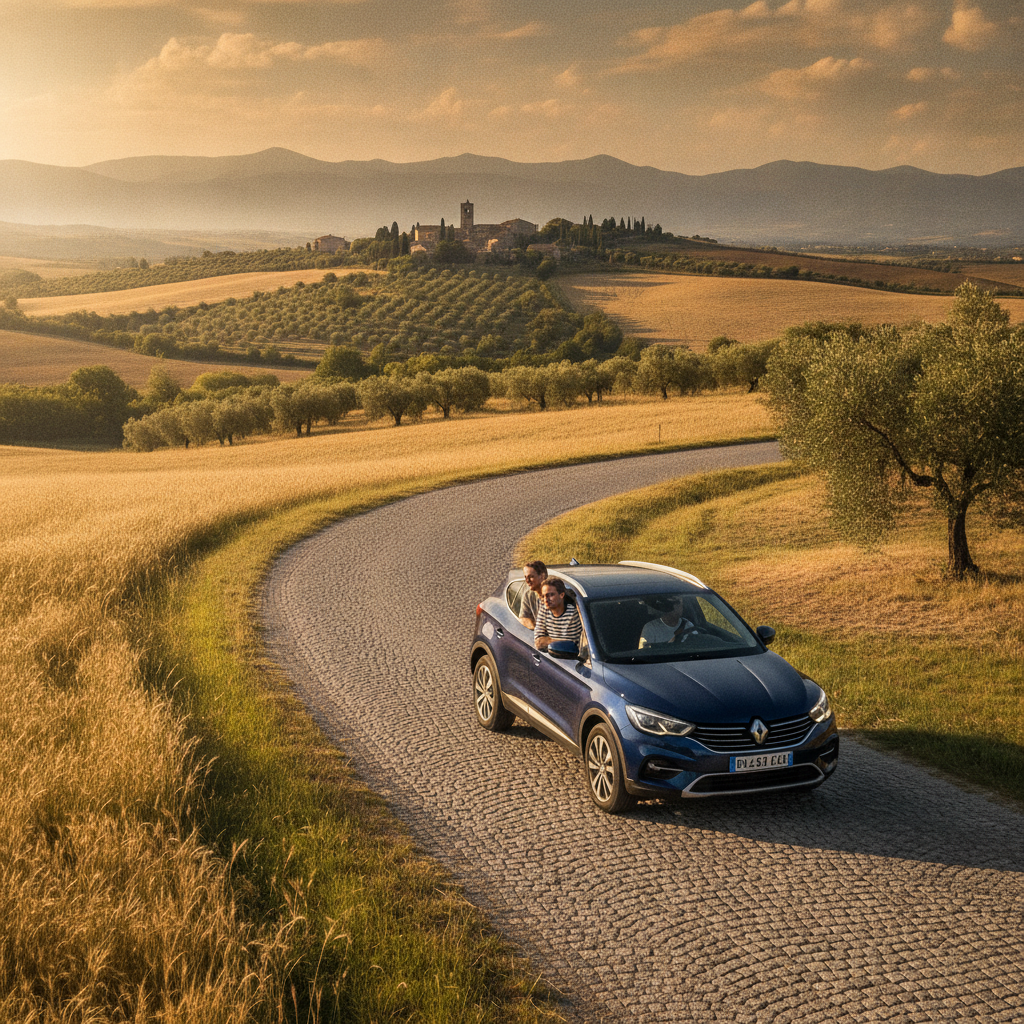
Most travelers spend their final days in the cities where their flights depart, retreating into the familiar comfort of known streets and hotel lobbies rather than pushing further into the places that don't appear on itinerary templates. It's a reasonable instinct — tiredness accumulates, packing looms, and the logistics of moving feel heavier near the end of a journey. But those last three days, given a set of car keys and a modest regional map, can become the most vivid stretch of an entire trip.
The Geography That Public Transit Doesn't Reach
There is a version of almost every country that exists just beyond the reach of train stations and bus routes — a version that moves at a different pace, follows older rhythms, and expects nothing particular from visitors. In southern France, it's the limestone villages of the Luberon that sit silent between lavender fields, an hour from Avignon by car and effectively unreachable without one. In rural Japan, it's the narrow roads threading between cedar forests toward shrine complexes that no shinkansen serves. Public transit is extraordinary for connecting major points, but the connective tissue between those points — the hamlets, the unmarked overlooks, the roadside markets — belongs to the driver. Renting a car doesn't mean abandoning the spirit of slow travel; it means extending its reach into terrain that has been quietly waiting.
Why the Final Days Are the Right Moment
The timing matters more than it might seem. Early in a trip, many travelers are still finding their footing — learning local customs, adjusting to the pace, calibrating their expectations. By the final few days, that adjustment is complete. A traveler who spent two weeks in Portugal, say, moving between Lisbon and Porto by Intercidades rail, has already developed a feel for the country's temperament: the particular quality of afternoon light, the way lunch extends into conversation, the unhurried cadence of small exchanges. Arriving in the Alentejo by rental car at that stage of a trip means arriving with context. The *aldeia* — the small village — doesn't need explaining. Its stone streets and cork oak surroundings make sense in a way they might not have on day one.
There's also a practical logic to this arrangement. Picking up a car in a major city and returning it at the departure airport is a route most rental companies accommodate naturally, often without a significant drop-off surcharge if the distances are regional. Companies like Europcar and Sixt operate desks at most international airports, and booking three or four days rather than a full week often hits a pricing window that's more favorable than extended rentals. The car becomes a closing chapter, not a logistical burden.
What the Countryside Offers That Cities Cannot
There is a concept in rural Greek culture called *filoxenia* — a hospitality so deep it is considered a moral obligation, an almost sacred duty to welcome the stranger. It's the kind of welcome that doesn't scale to tourist crowds and so tends to disappear from popular destinations. In the villages of the Peloponnese or the back roads of Epirus, it survives. A traveler who stops at a kafeneion in a village of four hundred people, having arrived by car on a road that sees little outside traffic, is not one visitor among thousands. The interaction carries a different quality. The same phenomenon appears in rural Tuscany, in the lesser-visited valleys of Slovenia, in the farming towns of Oaxaca's sierra. The countryside reserves its most genuine expressions for those who make the effort of arrival.
Beyond hospitality, the countryside offers something harder to name but equally real — the experience of a place operating entirely on its own terms. A market in a Provençal town that exists to serve local farmers, not to charm tourists, sells different things at different prices and carries a different atmosphere entirely. A roadside shrine in rural Croatia means something specific to the community that built it, and understanding that specificity — even partially, even intuitively — is the kind of travel that stays with a person long after the photographs have faded into a phone archive.
Planning Three Days Without Over-Structuring Them
The greatest risk of adding a car rental to the end of a trip is filling the freedom it provides with a schedule dense enough to defeat the purpose. Three days by car should carry no more than two or three anchor destinations — a village you've identified from research, a regional food market with known operating days, a coastal road you want to drive at the right hour. The rest should remain open. Apps like Maps.me work well offline for rural roads where cellular service drops, and they carry enough detail to surface small settlements without requiring a signal. A paper regional road map, still sold at most European gas stations and ferry terminals, offers something digital tools don't: the visual sense of what lies between the points, the unmarked roads that might be worth following simply because they run toward interesting terrain.
Accommodation in the countryside often means an *agriturismo* in Italy, a *casa rural* in Spain, or a farm guesthouse in Ireland — properties that include breakfast, sometimes dinner, and almost always a host willing to describe what the surrounding area holds. These aren't places that need booking platforms to fill their rooms; a phone call or a direct email inquiry, even sent with the help of a translation app, often produces a warmer exchange than any automated confirmation.
By the time you return the car at the airport and pass through the familiar architecture of departure halls, the trip will have ended differently than it began — not with the diminishing returns of an extra day in a capital city, but with the images that tend to persist: a road that narrowed into a single lane through olive groves, a conversation conducted mostly through gesture and laughter, the particular silence of a hilltop town at midday when the whole place retreats indoors and the light falls at an angle that belongs only to that hour and that place. Most travelers never quite reach that territory. Three days and a rental car are usually all that separates them from it.