Most kitchens are set up by default, not by design. Appliances land where the outlet is. Pots end up in the cabinet that had space. Spices get tucked wherever they fit after the last grocery run. Over time, this accumulated randomness makes even simple cooking feel like a small obstacle course — and that friction, more than any lack of skill or time, is often what quietly kills the enjoyment of cooking at home.
The good news is that you don't need a renovation to fix this. Rethinking your kitchen layout around the meals you actually make — not the meals you imagine making someday — can shift the whole experience. When the tools you reach for most are already where your hand expects them, cooking stops feeling like effort and starts feeling like flow.
Map Out What You Actually Cook Each Week
Before moving a single item, spend a few minutes writing down the meals you genuinely make on a regular basis. Not aspirational meals, not the elaborate dishes you cook twice a year — the real ones. Tuesday pasta. Weekend eggs. The soup you make every time the weather turns. This list becomes your blueprint. Once you know what you actually cook, you can organize your kitchen to serve those specific meals rather than a theoretical version of yourself who uses the mandoline slicer weekly.
Put Your Most-Used Tools Within Arm's Reach of the Stove
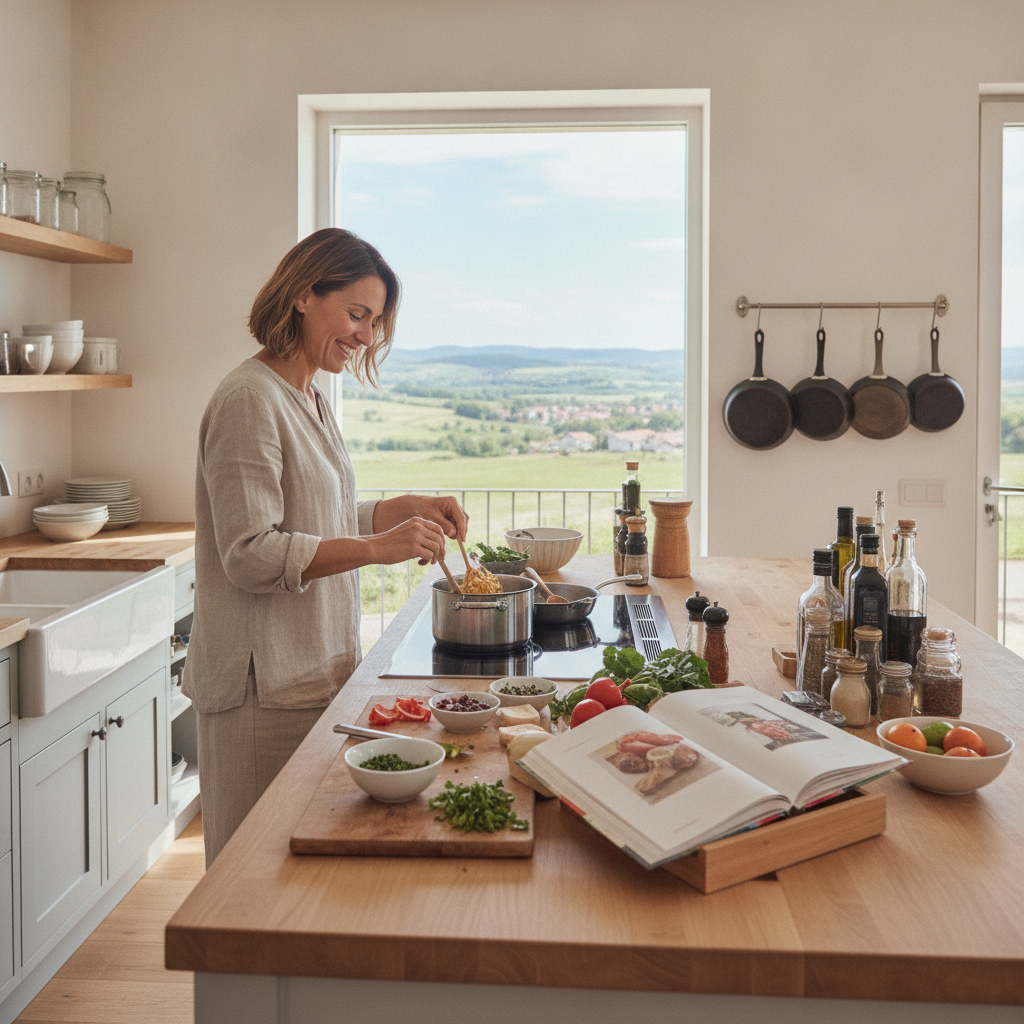
The stove is the center of most home cooking, and everything you reach for repeatedly should live within a single step of it. This means your most-used pan — probably a 10-inch skillet — should be on a hook or in the closest drawer, not buried beneath three others. A good wooden spoon, a spatula, and a ladle can live in a crock right on the counter. Brands like OXO make lightweight utensil sets that work well in open storage. Proximity removes the pause between deciding to cook and actually starting.
Reorganize Your Pantry Around Cooking Frequency, Not Category
Standard pantry organization groups things by type — canned goods together, grains together, baking supplies together. That logic makes sense in a grocery store, but in your kitchen, it often means digging past items you rarely use to reach the ones you need every day. Try reorganizing by how often something gets used. The olive oil, the pasta, the canned tomatoes, the rice — these belong at eye level and front of shelf. The specialty flours and holiday spices can move to the back or a higher shelf without any real cost to your cooking routine.
Create a Dedicated Prep Zone That Stays Clear
One of the biggest reasons cooking loses its appeal is counter clutter. When you have to move the mail, the fruit bowl, and the coffee maker just to find space to chop an onion, the whole task starts to feel like a burden before it begins. Designate one area of your counter — even a narrow stretch — as a prep-only zone and commit to keeping it clear. A sturdy cutting board like one from Boos Block can live there permanently. That single clear surface acts as a visual cue that cooking is easy to start.
Store Spices Where You Season, Not Where They Fit
Spices stored across the kitchen from the stove create a constant back-and-forth that adds up over a meal. Ideally, your everyday spices — salt, pepper, garlic powder, cumin, whatever you reach for most — should be within arm's reach of where you actually cook. A small magnetic rack mounted near the stove, or a shallow drawer pull-out beside it, keeps things accessible without taking up prime counter space. Reserve a separate shelf for the less-used spices, organized alphabetically if that helps you find things quickly without the daily grab-and-search routine.
Group Appliances by the Meals They Belong To
Rather than storing appliances based on size or where they fit in the cabinet, try grouping them by the cooking routines they support. If you make smoothies every morning, the Vitamix should live on the counter near the freezer, not in a cabinet across the kitchen. If you use a rice cooker several nights a week, it earns counter space near the stove. Appliances you use rarely — the deep fryer, the panini press — can go to a less convenient shelf or even a pantry closet. Let frequency, not habit, decide what gets prime real estate.
Match Your Refrigerator Organization to Your Weekly Habits
The same logic that applies to pantry shelves applies inside your refrigerator. Ingredients you use daily should be at eye level and easy to grab — not behind a week's worth of leftovers. If you cook a lot of stir-fry, keep your prepped vegetables in a clear container at the front of the middle shelf. If you batch-cook grains at the start of the week, give them a consistent, visible spot so they actually get used. Apps like Paprika can help you plan meals, but the physical organization of your fridge is what makes those plans easy to execute when you're standing there at six o'clock.
Let Go of the Tools You Keep Out of Obligation
Kitchens accumulate tools the way junk drawers accumulate batteries — slowly, without intention, until there's more in the way than in use. The electric can opener you never use, the specialty bakeware from a phase you moved on from, the gadgets that felt clever in the Williams Sonoma aisle but haven't been touched since — these take up physical space and mental space. Clearing them out makes room for the tools that actually serve your cooking life, and it makes the kitchen feel lighter to work in. Less visual noise means fewer small decisions every time you cook.
A kitchen that works for the meals you actually make is a kitchen you'll actually want to use. Small adjustments — moving the pan closer, clearing a stretch of counter, reshuffling the spice rack — add up to a cooking experience that feels natural rather than effortful. You don't need a dream kitchen to enjoy cooking more. You just need the one you have to stop working against you.