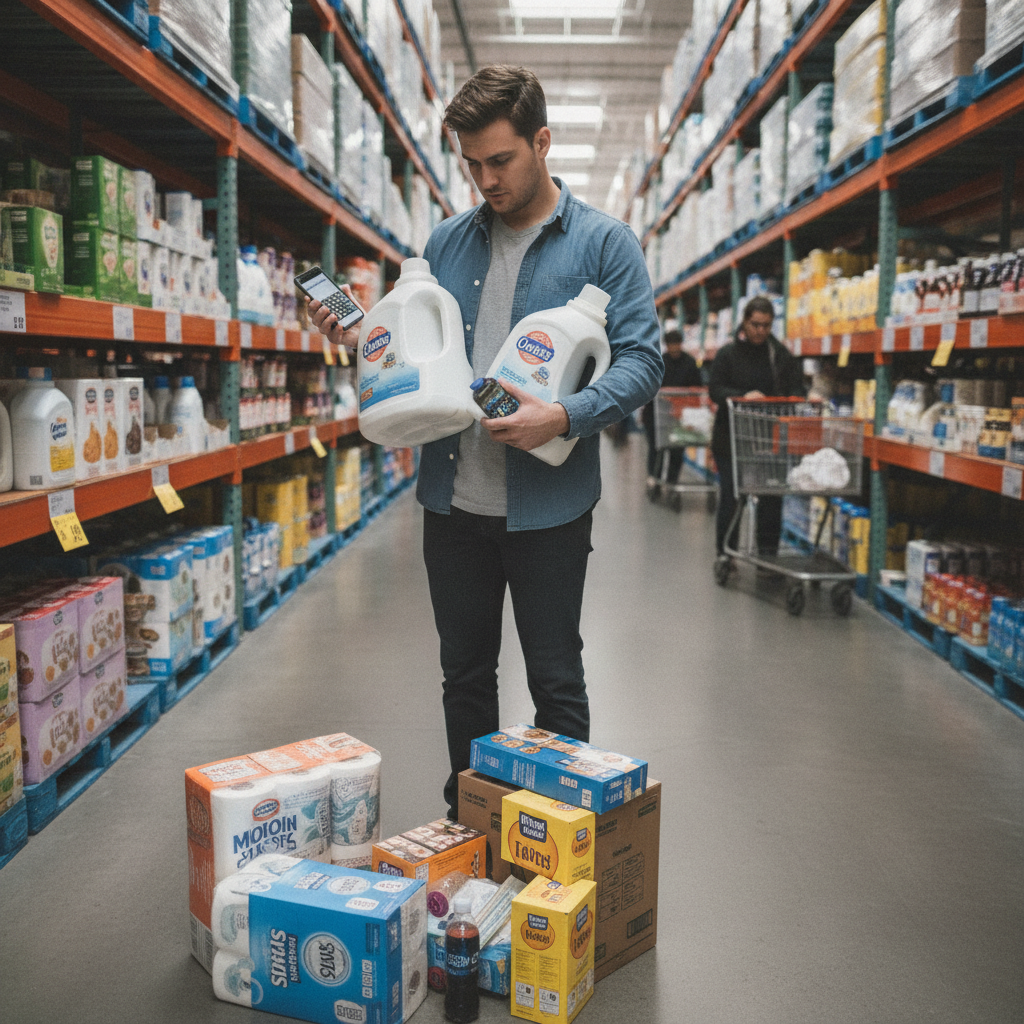
Warehouse stores are built around a compelling promise: buy more, spend less. Costco, Sam's Club, and BJ's Wholesale Club draw millions of shoppers with the idea that bulk purchasing automatically delivers savings. The reality is more complicated. Larger packages frequently carry a higher price per unit than their standard grocery store counterparts, and without doing the math on the spot, it's easy to leave the warehouse having spent more per ounce, per sheet, or per pill than you would have at a regular supermarket.
The fix isn't complicated, but it does require a small habit shift. Running a quick price-per-unit calculation before anything goes into the cart transforms a warehouse trip from a guessing game into a genuinely strategic shopping run.
What Does Price-Per-Unit Actually Mean?
Price-per-unit is simply the cost of one standard measure of a product — one ounce, one tablet, one sheet, one fluid ounce. You calculate it by dividing the total price by the total quantity. A 200-count bottle of ibuprofen priced at $14 costs seven cents per tablet. A 50-count bottle at $4.50 costs nine cents per tablet. The bigger package wins here — but that outcome isn't guaranteed, and assuming it is leads to overspending. The math takes about ten seconds and tells you exactly what you're actually paying.
How Do You Do the Calculation Without a Spreadsheet?
Your phone's calculator handles this in a single step. Divide the price by the number of units — ounces, count, pounds, whatever the package lists. Many warehouse stores now display a price-per-unit figure on the shelf tag, but those figures aren't always accurate or consistently formatted across product categories. It's worth verifying the store's posted unit price yourself, especially when comparing two differently sized packages of the same product. A quick manual check takes less time than walking back to return something.
Which Product Categories Catch Shoppers Most Off Guard?
Cleaning supplies, paper goods, and shelf-stable pantry items tend to be genuine bulk bargains at warehouse stores. Personal care products and name-brand cereals are where the math often flips. A warehouse-sized box of branded cereal can cost more per ounce than a regular-sized box during a grocery store sale. Over-the-counter medications vary widely — some are excellent value per dose, others are priced comparably to drugstore chains. Health and beauty items, in particular, reward a few seconds of calculation before you commit to a multi-year supply of something.
Does the Unit Price on the Shelf Tag Tell the Whole Story?
Not always. Warehouse store shelf tags sometimes use different base units than grocery store tags for the same product — one might show price per 100 sheets while another shows price per sheet, making direct comparison harder than it should be. When comparing a warehouse price to a regular store price you remember or have pulled up on your phone, make sure both figures use the same unit. Apps like Flipp aggregate weekly grocery circulars and can help you spot when a regular store's sale price undercuts the warehouse's everyday unit cost.
How Does Spoilage Factor Into Whether Bulk Actually Saves You Money?
Unit price calculations only reflect what you pay at the register. For perishable goods, what matters is the cost per unit you actually use before the product expires or goes bad. A massive container of Greek yogurt is only a good deal if your household finishes it before the use-by date. Warehouse stores like Costco have built strong reputations for fresh produce and bakery items, but those categories require honest self-assessment about consumption rates. When calculating whether bulk perishables make sense, factor in a realistic estimate of how much your household will use within the item's shelf life.
What Role Does Storage Space Play in the True Cost of Bulk Buying?
Storage isn't free, and it's worth treating it that way. Buying a year's supply of paper towels at a lower unit cost still represents money tied up in inventory sitting in your garage. For households in smaller homes or apartments, the practical calculus of bulk buying shifts considerably. The relevant question isn't just whether the unit price is lower — it's whether the savings justify the upfront cash outlay, the storage footprint, and the commitment to using a large quantity of something before it degrades or becomes obsolete. This is particularly relevant for technology accessories, batteries, and cleaning concentrates.
How Can You Build a Reliable Reference for Comparison Shopping?
Keeping a simple note on your phone with the regular-store unit prices of items you buy frequently gives you an instant benchmark at the warehouse. Note the price per ounce of your usual olive oil, the per-load cost of your laundry detergent, the per-count cost of vitamins. Update these occasionally when you shop your regular grocery store. With that reference in hand, a warehouse shopping trip becomes straightforward: check the warehouse unit price, compare it to your stored benchmark, and decide based on actual numbers rather than the general assumption that bigger always means cheaper.
When Is a Warehouse Membership Worth the Annual Fee?
The annual fee — typically somewhere between $65 and $130 depending on the tier and the club — is a fixed cost that needs to be recovered through actual savings to justify itself. If price-per-unit comparisons show you're genuinely saving on the items you regularly buy, that math can work in your favor fairly quickly. If the warehouse's unit prices only occasionally beat regular grocery prices, the membership fee may not pencil out. Tracking your verified savings over the first few months of a membership gives you real data to make that decision rather than relying on the general sense that you must be saving because the cart is large.
Warehouse stores can deliver meaningful savings, but only when you know what you're actually paying per unit and how that compares to alternatives. The bulk-buying model benefits from the assumption that shoppers won't do the math. Running simple price-per-unit calculations puts the advantage back where it belongs — with the shopper who came prepared.