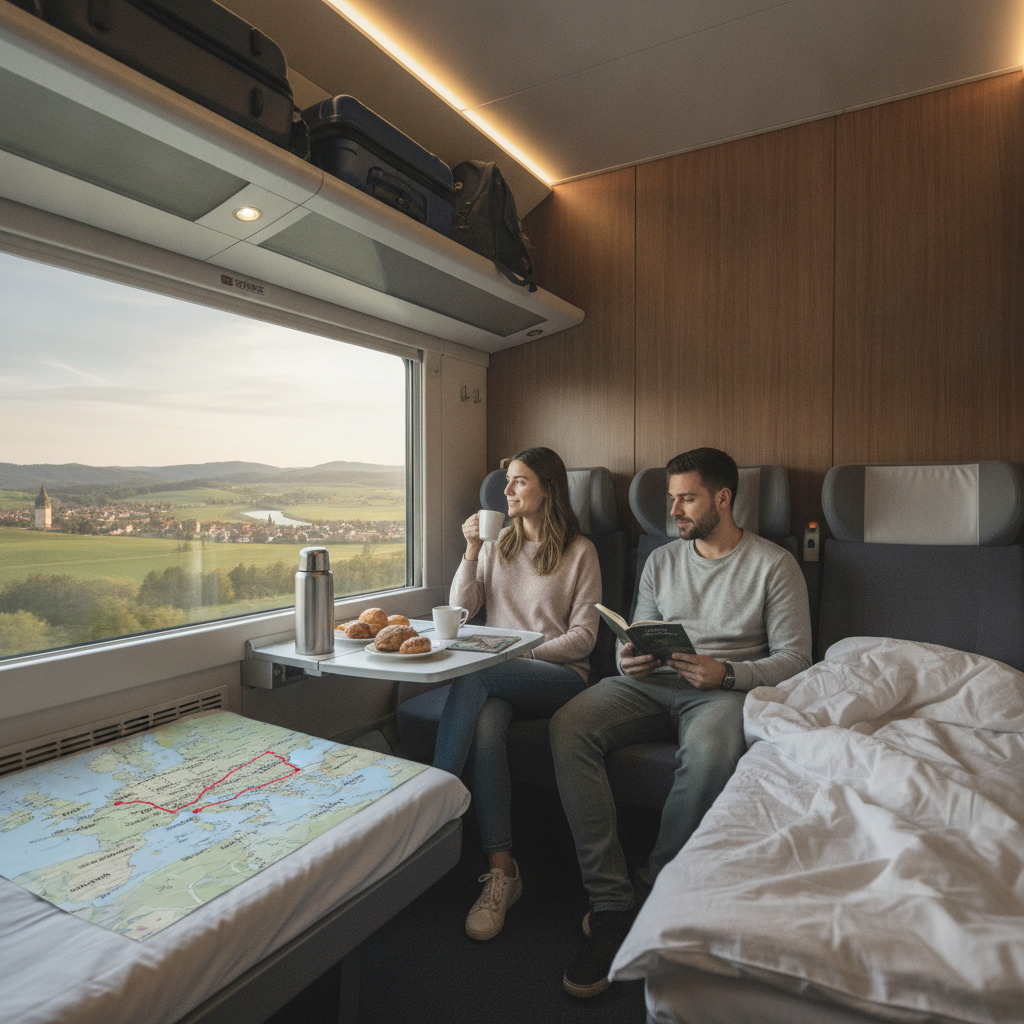
Overnight sleeper trains across Central Europe have made a quiet comeback, and for travelers who know how to use them, they solve two problems at once: you cover serious ground between cities, and you do it while you sleep, which means you wake up somewhere new without having spent a night's budget on accommodation. The network connecting Vienna, Budapest, Prague, Warsaw, Zurich, and beyond has expanded noticeably in recent years, with operators like the Nightjet service run by Austrian Federal Railways leading the charge. If you've been watching train travel regain momentum across the continent, this is one of the most practical tools available.
Book Your Berth Early, Especially for Weekend Departures
Sleeper compartments on popular Central European routes fill up faster than most people expect. The Nightjet trains connecting Vienna to Hamburg or Zurich to Prague, for example, regularly sell out their private couchette and private sleeping car berths several weeks ahead on busy travel weekends. The open-seat and basic couchette options stay available longer, but if comfort matters to you, booking early is the move. Rail platform apps like Trainline and the national booking portals — particularly ÖBB's own site — let you filter specifically by sleeping accommodation type.
Understand the Three Tiers of Sleeping Space
Most sleeper trains in Central Europe offer three levels of accommodation, and choosing the right one changes both your comfort and your budget math significantly. A seat reservation in an overnight coach is the cheapest option but suits only those who can genuinely sleep upright. Couchette berths — six-bunk shared compartments with a thin mattress, pillow, and blanket — are the sweet spot for budget-conscious travelers and are genuinely comfortable for most people. Private sleeping cars with lockable doors, their own washbasins, and sometimes breakfast included cost more, but when compared against a mid-range hotel room, they often come remarkably close in price.
Use a Rail Pass Strategically on Multi-City Routes
If your Central European itinerary strings together four or more cities, a Eurail Global Pass can dramatically change the economics of sleeper travel. Pass holders still pay a reservation fee for sleeper berths — usually a modest supplement — but the base fare is covered, which is where the real savings accumulate on longer routes. The key is calculating your actual planned routes before buying: passes make sense for ambitious itineraries, but point-to-point tickets often win for simpler two- or three-city trips. Spend an hour with the Eurail route map before you decide, and run both scenarios side by side.
Pack for the Compartment, Not Just the Destination
What you bring into a sleeper compartment matters more than most travelers realize on their first overnight journey. A small personal bag with your overnight essentials — earplugs, an eye mask, a light layer for warmth, and anything you'll want in the morning without digging through your main luggage — makes the whole experience smoother. Secure your main bag in the overhead storage or the luggage area at the end of the carriage before settling in. Couchette compartments are safe and staff-monitored, but basic precautions like keeping documents and valuables in a small pouch you wear or keep close are simply good travel habit.
Time Your Departures to Maximize the Destination Day
One of the biggest advantages of overnight trains is that they typically depart in the early evening and arrive mid-morning, which means you gain a full day at your destination that a daytime train journey would have consumed. A train leaving Budapest at 9pm and arriving in Vienna by 7am gives you the entire Vienna day without transit cost or fatigue from an early airport run. Planning your itinerary around these windows — spending your last day in one city rather than your first — turns the overnight journey into a genuine time asset rather than just a logistical necessity.
Know Which Routes Are Worth It and Which Aren't
Not every city pair in Central Europe benefits equally from overnight train options. Routes where the journey takes between six and ten hours are the sweet spot — long enough to actually sleep through, short enough that the train arrives at a civilized morning hour. The Vienna to Krakow corridor, the Budapest to Prague route, and the Zurich to Hamburg connection are all well-established and genuinely comfortable. Routes that are too short, like a two-hour hop between cities, simply don't justify a sleeper ticket. Research the specific route before booking; some overnight options involve long layovers or route changes that make a direct daytime train a smarter choice.
Eat Before You Board and Plan Your Morning Arrival
Most Central European sleeper trains don't offer much in the way of food service after the first hour, and the dining car, when one exists, often closes before midnight. Eat a proper meal before boarding, and bring snacks for the journey. On the arrival end, many major stations — Vienna Hauptbahnhof and Budapest Keleti among them — have strong café options open early, so you won't be stranded hungry at 7am. If your accommodation doesn't offer early check-in, most hotels will hold your luggage from arrival, which means you can drop bags and explore immediately without dragging everything along.
Layer Sleeper Nights Into a Longer Itinerary Deliberately
The travelers who get the most out of overnight trains are usually the ones who build them into a rhythm rather than using them as a one-off trick. A ten-day Central European trip that uses two or three sleeper connections — say, Zurich to Vienna, then Vienna to Warsaw — can realistically eliminate two to three nights of hotel costs while keeping the pace of travel feeling intentional rather than exhausting. The key is spacing them out: back-to-back overnight journeys wear on you, but alternating a sleeper night with two or three settled nights in one city creates a balance that feels sustainable.
The overnight sleeper network across Central Europe is still expanding, with new routes and upgraded rolling stock being announced regularly. Operators are investing in the experience in ways they weren't a decade ago, which means the quality gap between sleeper travel and budget hotel stays continues to narrow. If you're planning a multi-city trip through this part of the world, it's worth keeping an eye on newly added routes and seasonal schedules — some of the most useful connections open up in spring and autumn when demand from leisure travelers supports the runs. The trains are already there. It's mostly a matter of knowing how to use them.