Overnight buses in Central America are one of the most practical tools a traveler has for stretching both time and budget across a region where distances can be deceptively long. Crossing from Guatemala City to San José, Costa Rica, for example, takes the better part of two days by road — but boarding a night bus means you wake up closer to your destination without sacrificing daylight hours you could spend actually exploring. For anyone traveling with limited time but ambitious itineraries, this strategy changes the shape of a trip entirely.
Book Through a Reputable Operator, Not the Cheapest Ticket
Not all bus services in Central America offer the same experience, and the gap between a trustworthy operator and a cut-rate one is significant. Companies like Tica Bus and King Quality have long-running routes connecting major cities across Guatemala, El Salvador, Honduras, Nicaragua, Costa Rica, and Panama, with relatively consistent schedules and onboard staff. Booking directly through their websites or at established terminals reduces the chance of surprise cancellations or unexpected route changes. The slightly higher ticket price usually includes a guaranteed seat, luggage storage below, and sometimes a meal or snack — all of which matter when you're traveling through the night.
Choose Your Seat Position Carefully Before You Commit
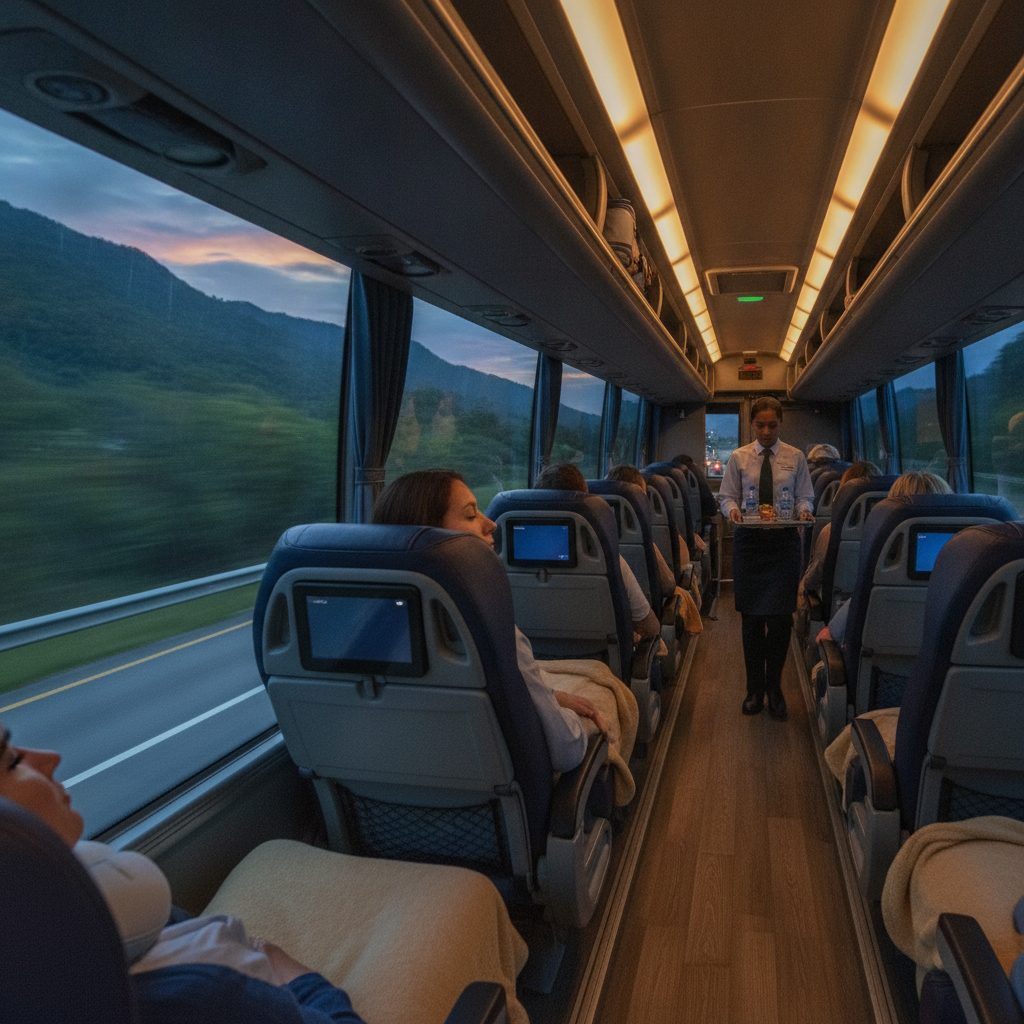
Where you sit on an overnight bus shapes how well you sleep. The back rows tend to absorb more road noise and bounce more on rough stretches of highway, which is common on routes through Honduras or parts of Nicaragua. Seats near the front are smoother and often quieter, though they can get cold if you're sitting directly below an air conditioning vent. When booking, ask specifically for a window seat in the first third of the bus — this gives you something to lean against and puts you away from the aisle foot traffic. Many operators assign seating at the terminal, so arriving early gives you the most options.
Pack a Small Personal Bag You Can Keep With You Onboard
Your main luggage will almost certainly go into the compartment underneath the bus, which is fine — but anything you need during the journey should be in a small daypack or tote that stays with you. This means your passport, any medication, a light jacket, snacks, and your phone charger if the bus has USB ports. Digging through a large bag in a dark luggage hold at a border crossing at 2 a.m. is an experience worth avoiding. Central American overnight routes frequently cross international borders during the night, and having your documents immediately accessible makes those stops faster and less stressful for everyone.
Understand How Border Crossings Work at Night
Border crossings on overnight routes follow the same process as daytime crossings, just with less natural light and fewer vendors. You'll be woken by the driver or an attendant, asked to collect your belongings, and walk through immigration on both sides of the border before reboarding. The crossing between Nicaragua and Costa Rica at Peñas Blancas is one of the most commonly used on this route and can take anywhere from thirty minutes to over two hours depending on traffic and the number of buses queued. Keeping your documents in a consistent pocket and staying calm and patient makes these stops go smoothly.
Sleep Strategy Matters More Than You Think
Arranging yourself for sleep before the bus departs saves you from the groggy fumbling that happens once you're already moving and the lights are off. A travel pillow that wraps around the neck rather than a standard rectangular pillow works far better in a reclining seat. A light sleep mask blocks the interior lighting that stays on near the driver's area, and earplugs or noise-canceling headphones handle the low rumble of the engine on mountain passes. Some travelers find taking a mild sleep aid helpful, but keeping it mild matters — you still need to wake up and function at border crossings.
Time Your Departure to Match Your Destination's Rhythm
The best overnight buses depart between 8 p.m. and midnight and arrive in the early morning hours, ideally between 5 a.m. and 9 a.m. This timing lets you sleep the bulk of the journey and arrive with a full day ahead. If your bus gets in at 4 a.m., you might find yourself waiting outside a guesthouse until check-in begins. Research what time the bus is scheduled to arrive and compare that with when your accommodation can receive you. Hostel Selina locations across the region, for example, often have 24-hour reception, which makes early arrivals far less complicated than a family-run guesthouse with fixed hours.
Store Valuables Thoughtfully During the Journey
Pickpocketing on overnight buses is relatively rare but not unheard of, particularly during border crossing stops when bags get shuffled and attention is divided. A money belt worn under clothing handles passports and larger sums of cash without drawing attention. For your phone and smaller items, keeping them in a front pocket or a bag you're actively holding is more effective than a zip pocket in a backpack resting in an overhead rack. The goal isn't paranoia — most overnight bus journeys in Central America are uneventful — but a few simple habits keep your attention on the scenery once morning arrives.
Adjust Your Expectations for Schedule and Comfort
Central American overnight buses are not European sleeper trains, and setting realistic expectations makes the experience genuinely enjoyable rather than quietly disappointing. Seats recline, but they don't fully flatten. Air conditioning exists, but it tends to run cold — sometimes very cold on longer runs. Roads vary dramatically in quality depending on the country and the specific route. That said, waking up as the bus rolls through the misty highlands of Costa Rica or along the Pacific coastal corridor of Guatemala is the kind of moment that makes the minor discomforts completely forgettable. The journey itself becomes part of what you're here to experience.
Overnight bus travel in Central America is only becoming more accessible, with operators gradually improving their fleet quality and expanding routes to meet growing traveler interest in the region. As more independent travelers look for ways to move efficiently between countries without flying, the infrastructure around these routes — better terminals, clearer booking platforms, improved safety standards — continues to develop. Knowing how to use this network well puts you in a strong position to see more of this part of the world on your own terms, at a pace that actually feels like travel.