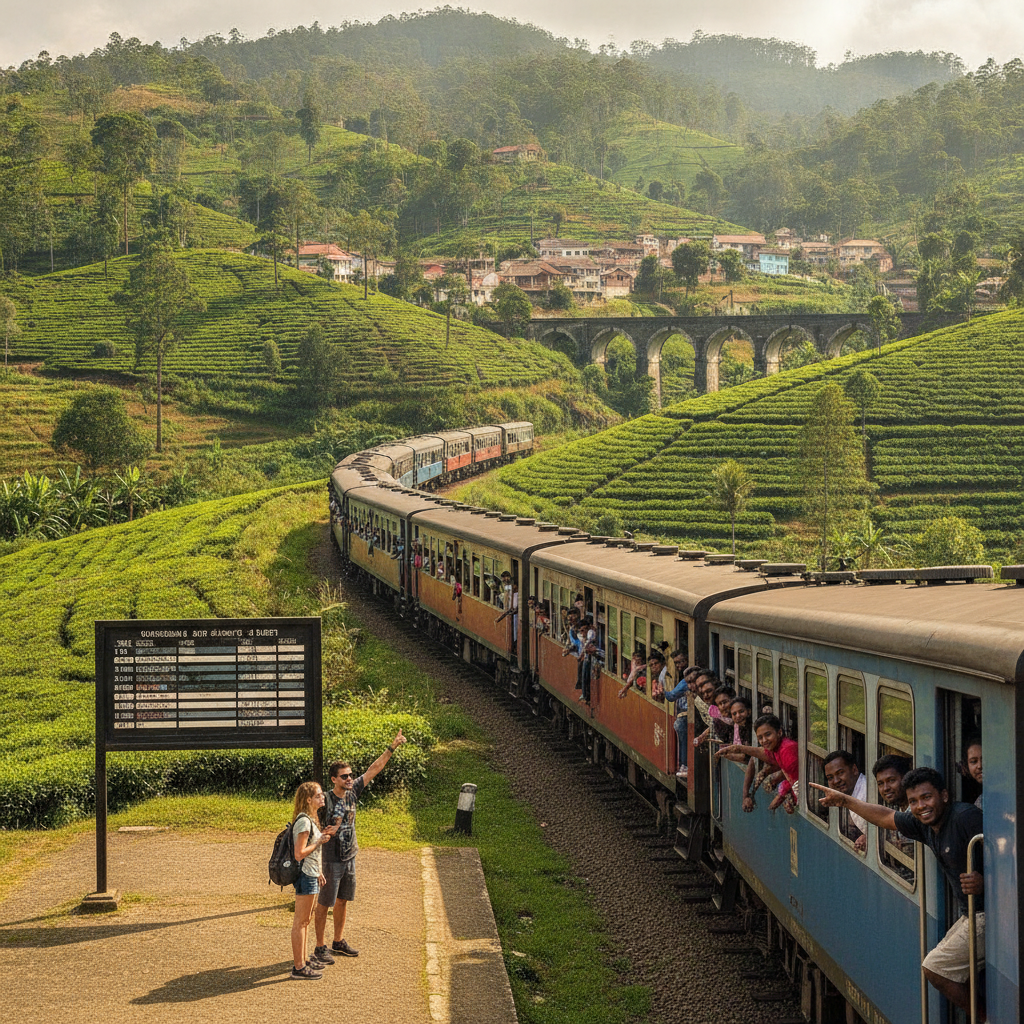
There are journeys that exist for the sake of getting somewhere, and then there are journeys that are the point. Sri Lanka's narrow-gauge mountain railway is firmly in the second category. Winding through mist-draped tea estates, dropping into deep green valleys, and pulling slowly into small station towns that seem barely connected to the outside world, this train network offers something a rental car simply cannot: the freedom to watch the landscape unfold while someone else handles the curves.
If you're planning time in Sri Lanka's Hill Country — the region centered around Kandy, Ella, Nuwara Eliya, and the surrounding highlands — the railway isn't just a practical choice. It's genuinely the better one. Here's how to use it well.
Book the Right Class for the Right Route
Sri Lanka Railways offers several seating classes, and the choice matters more than it might seem. First-class observation cars, available on select trains including some runs between Kandy and Badulla, offer wide windows and reserved seats that make the journey significantly more comfortable. Second class is perfectly serviceable for shorter hops and offers a more local atmosphere. Third class, unreserved and often crowded, works best for short segments rather than the long haul. For the iconic Kandy-to-Ella route — the one most travelers are after — booking a first-class or second-class reserved seat well in advance is strongly recommended, especially during the December-to-March high season.
Use Ella as Your Central Hub
Ella sits near the eastern end of the most scenic stretch of track, which makes it an excellent base for day trips and longer excursions. From Ella station, you can reach Haputale in under an hour — a quieter, less-visited town perched on a ridge with extraordinary views over the southern plains. Nanu Oya, the stop for Nuwara Eliya, is reachable in roughly two hours. Using Ella as your anchor means you can take day trips by train without repositioning your accommodation repeatedly, which saves both money and the logistical effort that comes with moving bags between guesthouses every other night.
Time Your Departure to Match the Light
The train from Kandy toward Ella passes through its most dramatic scenery in the middle sections — the stretch through the Nine Arches Bridge area and the tea-terraced hillsides near Haputale. Morning trains departing Kandy in the early hours tend to arrive in this section during mid-morning, when the light is soft but clear. Afternoon trains departing around midday often pass through during the golden hour, which is worth planning around if photography matters to you. Trains departing very early can catch mist rising off the hills, which has its own particular magic. Check the Sri Lanka Railways schedule online, cross-reference with sunrise times, and choose accordingly.
Buy Tickets Through the Right Channels
Walking up to a station window and buying tickets on the day works well for third-class unreserved travel, but reserved seats on popular trains — particularly the scenic runs through the highlands — sell out days or even weeks in advance. The Sri Lanka Railways website allows direct booking, though the interface can be inconsistent. A more reliable option for international travelers is the third-party platform Bookaway, which covers Sri Lankan train reservations with a straightforward interface and confirmed seat allocation. Whichever route you use, carry a printed or downloaded copy of your ticket, as digital-only confirmations occasionally cause confusion with on-train inspectors.
Combine the Railway With Short Walks Between Stations
One of the underused pleasures of this network is that the stations are spaced reasonably close together through the highlands, which means you can walk between some of them on scenic paths and then catch a later train onward. The walk between Ella and Demodara — passing the lower entrance to the Nine Arches Bridge — takes around forty-five minutes on a clear path and drops you at a small station where you can board the next eastbound train. Similarly, the area around Idalgashinna station offers beautiful walking through tea estates. Treating the train as a flexible framework rather than a fixed itinerary opens up the Hill Country in a way that a rental car and a rigid schedule never quite achieves.
Know Which Towns Deserve an Overnight Stay
Not every station town warrants more than an afternoon, but several genuinely reward a night or two. Haputale is one of the most underestimated stops on the route — quieter than Ella, cooler, and with views on clear mornings that stretch all the way to the southern coast. Bandarawela, one stop before Haputale, has a real town center with local restaurants and guesthouses that cater mainly to Sri Lankan travelers, which changes the texture of the experience considerably. Staying in these smaller stops rather than concentrating all your nights in Ella or Nuwara Eliya gives you a more textured sense of how the hill country actually functions beyond its tourist economy.
Pack for the Temperature Shift
The Hill Country sits at altitude, and the temperature difference between Colombo or Kandy at lower elevations and the highlands above Nanu Oya can be striking — sometimes fifteen degrees Celsius cooler. The train itself, especially in older carriages with open windows, gets cold quickly after dark or during early morning runs. A light layer kept accessible in your day bag rather than packed in checked luggage is not a small comfort; it becomes essential. Nuwara Eliya in particular earns its nickname as "Little England" partly because of genuine cold evenings, which catches travelers who arrive expecting tropical warmth entirely off guard.
Let Delays Work in Your Favor
Sri Lanka's mountain trains run on a philosophy of approximate timing. Delays of thirty minutes to an hour are common, and occasionally longer. Rather than treating this as a problem, experienced travelers build it into their planning by not booking anything time-sensitive in the hours immediately after arrival. A delay on the Kandy-to-Ella run means more time watching the scenery pass — which, on this particular route, is genuinely not a hardship. Keep your accommodation flexible for arrival time, confirm that guesthouses can accommodate late check-ins, and resist the urge to fill the day after a long train journey with activities that demand precision timing.
The Hill Country railway is one of those rare travel experiences that holds up under close attention. The more you understand how it works — its quirks, its rhythms, the way its stations connect to walking paths and small towns most visitors speed through — the more it rewards you. As rail tourism across Asia continues to attract thoughtful travelers looking for alternatives to flying or driving, Sri Lanka's mountain line is increasingly recognized as one of the finest slow-travel routes on the continent. It deserves the reputation, and it repays the planning.