Familiarity is one of the quietest forces shaping how people move through their days. Over time, a city that once felt expansive and full of possibility can shrink to a circuit of known streets, trusted cafés, and predictable routines. What begins as comfort gradually becomes a kind of selective blindness — and the curiosity that once made even a grocery run feel like a small adventure slowly goes quiet.
How Routine Narrows the Way People Experience Place
The brain is remarkably efficient at filtering out what it already knows. Once a neighborhood feels fully mapped, the mind stops paying close attention to it. Streets that were once observed with interest become mere transit corridors. This narrowing isn't laziness — it's the nervous system conserving energy. But the side effect is that an entire city, rich with texture and change, gets compressed into a handful of well-worn paths. People stop noticing what's there because they believe they already know.
What a Single Unfamiliar Destination Actually Does to the Mind
Visiting somewhere genuinely new — even within a city a person has lived in for years — reactivates attentiveness in a way that familiar environments cannot. The brain shifts from autopilot to active observation. Colors register differently. Details that would be invisible on a known street become worth examining. A first visit to a neighborhood like Detroit's Corktown or Chicago's Pilsen, for someone who has never walked those blocks, can produce the same quality of presence usually associated with international travel. Newness doesn't require distance.
Why Monthly Frequency Builds Something Cumulative
A single outing creates a memory. A monthly practice creates a relationship — between a person and the overlooked parts of their own city. Over the course of a year, twelve unfamiliar destinations accumulate into a genuinely expanded sense of place. This isn't just geography. The habit trains the mind to stay open to the possibility that something worthwhile exists just beyond what's already known. That orientation — the expectation of discovery — is curiosity in its most practical and sustainable form.
How the Solo Element Changes the Quality of the Experience
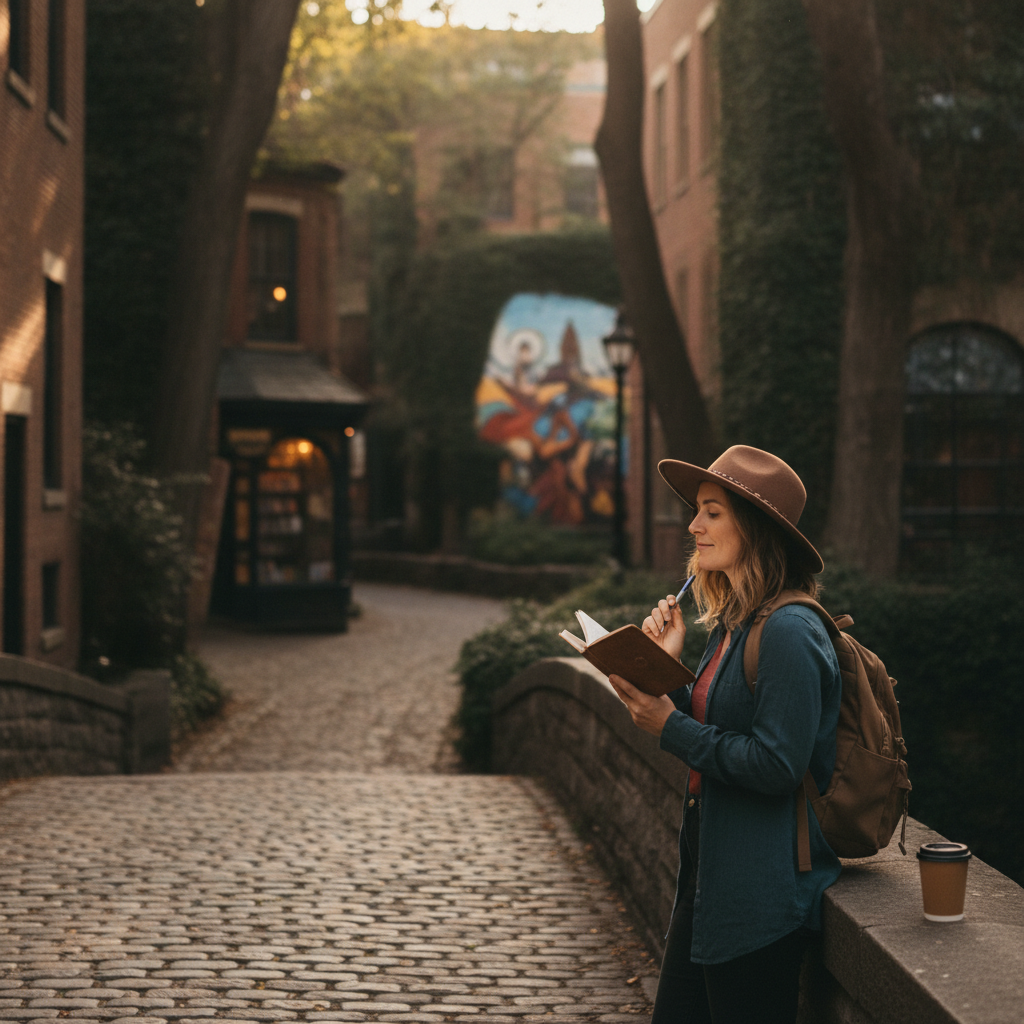
Going alone matters more than it might seem. When traveling with others, conversation fills the space that observation might otherwise occupy. Group dynamics shape where to go and how long to stay. Solo outings put a person in unmediated contact with their surroundings. There's no negotiation, no compromise, no narrating the experience for someone else. A visit to a place like Philadelphia's Fabric Row or a tucked-away botanical greenhouse in a city's outer borough becomes entirely self-directed. That autonomy, however modest, sharpens attention and deepens engagement.
What Tools and Approaches Make It Easier to Choose Where to Go
For you, the practical challenge is often simply deciding on a destination. Apps like Yelp and Google Maps, filtered by neighborhood rather than category, reveal corners of a city that rarely surface through word of mouth. Local subreddits, neighborhood Facebook groups, and city-specific publications like Time Out or local alt-weeklies often surface spots that aren't algorithmically prominent but are genuinely interesting — an independent print studio, a community garden open to visitors, a small natural history collection attached to a local university. The goal isn't finding the best-reviewed place. It's finding somewhere you've genuinely never been. Keep a short running list and choose one each month without overthinking it. The bar should stay low enough that the habit stays consistent.
How This Practice Extends Beyond the Day Itself
The effects of a monthly solo outing tend to carry over in ways that aren't immediately obvious. People who maintain this kind of practice often report a general increase in noticeability — a word that doesn't quite exist, but describes the experience of finding more things worth noticing in everyday life. Curiosity, once reactivated, doesn't stay neatly contained to one afternoon per month. It begins to bleed into ordinary days. A new bus route becomes worth trying. A street not usually walked becomes interesting. The city that felt fully known starts to feel like it still has edges worth finding.
As cities continue to change — new developments reshaping older neighborhoods, cultural institutions expanding into unexpected areas, small businesses opening in formerly overlooked districts — the practice of deliberate local exploration is likely to become more rather than less rewarding. The places worth discovering aren't disappearing. They're shifting. A habit built on monthly curiosity is, in that sense, a renewable practice — one that adapts as the city does and keeps returning something genuine in exchange for a single afternoon of intentional wandering.