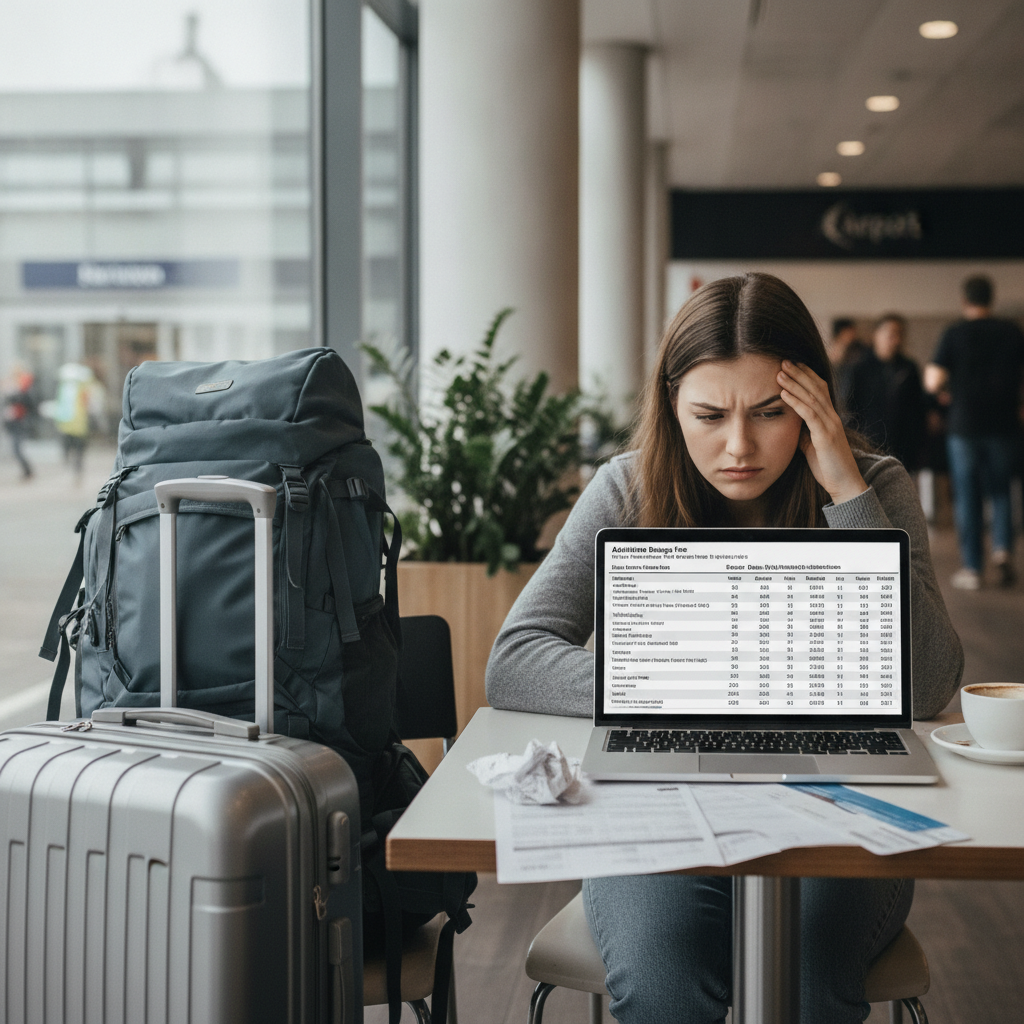
Booking a flight should feel like a win, and for a moment it does — until you reach the checkout screen and watch that attractive base fare quietly double. Baggage fees have become one of the most reliable ways airlines recover revenue from low advertised fares, and most travelers don't realize what they've agreed to until they're already committed. The good news is that a little pre-booking research changes everything. Once you know where to look and what questions to ask, you stop being surprised and start making genuinely smart booking decisions.
What Does the Base Fare Actually Include?
The first thing worth understanding is that most budget fares — especially on carriers like Spirit, Frontier, and Ryanair — include almost nothing beyond a seat. No carry-on bag, no checked luggage, sometimes not even a seat assignment. Legacy carriers like Delta or United tier their fares similarly now, with basic economy options that strip out standard inclusions. Before you book anything, find the airline's fare class breakdown on their website. It usually lives under "Baggage Policy" or embedded in the fare comparison chart during the booking flow. That's where the real picture lives.
How Does the Fee Structure Change Based on When You Pay?
Airlines almost universally charge more for bags added at the airport than bags paid for online during booking, and more still if you wait until the gate. The price gap can be significant — sometimes the airport price is nearly double the online rate. If you know you need a checked bag, adding it at the time of booking or shortly after through your reservation management page is almost always the cheaper path. Set a reminder to handle this within a day or two of booking so you don't forget and end up paying the rushed rate at check-in.
Why Does Your Credit Card Matter More Than You Think?
Several travel credit cards — including the Chase Sapphire Preferred, the Capital One Venture, and co-branded airline cards from American, Delta, and United — include free checked bag benefits, either through earned credits or direct airline perks. If you already carry one of these cards, charging your ticket to it may unlock a free first bag. That single benefit can offset an annual fee on its own if you fly a handful of times a year. Always check your card's benefits portal before booking, because this is one of those perks people forget they have.
How Do Carry-On Rules Differ Across Airlines?
The assumption that a carry-on bag is always free no longer holds. Budget carriers have restructured their fare tiers so that even an overhead bin bag triggers a fee on the lowest-priced ticket. Spirit and Frontier, for instance, allow a small personal item under the seat for free — but a standard roll-aboard will cost you unless you've purchased an upgraded fare. Measure your bag against the airline's posted dimensions, which are typically found on their baggage policy page, and compare your carry-on habits against what each fare tier actually permits before you lock in a price.
What Tools Help You Compare Total Trip Cost?
Google Flights has a useful fee transparency feature that flags additional costs for certain carriers, though it doesn't capture every airline's full fee schedule. Tools like Kayak and Hopper sometimes surface baggage fee estimates as well. For the most accurate picture, take the extra three minutes to visit the airline's own baggage policy page after finding a fare you like. Build a simple mental math habit: base fare plus your expected bag fees equals your real ticket price. That number is what you should be comparing across airlines, not the advertised fare alone.
How Do Loyalty Status and Frequent Flyer Programs Affect Fees?
If you hold even mid-tier status with an airline — United Silver, Delta Silver Medallion, American Gold — free checked bags are often part of the package. The same applies if you've accumulated enough miles to hold a status tier without flying heavily. Before defaulting to the cheapest fare on whichever airline appears first, check whether you have existing loyalty status somewhere that would wipe out the baggage cost entirely. Booking through your airline's own site rather than a third-party platform also tends to preserve fee waivers that might otherwise not apply.
Why Does Route and Direction Sometimes Change the Fee?
International flights, particularly transatlantic routes, often include one free checked bag even on economy fares where domestic routes do not. An airline might charge for a bag on a New York to Miami flight but include it at no extra cost on a New York to Lisbon ticket. This isn't always intuitive, and the rule varies by airline and sometimes by specific route. It's worth checking both legs of a connecting itinerary separately if you're routing through a hub, since domestic connections may be treated differently than the international portion of the same booking.
How Should You Factor Fees Into a Final Booking Decision?
Once you've calculated the true cost of each option — fare plus all applicable bag fees — you may find that what looked like the budget choice is actually mid-range, and a slightly higher base fare on a full-service carrier already includes everything you need. This comparison takes about five extra minutes and reliably produces better outcomes. Frequent travelers often keep a simple notes document with the baggage policies of the airlines they use most, updating it occasionally since policies do shift. That small habit eliminates the research friction each time a new booking comes up.
Reading airline baggage fees carefully before committing to a ticket isn't about being overly cautious — it's just good arithmetic. The lowest number on the search results page is a starting point, not a final answer. Building the habit of checking what that fare actually covers transforms you from someone who gets surprised at checkout into someone who books with genuine confidence.