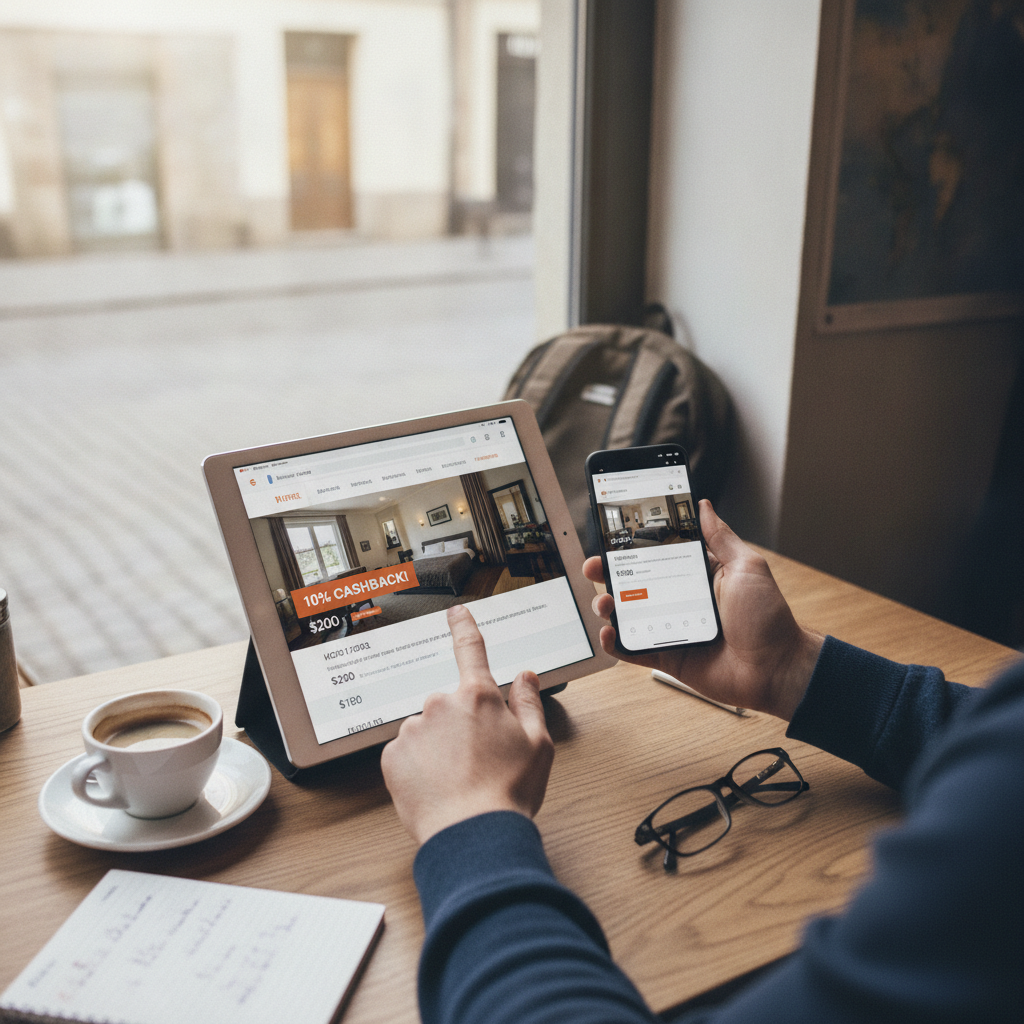
Cashback portals have become a routine part of how many travelers book flights, hotels, and rental cars — but the promise of earning money back on a purchase doesn't always mean you're walking away with a better deal. Sometimes the listed price through a portal is quietly inflated to offset the cashback, leaving you with a number that looks attractive but compares poorly to booking directly. Learning to separate real savings from repackaged pricing takes only a few habits, and once you have them, they become second nature.
Check the Direct Price First, Before Anything Else
Before you click through any cashback portal, open the airline, hotel, or car rental site directly and note the price. Do this without any portal referral link active in your browser, because some pricing systems adjust dynamically based on referral source. Sites like Rakuten, TopCashBack, and Expedia's cashback offers all operate differently, and the baseline price can vary. Taking sixty seconds to record the direct price gives you a reference point that turns everything else into a clear comparison rather than a guessing game.
Compare Identical Booking Conditions, Not Just Headline Prices
A portal price might look lower until you notice the refund policy is more restrictive, the rate is non-changeable, or the room category has quietly shifted. Portals sometimes surface rates that match a lower fare class or a prepaid-only hotel rate to manufacture a visible price difference. Make sure you're comparing the same cancellation terms, the same room type, and the same fare class across every platform. A slightly higher direct price with free cancellation is often worth more than a portal rate that locks you in completely.
Use a Price History Tool as a Sanity Check
For hotel bookings especially, browser extensions that track price history can reveal whether a portal's listed rate is genuinely discounted or simply the price the property has been charging for weeks. Tools like Honey or Capital One Shopping can surface recent price data for certain booking categories. If the portal price matches the rate the hotel has listed directly for the past month, the cashback is the only real benefit — and you should calculate whether that cashback percentage justifies using the portal over a direct booking that might include loyalty points.
Calculate Whether Loyalty Points Outweigh Cashback
One of the most common ways cashback portals quietly dilute their own value is by requiring you to forfeit hotel or airline loyalty earnings. Many major portals, including those affiliated with Chase Travel and similar bank programs, will get you cashback while stripping away the points you'd earn by booking directly with Marriott, Hilton, or a specific airline. Run the math on both sides. If your loyalty status earns you meaningful points per dollar spent, those points may represent more value than the portal's cashback percentage — particularly if you're working toward a free night or an upgrade.
Watch for Portal-Exclusive "Sale" Prices That Aren't
Some portals advertise a strikethrough price next to a current rate to imply a discount has been applied. This presentation is worth scrutinizing. The original price shown is sometimes a rate that was only briefly available, a rack rate nobody actually paid, or a figure the portal calculated independently. Search the same hotel on Google Hotels or directly on the property's own site to verify what the real market rate looks like. If the portal's "discounted" price matches the going rate everywhere else, the cashback is the full story — and you can evaluate it honestly from there.
Factor in Portal Cashback Payout Terms and Delays
Cashback that takes ninety days to confirm and another thirty to withdraw is not the same as an immediate price reduction. Portals like Rakuten typically hold cashback for a quarter before releasing it, and some travel cashback has longer verification windows because bookings must be completed — meaning the hotel stay or flight must occur before the cashback is confirmed. If you're comparing a portal offer against a direct booking discount or a credit card travel benefit, the timing and certainty of the reward matters. A guaranteed, immediate benefit is worth more than a future cashback that could be reversed if the booking terms aren't met.
Test the Portal Rate Against a Metasearch Result
Metasearch platforms like Google Hotels or Kayak aggregate rates from multiple sources and make it straightforward to see whether a portal's price is competitive or simply average. If the portal price appears in the metasearch results at the same level as direct booking options, you're not getting a discounted rate — you're getting the standard price with a cashback layer on top. That's not necessarily bad, but it should be understood clearly. The cashback then becomes a genuine bonus rather than a substitute for a price reduction that was never actually there.
Treat Small Cashback Percentages on High-Cost Bookings Carefully
A one or two percent cashback offer on a long-haul flight or a multi-night hotel stay can look meaningful in absolute terms, but it's worth asking whether better options exist. A travel rewards credit card used for a direct booking might return three to five times the points per dollar, offer purchase protection, and preserve your loyalty status simultaneously. The portal's cashback looks appealing in isolation, but placed next to the full picture of what a direct booking with the right payment method delivers, it sometimes represents the least efficient way to extract value from the same purchase.
Cashback portals can deliver real, legitimate savings on travel — but only when the listed price is genuinely competitive and the cashback adds on top of it rather than replacing a discount that was never applied. The habit of checking the direct price first, verifying booking conditions, and calculating the full value of loyalty points and credit card rewards turns portal offers from an automatic yes into a considered choice. Once that comparison becomes routine, you'll use portals when they genuinely serve you and skip them confidently when they don't.