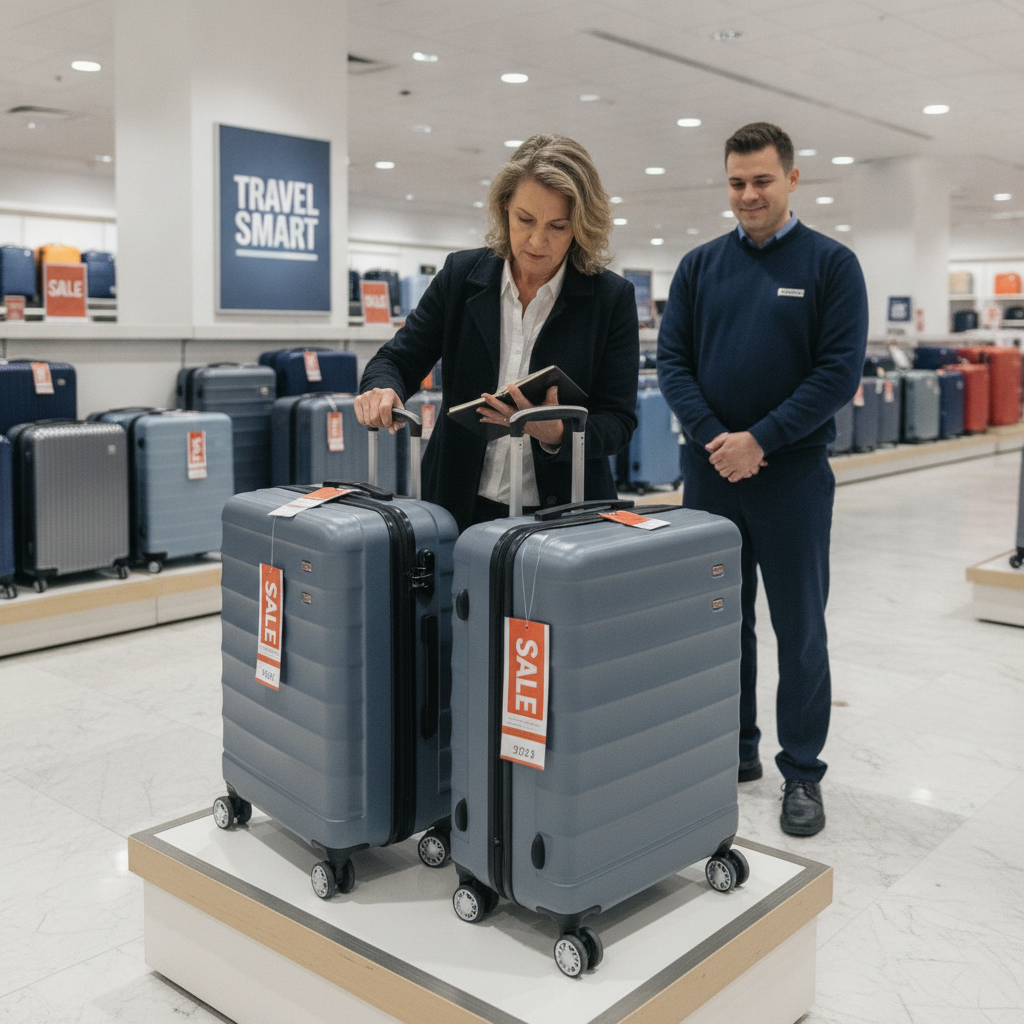
Department store luggage sales have a way of feeling like windfalls — bright tags, bold percentage-off claims, and display cases full of polished shells that catch the light just right. But not every sale rack tells the whole story. Some discounts reflect genuine markdowns on quality merchandise; others quietly move older stock that may have been produced to a lower standard than the brand's current lineup. Knowing how to tell the difference saves you from spending good money on a bag that starts falling apart after your third trip.
What Does the Hardware Actually Tell You?
Zipper quality is one of the most reliable indicators of a bag's true construction tier. High-quality luggage — think Briggs & Riley or Rimowa — typically uses YKK or Riri zippers, which you can identify by looking for the brand stamp directly on the zipper pull. Budget zippers often feel slightly rough when you run them along the track, or they sit loosely in the housing. On hardshell bags, check how the zipper follows the shell curve — clean, consistent contact is a good sign; gaps or slight warping suggest a cost-cutting decision made during manufacturing. These details rarely change in a sale, but they often differ between product generations.
How Can You Identify Whether a Model Has Been Discontinued?
Retailers use sales to clear out lines that are being phased out, and that's not inherently bad — unless the reason for discontinuation is a design flaw or a shift toward better construction in the replacement model. Search the bag's model name on the manufacturer's website before you buy. If it doesn't appear in the current lineup, that's worth noting. Brands like Samsonite and Travelpro update their collections regularly, and the successor model often incorporates user feedback about weak points. Comparing the discontinued model's specs against the current version takes about five minutes and can reveal exactly what changed and why.
What Should the Wheel Assembly Feel Like?
Wheels are where cheap construction shows up fastest in real use. On spinner luggage, lift each corner slightly and give the wheel a spin with your finger — it should rotate smoothly and continue for a moment under its own momentum. Wobble, grinding, or immediate stopping all suggest lower-grade wheel housing. Also check how the wheel housing is attached to the bag's body. On better-built bags, it's recessed or reinforced with a visible plate; on lower-cost pieces, it may be glued or simply bolted through thin polycarbonate. This matters because wheel replacement is often more expensive than people expect, and some bags aren't designed to allow it at all.
Does the Interior Construction Match the Exterior Price Tag?
A bag can look impressive on the outside while cutting significant corners inside. Unzip the main compartment and look at how the lining is attached — it should be stitched cleanly at every seam, not heat-bonded or loosely tucked. Check the dividers and compression straps for stitching quality, and tug gently on any interior pockets to feel whether they're anchored properly. On bags sold through discounters or in clearance events, the interior is often where previous-season construction differences become visible. Brands like Eagle Creek tend to maintain interior quality across price points, but this isn't universal, and clearance stock can mix production runs.
How Do You Read the Shell Material Description Honestly?
Polycarbonate, ABS, and polypropylene are the three most common hard-shell materials, and they perform quite differently under travel stress. Polycarbonate flexes on impact and tends to recover; ABS is cheaper and more rigid but cracks under sustained pressure; polypropylene sits somewhere between the two. When a tag says "polycarbonate blend," it's worth asking how much of the blend is actually polycarbonate versus ABS filler. On previous-season stock, this blend ratio sometimes changed quietly between production years — which is why two bags that look identical and carry the same model name can have meaningfully different durability. The manufacturer's spec sheet, often available online, lists the material composition if you search the exact model number.
What Does the Warranty Actually Cover on Sale Merchandise?
Warranty terms on clearance luggage deserve a close read, because department stores sometimes sell floor models or open-box units with modified return windows. A bag being sold "as is" during a clearance event may carry no warranty at all, or the clock on a limited warranty may have already started. Brands like Away and Briggs & Riley offer lifetime or extensive warranties on their current lines, but these don't always transfer through third-party retail channels or apply to discontinued models in the same way. Ask the sales associate directly, and if they can't confirm it in writing on your receipt, that uncertainty is part of the deal you're accepting.
How Does Weight Compare to Current Production Models?
A bag that's heavier than its current-generation equivalent isn't automatically inferior, but unexplained weight differences can point to denser filler materials or thicker ABS shells used in older production runs — both signs of a different construction standard. Pull up the current model's listed weight on your phone while standing at the display. If the sale bag is notably heavier for the same stated capacity, it's worth asking why. Airlines haven't loosened carry-on weight limits, and every extra pound a bag adds is weight you can't give to your actual belongings. This is a simple comparison that most shoppers skip entirely.
What Can the Stitching on the Handle Tell You?
Carry handles and telescoping handles take enormous strain over a bag's lifetime, and their stitching is one of the easiest construction details to inspect in a store. On the top carry handle, look at the point where it meets the bag body — this connection should have layered stitching or a bartack (a tight rectangular or X-shaped stitch pattern used to reinforce stress points). A single row of stitching at that juncture is a warning sign. On telescoping handles, extend the rod fully and check that it locks cleanly at each position without play or wobble. A handle that wobbles when extended is difficult to repair and will grow worse with every trip.
Luggage sales can genuinely deliver quality merchandise at honest prices — but they reward the shopper who takes five extra minutes to look past the markdown tag. Check the hardware, pull up the model number, read the warranty terms, and compare the specs against what the brand is currently selling. The bags worth buying hold up to that scrutiny without hesitation. Trust the details over the discount, and you'll come home with something that earns its place in your closet for years.