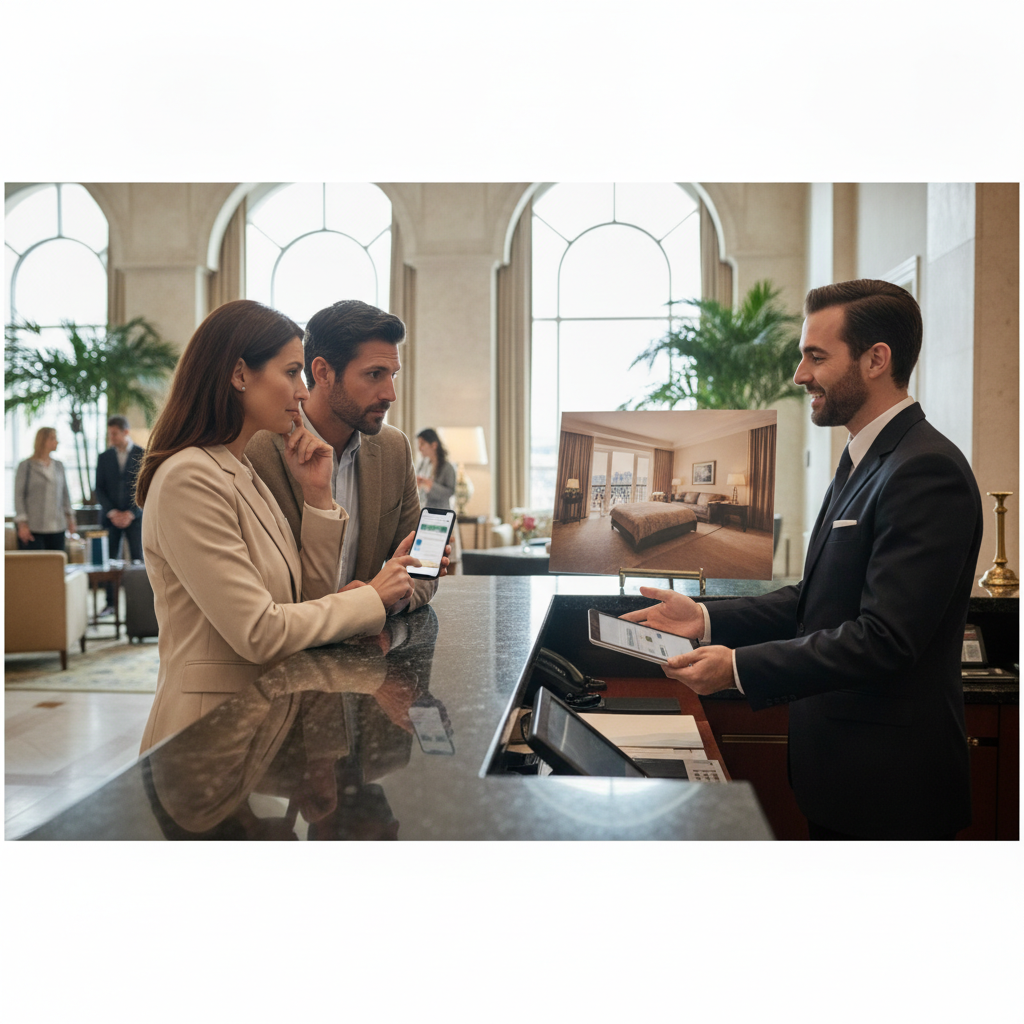
Hotel check-in upgrades are one of the travel industry's most common upsell moments, and they're designed to feel like a spontaneous gift. The front desk agent leans forward, lowers their voice slightly, and mentions that a nicer room is available — for just a little more per night. The offer feels personal and exclusive. Whether it actually represents value, though, depends on a handful of factors that most travelers never think to check before nodding yes.
What Is the Front Desk Actually Trying to Do?
Hotels operate on yield management systems that track occupancy in real time. When premium rooms haven't sold by the afternoon of a given night, they represent dead revenue — a loss that can't be recovered once midnight passes. Check-in upgrade offers are often a direct response to that pressure. The hotel would rather collect something for that room than nothing at all. That doesn't mean the offer is a bad deal for you, but it does mean the framing of "exclusive opportunity" should be taken with some skepticism. Understanding the hotel's motivation helps you evaluate the offer more clearly.
How Does the Offered Price Compare to the Booking Rate?
The first number to check is the rate you'd see if you booked that upgraded room category directly through the hotel's own website or a platform like Expedia or Booking.com right now. Pull up your phone at the desk — politely and without drama — and search the property for tonight. If the room being offered at check-in costs roughly the same as or more than the public walk-in rate, the "upgrade" is simply retail pricing with a softer sales approach. Genuine value typically means a meaningful discount off the current live rate, not a modest reduction off a price that was already inflated.
What Does the Room Actually Include That Yours Doesn't?
Upgrade offers gain real weight when the difference between your booked room and the offered room is concrete and personally useful. A higher floor with a city view, a room with a bathtub when you only have a shower, or a suite with a separate sitting area all represent tangible differences in your experience. Where the offer loses value is when the distinction is primarily cosmetic — a slightly larger footprint, a different carpet color, or a floor number that sounds more impressive than it actually is. Ask the agent to describe specifically what changes. Vague answers like "it's just nicer" are a signal worth noting.
How Long Is Your Stay, and Does the Math Scale?
A check-in upgrade is typically priced per night, which means a two-night stay doubles the cost and a five-night stay multiplies it significantly. Short stays are where modest upgrades can feel worthwhile; longer stays are where the cumulative spend deserves harder scrutiny. If a boutique hotel in Lisbon's Príncipe Real neighborhood offers you a room with a private terrace for an extra thirty dollars a night and you're staying two nights, the math is simple. If you're staying a week, that same daily rate adds up to a sum that could fund a very good dinner out every evening instead.
Has Your Status or Loyalty Program Already Earned You a Free Upgrade?
Many hotel groups — Marriott Bonvoy, World of Hyatt, and IHG One Rewards among them — offer complimentary upgrades as a benefit of elite status, and front desk staff don't always apply these automatically. Before accepting a paid upgrade, it's worth quietly confirming whether any loyalty benefit you hold already entitles you to an improved room at no charge. Paying for something you're already owed is an easy mistake to make in the slightly rushed atmosphere of check-in. A simple, polite question — "Does my membership level include any upgrade consideration?" — is entirely appropriate to ask.
What Time of Year and Day Is It?
The value of a check-in upgrade offer correlates directly with how full the hotel is likely to be tonight. During peak travel periods — summer in coastal Europe, holiday weekends, major local events — the hotel may have very few unsold rooms, and the offer reflects genuine scarcity. During quieter stretches, unsold premium inventory is abundant, and the hotel is simply trying to convert dead stock into marginal revenue. A quick check of local events in the area using a tool like Google Maps or Eventbrite can tell you whether there's a reason demand might be high tonight, which shifts how much pressure you should feel to decide quickly.
Is the Agent's Urgency Real or Manufactured?
Check-in upgrade offers sometimes come with a soft time pressure — the implication that this room won't be available if you think too long. In reality, hotels can see their own occupancy systems clearly, and an agent who knows the hotel is at forty percent capacity tonight is unlikely to lose sleep over one unconverted upgrade. Genuine scarcity does exist on busy nights, but manufactured urgency on quiet ones is a standard sales technique. Taking thirty seconds to check a live booking site, or simply asking how many of that room type remain available, gives you a grounded sense of whether the pressure is real.
What Would You Actually Use the Room For?
The most personal filter for any upgrade offer is an honest account of how you'll spend your time in the room. Travelers who plan to sightsee from early morning until late evening, using the room primarily as a place to sleep, rarely benefit from a premium space at a premium price. Those who plan rest days, remote work sessions, or long evenings in — especially at a property like a resort or spa hotel — may find genuine use in the extra space or features. Matching the offer to your actual behavior, rather than an idealized version of your trip, is the clearest way to judge whether the price makes sense.
Evaluating a check-in upgrade offer well comes down to treating it as a purchasing decision rather than a spontaneous treat. Checking the live room rate, understanding what concretely changes, considering how many nights you're staying, and knowing your loyalty benefits before you arrive all take less than five minutes and give you the information needed to say yes confidently or decline without regret. A good upgrade at a fair price is a genuine pleasure. The skill is knowing the difference between that and a hotel quietly solving its own inventory problem at your expense.