Rural Vietnam has a quiet generosity built into its hospitality culture — one that organized tours rarely capture and travel agencies can't package. When you stay at a small family-run guesthouse in places like Ha Giang, Phong Nha, or the villages scattered through the Mekong Delta, you're not just renting a room. You're stepping into someone's daily world, and that relationship, handled with a little warmth and patience, can open doors no booking platform will ever show you.
Arrive With Curiosity, Not a Checklist
The first evening at a guesthouse sets the tone for everything that follows. Rather than retreating to your room with a guidebook, spend some time in the common area or at the family table if one exists. Ask simple questions — what's good to eat nearby, what time the market starts, whether the road north is passable. These aren't demands; they're the beginning of a conversation. Guesthouse owners notice guests who show genuine interest, and that curiosity tends to come back to you in the form of invitations, recommendations, and offers you never anticipated.
Learn a Few Words Before You Need Them
You don't need fluency to build rapport, but a handful of Vietnamese phrases goes a long way. Knowing how to say thank you (*cảm ơn*), delicious (*ngon*), and the basic greeting (*xin chào*) signals respect and effort. In rural areas especially, where English is less common, even a clumsy attempt at the local language tends to generate warmth. Apps like Duolingo or Google Translate can get you through the basics before you arrive. The point isn't perfect pronunciation — it's showing that you see the person in front of you, not just a service provider.
Ask About Their Life, Not Just Your Trip
The most useful conversations with guesthouse owners rarely start with "what should I do here?" They start with genuine interest in the person's own experience. Ask how long they've lived in the area, whether the farming season is good this year, or what celebrations are coming up in the village. These questions tend to unlock much more than a tip about a waterfall. Owners who feel seen as people rather than information kiosks are far more likely to offer to take you somewhere themselves, introduce you to a neighbor, or mention the kind of local event that never makes it onto any travel website.
Let Meals Be the Entry Point
If a guesthouse offers breakfast or dinner — and many in rural Vietnam do — take it every time. Shared meals create a relaxed setting where conversation happens naturally and without pressure. This is often where the most useful local knowledge surfaces: a family member mentions a festival in a nearby commune, or the owner's father offers to show you how the rice terraces are managed during planting season. In places like Mu Cang Chai, sitting down to eat with the family rather than heading to a tourist restaurant has connected travelers to experiences that no itinerary could have predicted.
Be Honest About What You're Actually Looking For
Guesthouse owners are practical people with busy lives — they appreciate directness. If you're hoping to see a morning market that locals actually use rather than a staged version, say so. If you'd rather avoid motorbike tours with five other tourists, mention that too. When you're clear about your interests without being demanding, owners can make far more useful suggestions. They know which paths lead somewhere worth walking and which ones are mostly for show. That local filter is genuinely valuable, and it only works if you give them enough information to apply it.
Offer Something in Return
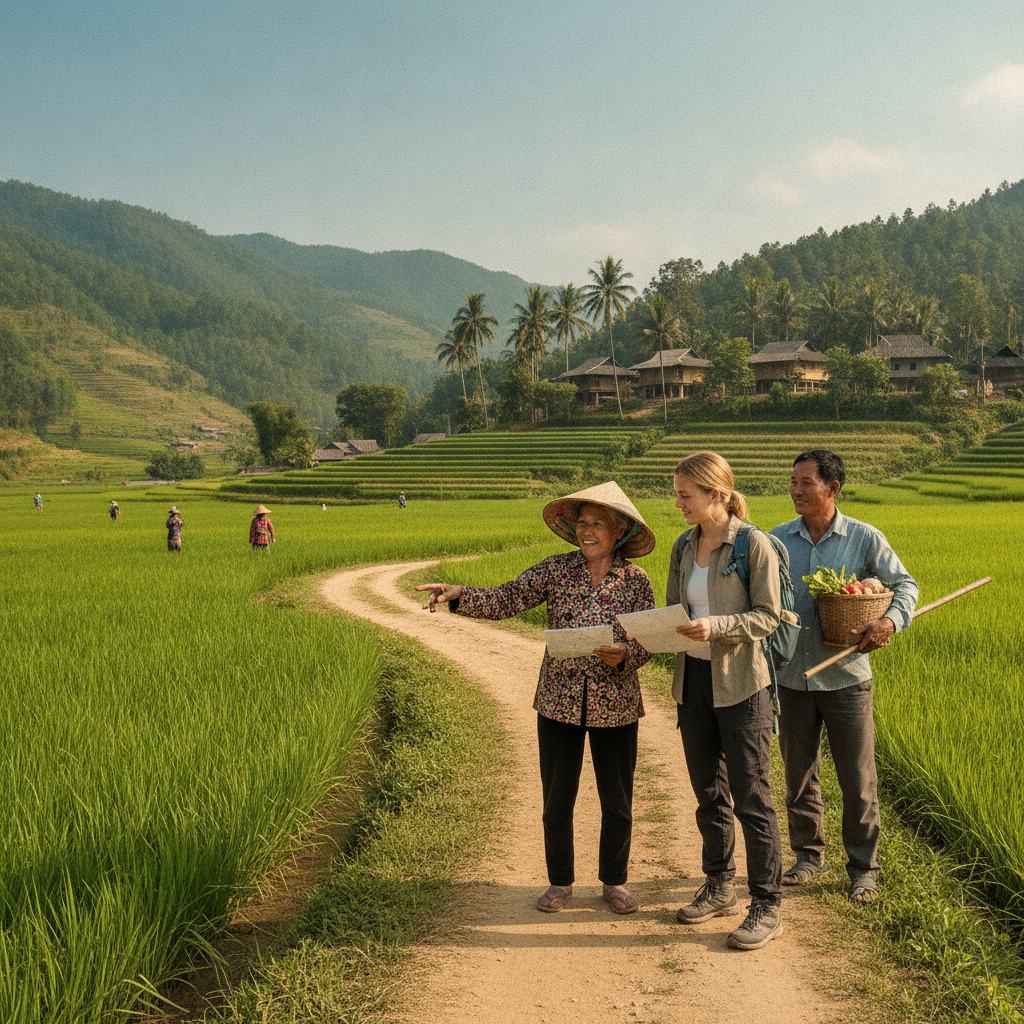
The relationship works best when it flows both ways. Leaving a thoughtful review on platforms like Booking.com or Google Maps is genuinely meaningful for small guesthouses that depend on word of mouth and online visibility. Buying locally made products the owner's family produces — rice wine, handicrafts, preserved foods — is another way to contribute without it feeling transactional. If an owner spends an hour drawing you a hand-sketched map or calling ahead to a contact in the next village, acknowledging that generosity matters. Small gestures of reciprocity tend to deepen the exchange rather than close it off.
Read the Pace of the Place Before Asking Anything
Timing and context shape how these conversations land. A guesthouse owner managing breakfast for six guests, answering phone calls, and helping a child with homework is not in the right moment for a long chat about local trails. Paying attention to when the day quiets down — often mid-morning or after the evening meal — and choosing those windows for conversation makes a real difference. Rural hospitality in Vietnam is generous, but it exists within a working life. Respecting that rhythm is what separates a traveler who gets genuine help from one who gets polite but generic answers.
Follow Up on Introductions With Real Effort
When an owner offers to introduce you to someone — a farmer who knows the forest paths, a woman who makes traditional bánh in a neighboring village, a local teacher who speaks some English — take it seriously. Show up on time, bring a small gift if it feels appropriate, and engage with genuine attention. These introductions carry the guesthouse owner's reputation with them, and honoring that connection respectfully tends to build trust across the whole community. It also means the next traveler who stays at that guesthouse is more likely to receive the same generosity.
Rural Vietnam rewards the traveler who slows down enough to notice the people around them. Guesthouse owners aren't tour guides, and that's exactly what makes their knowledge so valuable — it's unscripted, deeply local, and freely given when the right kind of trust is in place. Take the time to build that trust, and the trip you end up having will be something no itinerary could have planned for you.