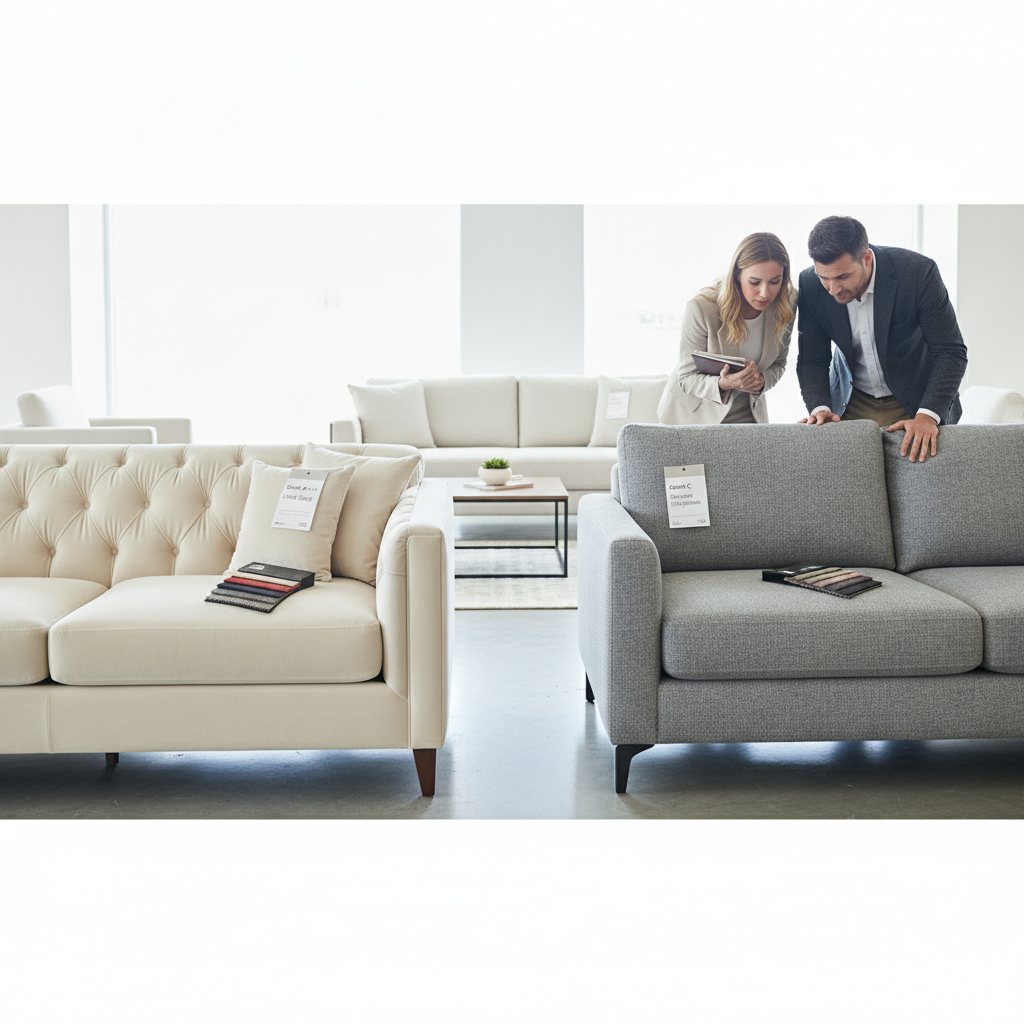
Fabric grade labels on sofas are one of the most quietly consequential pieces of information a shopper can encounter — and one of the most consistently misunderstood. Walk through any showroom at Crate & Barrel, La-Z-Boy, or a local furniture boutique, and those small letter or number designations attached to upholstery swatches can feel arbitrary. They are not. Understanding what they actually communicate changes how a person evaluates price differences across sofas and helps explain why two pieces that look nearly identical at first glance can land at very different points on the cost spectrum.
What Fabric Grades Are Actually Measuring
Fabric grades are a pricing and sourcing classification system, not a direct quality rating. When a manufacturer assigns a fabric Grade A, B, or C — or uses numerical tiers like 1 through 6 — they are primarily communicating the cost of that material to them, which then flows through to the retail price of the finished piece. Higher-grade fabrics tend to use more expensive raw materials, more complex weaving processes, or higher fiber content, but the grade itself does not guarantee durability. A Grade 1 fabric might be a beautifully simple linen that costs the manufacturer less than an intricately patterned Grade 5 velvet, even if the linen wears longer under daily use.
Why Two Identical Sofas Can Cost Very Different Amounts
When two sofas share the same frame, cushion construction, and overall dimensions but sit at noticeably different price points, fabric grade is often the primary variable. Manufacturers like Pottery Barn and West Elm frequently offer the same sofa silhouette across multiple performance tiers, with entry-level options in Grade A and premium selections in Grade D or above. The underlying structure may be identical. What changes is the material cost per yard, which on a large sectional or deep-seated sofa can represent hundreds of dollars in fabric alone. Recognizing this pattern helps shoppers decide whether the visual or tactile upgrade justifies the jump.
Rub Count and What It Actually Tells You About Wear
One of the more practical specifications buried inside grade labels or accompanying data sheets is the Martindale or Wyzenbeek rub count — a standardized abrasion test that measures how many cycles of friction a fabric can withstand before showing visible wear. A fabric rated at 15,000 rubs is generally considered suitable for light residential use, while anything above 30,000 rubs is treated as heavy-duty residential, and commercial-grade materials often exceed 100,000. When comparing sofas, this number matters far more than the grade letter for predicting how a piece holds up over years of actual sitting. A lower-grade fabric with a high rub count can outperform a visually luxurious high-grade fabric with a modest rating.
How Performance Fabrics Changed the Grade Conversation
The rise of performance upholstery — materials like Crypton, Sunbrella, and proprietary blends developed by brands such as Revolution Fabrics — has added a useful complication to the traditional grade system. These fabrics are engineered specifically for resistance to staining, moisture, and heavy use, and they often sit at mid-to-high grade levels because of their manufacturing complexity. For households with children, pets, or high daily traffic, a sofa upholstered in a performance fabric at Grade C may deliver significantly more long-term value than a natural fiber option at the same grade that looks richer in the showroom but requires professional cleaning after every spill. The grade label alone will not surface this distinction.
What to Ask Before Accepting a Grade at Face Value
When you are standing in a showroom comparing two sofas with different fabric grades and a noticeable price gap, a few targeted questions shift the conversation from marketing to substance. Ask specifically about the fiber content — natural, synthetic, or blended — since this directly affects how the fabric ages, pills, and responds to cleaning. Ask for the rub count if it is not printed on the swatch card. Ask whether the fabric has any protective finish applied at the mill, which affects stain resistance independently of fiber quality. These questions move the evaluation beyond what the grade label communicates and into what the fabric is actually built to do over the years you plan to own the piece.
Reading the Full Picture When Comparing Price Points
When you are comparing sofas across price points, treat the fabric grade as a starting point rather than a verdict. Pull back and look at the complete specification: frame construction, suspension system, cushion fill, and fabric performance data together tell a more complete story than any single label. A sofa priced several hundred dollars higher due to a premium grade fabric may still be the weaker long-term investment if its cushion fill compresses quickly or its frame uses lower-quality joinery. Conversely, a mid-grade fabric on a well-built hardwood frame from a maker like Benchcraft or similar mid-tier brands can outlast a beautifully upholstered piece built on a compromised foundation. The grade label is one data point in a decision that rewards looking at the whole.
As manufacturers respond to growing consumer demand for transparency, more retailers are beginning to publish fuller fabric specification sheets alongside traditional grade labels — including fiber content, cleaning codes, and rub counts — directly on product pages rather than requiring shoppers to ask. This shift is making it easier to compare sofas honestly across price points without relying solely on a letter or number that was originally designed as an internal pricing tool. Shoppers who know what to look for are already benefiting from this change, and the trend toward fuller upfront disclosure seems likely to continue reshaping how fabric value gets communicated at the point of sale.