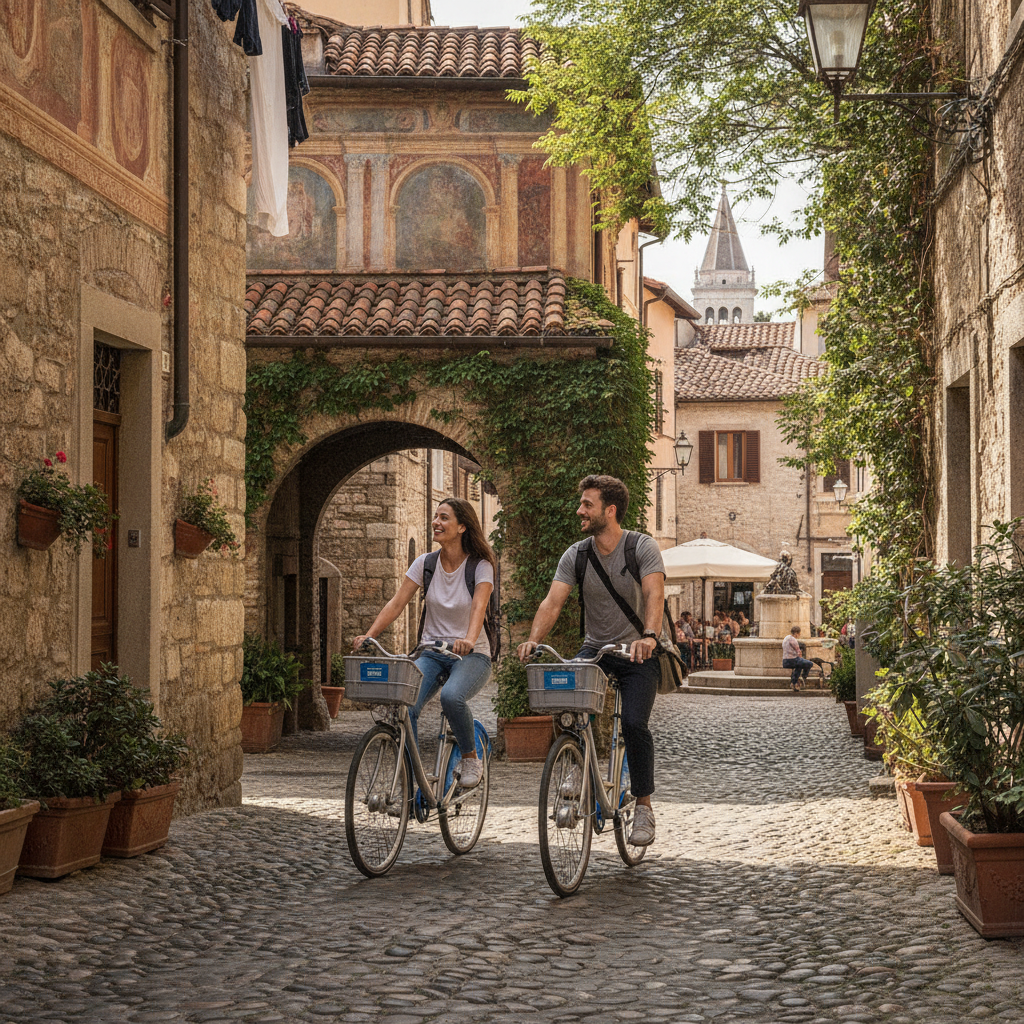
Most visitors to European cities follow the same well-worn path — the cathedral, the old town square, the famous market, maybe a museum. It's not a bad way to spend a day, but it rarely shows you how a city actually breathes. Bike-share systems change that equation entirely. They're cheap, often free for short rides, and they put you exactly where the maps don't tell you to go. Mid-sized cities across Europe have invested heavily in these programs, and knowing how to use them well is one of the most reliable ways to turn a decent trip into a genuinely memorable one.
Download the Right App Before You Land
Most municipal bike-share programs run through their own city-specific apps, and a few require account registration before you can unlock a bike. Cities like Seville use the SEVICI system, while Ghent runs its Blue-bike program through a separate platform. Download the relevant app and create your account while you're still on your home Wi-Fi. Some systems also work through Donkey Republic, which covers multiple European cities and simplifies the process considerably. Scrambling with registration while standing at a docking station is frustrating and wastes the first hour of a morning you could be spending riding.
Learn the Free-Ride Window and Use It Strategically
Many municipal systems offer rides free for the first 30 to 45 minutes, with fees kicking in after that threshold. The trick is that this window resets every time you dock the bike. So instead of riding continuously for two hours and paying overage fees, you plan your route around docking stations — ride for 25 minutes, dock near a bakery worth visiting, pick up a new bike, ride another 25 minutes. It takes a little planning but costs you almost nothing. Studying the docking station map the night before pays off here. You'll move across a city's residential and commercial edges with almost no expense.
Start in a Neighborhood Locals Actually Use
In a city like Porto, the Bonfim and Campanhã neighborhoods sit just east of the tourist core and feel almost entirely untouched by tour groups. In Ghent, the Ledeberg district just southeast of the city center operates at a completely different rhythm than the postcard-ready canal area. These aren't hidden gems in any dramatic sense — they're just working neighborhoods where people shop, eat lunch, and live their lives. Arriving by bike rather than on foot signals something different about your intentions, and you tend to move through at exactly the right speed to notice what's actually there.
Use Elevation Data to Pick Your Direction
Bike-share bikes are generally heavy and single-speed or low-geared, which means hills punish you quickly. Before you plan a route, check the terrain. Google Maps cycling mode shows elevation profiles, and it's worth a quick look. In cities like Lisbon, where the hilly western neighborhoods like Ajuda sit above the riverside flatlands, riding downhill into less-visited areas and busing or tram-riding back is a completely legitimate strategy. Flat cities like Bruges or Münster let you roam freely in any direction. Matching your ambition to the actual terrain prevents an exhausting morning from souring the rest of your day.
Follow the Residential Grocery Infrastructure
One of the best navigational tricks for finding genuine local neighborhoods is to look for where people actually buy food. Not the tourist market, but the mid-sized supermarket, the fruit stall, the discount grocer. Cycling toward these commercial anchors on a bike-share almost always takes you through streets that guidebooks skip entirely. In cities running well-mapped systems, you can often spot these destinations on standard map apps and plot a loose route toward them. The streets between you and the grocery store are usually exactly what you came to Europe to see — residential facades, neighborhood cafés, corner parks with dog walkers.
Combine Bike-Share With Public Transit to Cover More Ground
Bike-share works best as one layer of a transit strategy, not the only tool. In mid-sized cities, you can often ride a bike-share to the edge of a tram or light rail line, lock up, take a quick transit hop to a distant neighborhood, and pick up another bike-share bike at the far end. Cities like Strasbourg have deliberately built their tram and bike-share networks to complement each other, with docking stations placed directly at major transit stops. This combination lets you cover distances that would exhaust you on a bike alone, while still arriving in neighborhoods rather than tourist zones.
Check the Docking Station Density Before You Commit to a Route
Not all parts of a city have equal docking station coverage, and this matters when you're planning to ride into less-visited areas. The systems in cities like Seville and Münster tend to have strong peripheral coverage, while smaller or newer programs may cluster their stations near the center. Before you head somewhere unfamiliar, open the system's map and check that there's a docking station within a reasonable distance of your intended destination. Running out of nearby docks when you're ready to return the bike adds stress and potential fees. A two-minute check the night before prevents an unnecessary scramble.
Give Yourself One Completely Unplanned Hour
All the strategic planning above is useful, but the best neighborhoods you'll find on a bike-share trip are often the ones you rolled into by accident. Build one hour into your cycling day with no destination in mind — just a general direction and a rough sense of when you need to be back. Follow a street that looked interesting from the corner. Stop when something smells good. Lean the bike against a wall and sit on a bench for ten minutes. The infrastructure of a bike-share system makes this kind of wandering genuinely easy. You're never more than a short ride from a docking station, which means there's no real cost to getting beautifully, usefully lost.
Bike-share networks across European cities are expanding and improving steadily. More cities are integrating their systems with regional transit apps, adding e-assist options on hilly routes, and extending free-ride windows to encourage exploration. The gap between what a city looks like from a tour bus and what it feels like from a bike saddle on a quiet residential street is one of travel's most reliable revelations — and for most of these programs, that revelation costs you almost nothing at all.