There is a particular kind of clarity that arrives with the first morning in a foreign country — a moment when all the optimism of pre-trip planning collides with the unmediated reality of being somewhere entirely new. The coffee tastes different. The light falls at an unfamiliar angle. And almost immediately, the quality of the preparation that went into the journey begins to announce itself in ways no itinerary could predict.
The Quiet Test of Arrival
The hours between landing and finding breakfast constitute one of the most honest assessments a traveler will ever receive about their own habits and assumptions. Those who arrive in Lisbon or Hanoi or Medellín without having confirmed check-in times or located even a rough neighborhood landmark often spend those first hours in a low-grade anxiety that colors everything that follows. The traveler who has done the quiet work — noting which direction the nearest café lies from the guesthouse, downloading an offline map through an app like Maps.me or Google Maps Offline, understanding the local currency in rough terms — moves through arrival with an ease that feels disproportionate to the effort it required. Planning, in this sense, is not about controlling the experience but about preserving the mental bandwidth to actually have one.
Currency, Transport, and the First Hour
Few things expose a gap in preparation faster than money. Many countries operate on rhythms that visitors underestimate: the *cambio* in Latin America may not open until mid-morning, the ATM in a smaller European town may charge fees that no travel card offsets, and a taxi driver in certain Southeast Asian cities will quote in a currency the traveler has not yet mentally converted. The well-prepared traveler arrives with a modest amount of local currency already exchanged — not a large sum, but enough for a coffee, a bus fare, and whatever small negotiation the first hour requires. Transport from the airport or station is similarly worth researching in advance. Knowing whether the Almada ferry from central Lisbon requires a separate ticket, or that Bangkok's BTS Skytrain does not extend to all hotel zones, is the difference between a confident first hour and an expensive, disorienting one.
What Hunger Reveals
Breakfast, or the search for it, is a surprisingly telling early test. The traveler who arrives in a new city with no sense of where or how locals eat in the morning will default to whatever is most visible — often a hotel buffet priced for convenience or a chain café imported from somewhere they just left. Those who spent even twenty minutes researching before departure tend to make better choices. In Istanbul, that means understanding that a *kahvaltı* — the traditional Turkish breakfast spread of cheeses, olives, eggs, and bread — is typically served until mid-morning and is best found not near the grand mosques but in quieter residential neighborhoods like Karaköy or Cihangir. In Tokyo, it means knowing that the *teishoku* breakfast sets at small neighborhood diners are both inexpensive and deeply satisfying. These discoveries don't require expert knowledge; they require genuine curiosity exercised before departure rather than after arrival.
Language as Infrastructure
The traveler who arrives without even a handful of phrases in the local language is not necessarily at a disadvantage — but they will encounter the world differently than one who has learned to say good morning, thank you, and excuse me in the tongue of the country they're visiting. Language functions as a form of social infrastructure. A greeting offered in Arabic in Marrakech or in Georgian in Tbilisi — however imperfect — communicates something that no amount of guidebook knowledge can substitute for. It signals respect, however basic, and it opens small doors. Apps like Duolingo or Pimsleur can establish the foundation in a few weeks of irregular practice. The result is rarely fluency but often a meaningful shift in how locals receive a visitor, particularly in the first tentative exchanges of an early morning.
The Slow Reveal of What You Missed
Not everything a first morning reveals is a failure. Some of what surfaces is simply the gap between expectation and texture — the way a city smells, the pace at which people move, the unwritten social rules of a morning commute or a market queue. These things cannot be planned for, and trying to anticipate them entirely is its own form of error. The traveler who over-plans — who has scheduled every hour of a first day in Oaxaca or Kyoto or Dubrovnik — often finds that the city resists the itinerary in ways that feel frustrating rather than revelatory. There is a calibration, between preparation and openness, that the first morning helps locate. The streets require a kind of attention that a tightly packed schedule doesn't leave room for.
What a Good First Morning Actually Looks Like
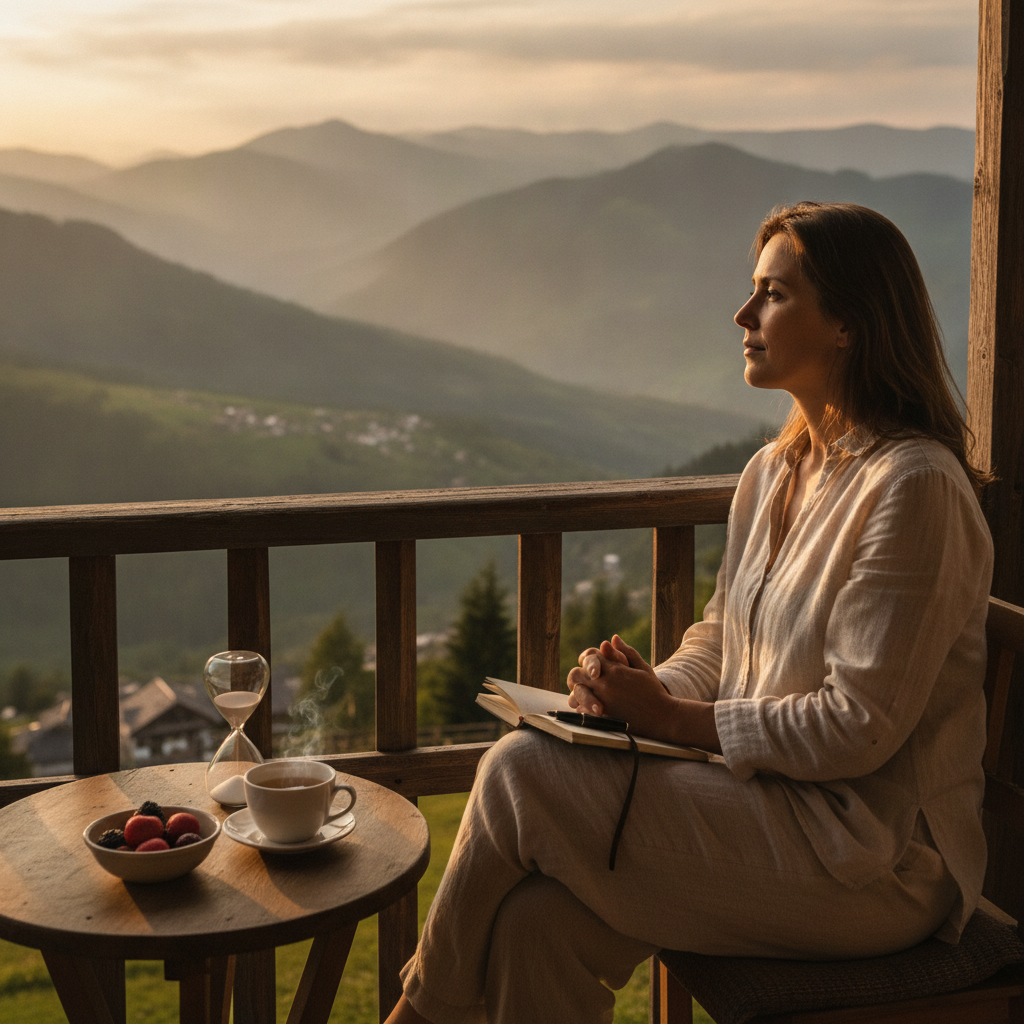
For those who have thought carefully about arrival — confirming accommodation logistics, knowing roughly where to eat, carrying a small amount of local cash, loading offline maps, and researching transport from the point of entry — the first morning tends to settle into something genuinely pleasurable. There is time to sit somewhere unremarkable and watch a neighborhood wake up. There is no frantic search for a working ATM, no confusion about which bus goes where, no gnawing uncertainty about whether the accommodation is actually confirmed. The freedom that comes from having handled the practical architecture of arrival in advance is, paradoxically, what allows a traveler to feel most present in those earliest, most impressionable hours.
That first morning in a foreign country is, in the end, a mirror. It reflects back the quality of attention that was brought to the planning process — not the volume of research, not the thickness of a printed itinerary, but the thoughtfulness of the preparation. The traveler who arrives ready to encounter a place, rather than simply manage it, tends to find that even the complications of a first morning carry something worth keeping. And that capacity for encounter, it turns out, was always what the planning was meant to protect.