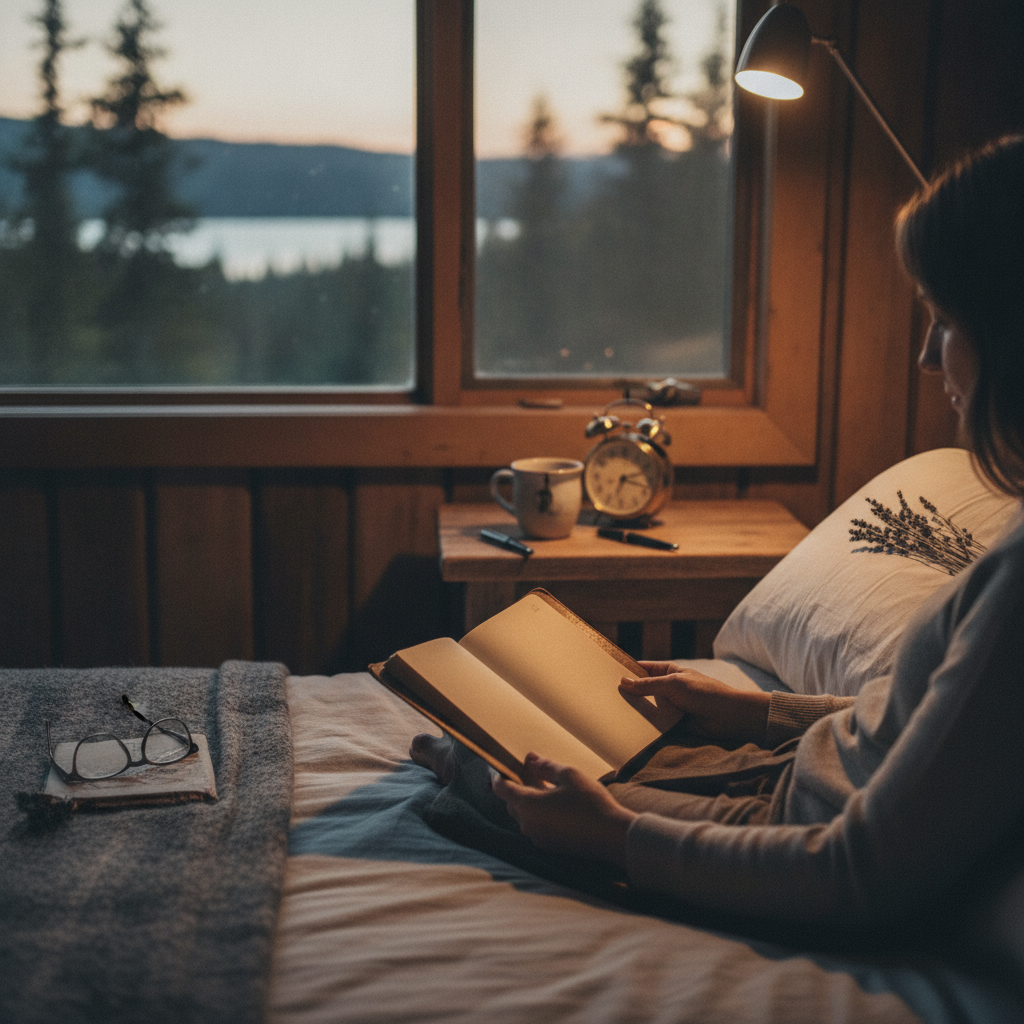
Most people understand, on some level, that staring at a phone before bed isn't helping them sleep. What fewer realize is how quickly the body responds when that habit is replaced with something slower, quieter, and screen-free. The shift doesn't require a complete lifestyle overhaul or an expensive wellness program. A consistent twenty-minute analog wind-down practice — done in the final stretch before sleep — can noticeably change how easily a person falls asleep, how deeply they rest, and how they feel the following morning.
What Does Screen Light Actually Do to the Sleeping Brain?
The human brain takes its cues about time of day largely from light. Blue light, which smartphones, tablets, and laptops emit in significant quantities, signals the brain to suppress melatonin — the hormone responsible for triggering sleep. When someone scrolls through Instagram or reads news on their phone in the hour before bed, the brain interprets that light exposure as a reason to stay alert. The body's natural wind-down process gets interrupted, and falling asleep becomes harder even when physical exhaustion is present. This isn't a minor inconvenience; it's a measurable delay in sleep onset that compounds night after night.
Why the Content Itself Makes Things Worse
Light exposure is only part of the problem. The content consumed during an evening scroll creates its own neurological interference. Social media feeds, news cycles, and short-form video platforms like TikTok and YouTube Shorts are engineered to trigger small bursts of curiosity, comparison, and emotional reaction. Each notification, each algorithmically recommended clip, activates the brain's reward and threat-detection systems in ways that are the opposite of what sleep requires. A mind rehearsing a disagreement it read about or mentally cataloguing someone else's highlight reel is not a mind drifting toward rest. The stimulation is subtle but persistent.
How an Analog Practice Resets the Nervous System
Analog activities — reading a physical book, journaling by hand, gentle stretching, or even assembling a simple jigsaw puzzle — engage the brain at a much calmer register. They require just enough attention to quiet the inner monologue without triggering the alertness response. Physical books from publishers like Penguin Classics or Taschen offer a different quality of engagement than screens: slower, more linear, and free from notifications. Journaling, particularly when kept brief and reflective rather than problem-solving in nature, helps the brain offload unresolved thoughts before sleep rather than cycling through them in bed. The nervous system responds to these inputs with a measurable shift toward parasympathetic calm.
What a Twenty-Minute Practice Might Actually Look Like
The structure matters less than the consistency. Some people find that ten minutes of light reading followed by a few pages of handwritten reflection works well. Others prefer to spend the full twenty minutes with a notebook, a cup of caffeine-free tea from a brand like Yogi or Pukka, and low, warm lighting. Dim, amber-toned bulbs or a simple salt lamp from a brand like Himalayan Glow can replace overhead lighting during this window, further supporting melatonin production. The practice doesn't need to be elaborate. What it does need is a clear signal to the brain that the day is ending — and that signal needs to come from the environment, not just from intention.
Why Changes Often Appear Within the First Few Days
The body's sleep architecture is surprisingly responsive to consistent behavioral cues. When a person removes the late-night light and stimulation source and replaces it with calming sensory input at the same time each night, the brain begins to associate those cues with sleep preparation. Melatonin release can begin to shift earlier within just a few nights of consistent practice. Many people who make this change report falling asleep more quickly, waking less during the night, and reaching deeper sleep stages more reliably. The improvement isn't placebo — it reflects the brain's genuine sensitivity to environmental and behavioral patterns.
How You Can Start Without Disrupting Your Whole Evening
You don't need to restructure your nights entirely. The most effective approach is to identify the twenty-minute window just before you intend to sleep and treat it as non-negotiable screen-free time. Keep a book or journal on your nightstand instead of your phone charger. Move your phone charger to the other side of the room, or out of the bedroom entirely, and invest in a simple analog alarm clock — something like a basic Loftie or even a classic Casio tabletop model — so the phone no longer needs to be within reach. Start with one night and notice how you feel in the morning. The practice tends to become self-reinforcing quickly, because better sleep is one of the most immediate and motivating rewards a person can experience.
The relationship between technology and rest is becoming a growing area of focus in wellness culture, and the conversation is only becoming more nuanced. As phone manufacturers introduce more sophisticated sleep-mode features and researchers continue to examine how content consumption patterns affect cognitive recovery, the tools for protecting sleep will keep improving. For now, though, the most reliable solution remains elegantly simple: put the phone down, pick up something analog, and give the brain the quiet it's been waiting for.