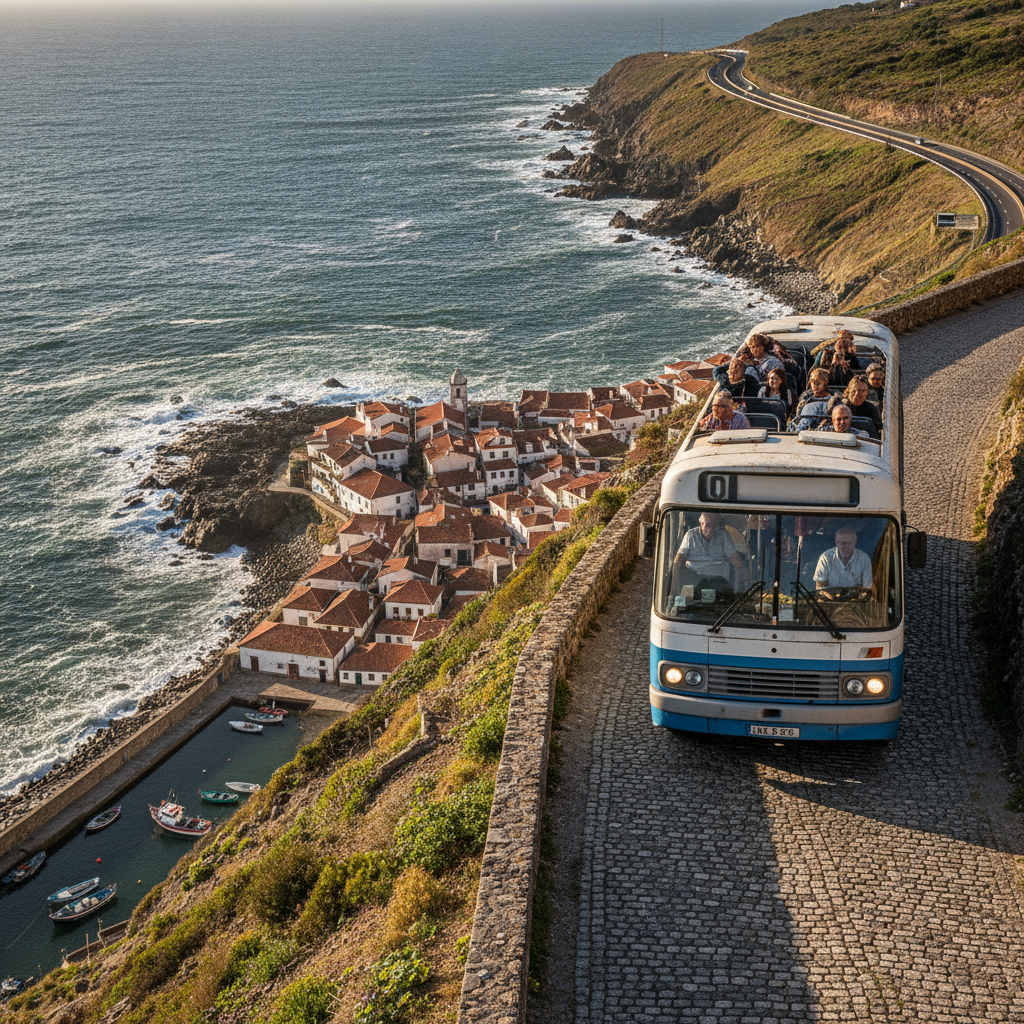
The intercity coaches that run between Porto and Viana do Castelo are fast, comfortable, and almost entirely useless for reaching the coast's most interesting places. Those express routes thread inland, bypassing a string of small fishing villages that sit tucked behind dunes, at river mouths, or at the end of narrow promontories. To reach them, you need the local bus networks — the slower, less obvious systems that connect communities rather than tourist hubs. Once you understand how these networks work, the northern Costa Verde opens up in ways that most travelers simply never experience.
Get to Know the Rede Expressos Versus Local Lines
Most visitors book Rede Expressos without realizing it's the long-haul option, not the local one. The real workhorse for coastal access is the network of municipal and regional bus lines operated by smaller carriers like Arriva Norte or local câmara-contracted services. These routes run between market towns and the villages beyond them, stopping at places that don't appear on mainstream travel apps. Spending twenty minutes at a regional bus terminal asking about local departures will reveal far more than any single booking platform. Schedules are often printed and posted on terminal walls.
Use Viana do Castelo as Your Operational Base
Viana do Castelo sits at the mouth of the Lima River and functions as the natural hub for the northern coastal network. From the main terminal near the train station, local buses fan out to smaller communities along the Minho coast — including villages like Afife, Âncora, and Moledo, which intercity services skip entirely. Staying in Viana for three or four nights lets you day-trip along the coast without repositioning your luggage constantly. The town itself is worth your time, but it's most valuable as a launching point rather than a destination you exhaust in a single afternoon.
Download Schedules Offline Before You Leave Town
Mobile data in coastal areas north of Viana can be patchy, particularly once you're on narrow roads between dunes and the Atlantic. Before leaving your accommodation each morning, photograph or download the relevant bus schedule for your return journey. The timing gaps between buses in smaller villages can run to two or three hours, so missing a departure isn't a minor inconvenience — it changes the shape of your whole day. Google Maps sometimes surfaces local bus routes in this region, but the Move-me app and local municipal websites tend to carry more complete timetables for the smaller lines.
Treat the Fish Markets as Your Arrival Compass
Fishing villages in northern Portugal structure their mornings around the catch. Buses serving these communities often run their earliest departures to coincide with market activity — which means arriving by the first or second service of the day puts you in the middle of genuine village life rather than its quiet aftermath. In places like Castelo do Neiva or the smaller hamlets along the Lima estuary, the morning fish market wraps up before ten o'clock. Getting there early isn't just logistically smart; it's the difference between seeing how a place actually works and simply walking through it after the fact.
Learn to Read Portuguese Bus Stop Signs Accurately
Northern Portuguese bus stops range from proper shelters with posted schedules to a single pole with a painted number. The key detail to note is the route number and the direction of travel — many rural stops serve buses going in both directions on the same road, and the stop for the return journey is sometimes fifty meters away on the opposite side. If you can read basic Portuguese or recognize directional phrases, you'll avoid the common mistake of waiting at a stop that only serves outbound traffic. Carrying a small phrasebook or translation app makes asking locals straightforward.
Build in Flexibility With a Multi-Day Coastal Pass
Some regional operators in northern Portugal offer multi-ride or day-pass options that make repeated boarding across a single day significantly cheaper. These aren't universally available, but in the Minho region specifically, it's worth asking at the terminal before buying individual tickets. Even where formal passes don't exist, buying a return ticket at the point of departure is generally cheaper than purchasing two single fares. The financial difference matters less than the flexibility — knowing you already hold a return ticket removes the low-level anxiety that comes with relying on last-minute purchases in a village with no ticket office.
Cross Into the Minho Estuary Villages by Boat and Bus Combined
The stretch of coast approaching the Spanish border uses a combination of road and water to connect communities that neither a single bus line nor a single ferry serves alone. Small passenger ferries cross the Minho River between Vila Nova de Cerveira and Goián on the Spanish side, while local buses connect the Portuguese riverbank villages to each other and back to Viana. Treating these two modes as a combined network rather than separate systems lets you reach places like Caminha — with its remarkable medieval fortress square — and the quieter villages north of it, using whichever combination of transport fits the day's schedule.
Ask at Accommodation About Informal Local Knowledge
Pension owners, small guesthouse hosts, and local café staff in northern Portugal are often a more reliable source of real-time bus information than any app. Services sometimes run seasonally, occasionally shift their timing around local festivals or market days, and now and then a route is rerouted without the change appearing online for weeks. A sixty-second conversation over breakfast can save a wasted hour at an empty stop. This kind of informal local knowledge is one of the consistent advantages of staying in smaller, owner-operated accommodation rather than chain hotels — the people behind the desk are from the area and use these buses themselves.
The northern Portuguese coast rewards the kind of traveler who slows down enough to understand how a place moves. As more visitors discover that the villages between Póvoa de Varzim and the Minho River offer a completely different experience from Porto's well-trodden streets, local transport networks are gradually improving — more schedules appearing online, more apps incorporating regional routes. For now, though, the gap between what's findable digitally and what's actually running remains wide enough that the traveler willing to ask, observe, and move at local pace will consistently reach places that most people simply ride past without ever knowing existed.