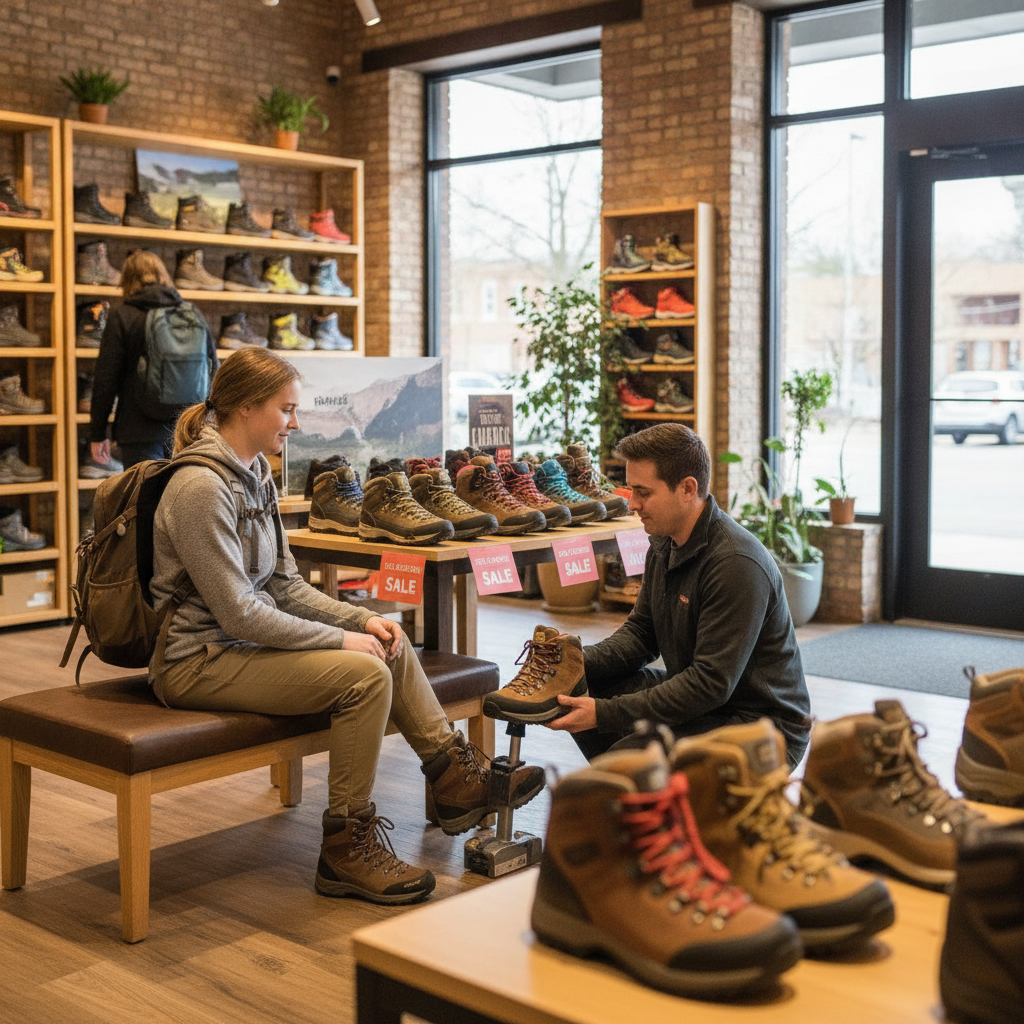
Most hikers wait until late spring or early summer to buy their boots, which is precisely when prices are highest and staff are too busy to spend thirty minutes analyzing your gait. The timing feels logical on the surface — warm weather arrives, trails open up, and suddenly everyone is at REI on a Saturday afternoon with the same idea. But that instinct costs you both money and quality attention, two things you absolutely want when you're investing in footwear that will carry you over rocky terrain for years.
The Window That Most Shoppers Don't Notice
Late March sits in a quietly useful gap in the outdoor retail calendar. Summer inventory has just arrived on shelves, but the wave of casual spring shoppers hasn't hit yet. Specialty retailers like REI, Backcountry, and independent outfitters are fully stocked with new season models while still carrying discounted carryover inventory from the previous fall. This overlap creates a rare moment where you can compare last year's proven performers at reduced prices against the newest arrivals without any pressure to rush. For a category like hiking footwear, where the difference between a great fit and a painful one comes down to fine details, that kind of unhurried browsing matters enormously.
Fit Appointments Are Actually Available
Here's what experienced gear shoppers understand: a proper boot fitting at a specialty retailer isn't just trying on a few pairs. A knowledgeable staff member should assess your arch type, measure both feet independently, evaluate your ankle stability, and ask about the terrain you typically cover. That process takes time and attention. In July, the staff at most outdoor retailers are simply too busy to offer it properly. In late March, you're far more likely to get a genuine fitting session where someone actually watches you walk, asks about your hiking style, and pulls multiple options based on what they observe rather than just what you ask for.
Carryover Models Represent Real Savings Without Real Compromise
The outdoor footwear industry follows a predictable pattern: new colorways and minor updates drop each spring, which means last season's models get quietly marked down to make room. Many of these carryover boots are functionally identical to their replacements — same last shape, same outsole compound, same waterproofing membrane. The changes are often cosmetic. Brands like Salomon, Scarpa, and Merrell do this every year, and late March is when those clearance discounts are deepest while selection is still solid. Waiting until summer means those discounted sizes are gone, leaving only the full-price new arrivals.
Price Comparison Tools Help You Know What's Fair
Before you walk into any retailer, spend a few minutes using a price history tool. The Google Shopping tab gives you a baseline across dozens of retailers quickly, and the Honey browser extension tracks price movement on specific models over time if you're buying online after your in-store fitting. Camelizer is useful for checking Amazon price history on footwear that crosses over to mainstream platforms. These tools take five minutes but arm you with the context to recognize whether a "sale" price at a physical store is genuinely discounted or just original retail with a markdown sticker.
Staff Knowledge Is at Its Sharpest in Early Season
Late March also tends to be when outdoor retail staff are most engaged and best informed. They've just completed spring product training, they're fresh off slower winter months, and they're enthusiastic about the new season. Compare that to mid-July, when the same staff are fatigued from weeks of high-volume foot traffic and are often working with less experienced seasonal hires brought in to handle the rush. The quality of advice you receive in late March at a place like a Moosejaw location or a well-staffed independent outfitter is measurably different from what you'll encounter when summer is fully underway.
Ask About Return and Exchange Policies Before You Commit
One underused strategy during a late March visit is asking about extended break-in return windows. Many specialty retailers offer a trial period specifically for footwear, allowing you to return boots that cause discomfort after a short period of real use. Staff in slower periods have more time to walk you through these policies carefully and note the terms in your account. In peak season, that same conversation gets rushed, and details get missed. Understanding what you're agreeing to before you buy — particularly with boots that need a proper break-in — can save you from being stuck with a pair that doesn't work on longer days.
The Compounding Benefit of Getting It Right Early
Buying hiking footwear in late March means you also have weeks to break in your boots properly before any serious summer hikes. That matters more than most new hikers realize. Leather and structured synthetic boots need several shorter outings before they conform to your foot shape, and doing those test walks in spring rather than scrambling the week before a July trip is a far more comfortable experience. You have time to return and exchange if something isn't working. You can ask follow-up questions when the store is calm. You get the full value of the investment rather than just the product.
Timing a purchase isn't about being clever for the sake of it — it's about creating the conditions where you actually get what you need. Late March is when the outdoor retail calendar quietly works in your favor, and all it takes is getting there a few months ahead of the crowd. Start looking at what's available now, use the price tools to build your baseline, and plan a fitting appointment before the trails get busy.